

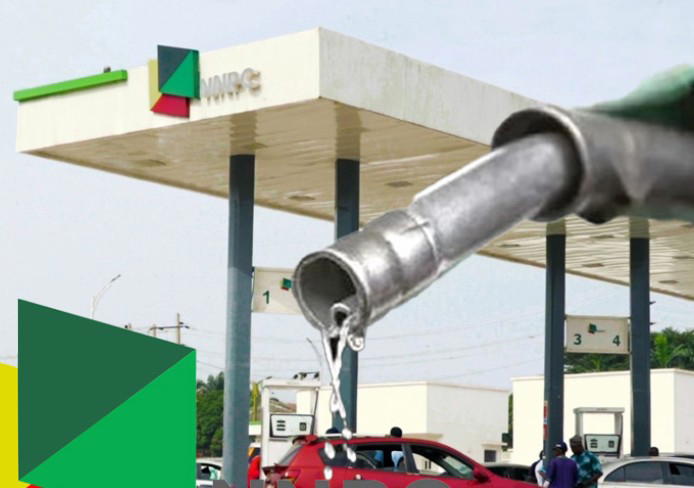
Many motorists, commuters, and stakeholders have expressed mixed reactions to the Federal Government’s announcement of a 30-day petrol discount at the Nigerian National Petroleum Company Ltd. (NNPCL) filling stations.
The News Agency of Nigeria (NAN) reports that the Minister of Finance and Coordinating Minister of the Economy, Taiwo Oyedele on Thursday announced the discount on petrol prices and subsidy-related issues in Abuja.
Oyedele said the arrangement would run for 30 days, with public transport operators receiving priority nationwide.
Mr Shehu Mohammed, a motorist who resides at Dutse, told NAN that the measure would reduce transportation costs and ease the financial pressure on households.
Shehu said it would also provide relief amid rising petrol prices.
Mr Wale Oshobu, a motorist who resides at Bwari, said the gesture was commendable but Nigerians do not know the actual discount consumers would receive and how it would translate into lower transport fares.
Mr Dotun Ogunsola, a consumer, said, “Nigerians need sustainable solutions to fuel price volatility rather than temporary relief measures.
“The effectiveness of the discount will depend on its size from NNPCL stations,” he said.
Mrs Uche Ogor, a consumer who resides at Wuse, urged relevant stakeholders to monitor the transparency of the initiative and the Federal Government’s plans for the period after the initial 30 days.
Mr Wumi Iledare, a Professor Emeritus of Petroleum Economics, Louisiana State University (LSU) Energy Institute, said the initiative could be defensible if it remained a targeted, temporary welfare intervention rather than a return to universal fuel subsidy.
Iledare said the purpose should not be to make petrol artificially cheap, but to ease transport costs, limit their spillover into logistics and consumer prices.
He said the initiative should provide short-term relief to vulnerable households.
“Prioritising public transporters may be justified only if the savings ultimately reach passengers.
“The decisive question is simple: who pays for the discount? If NNPC Ltd sells below economic cost and government later reimburses it or an implicit public liability arises. The measure is subsidy-equivalent.
“The economics are different only if NNPCL transparently funds the discount from a commercial margin for a strictly limited period without creating a fiscal obligation.
“Government should therefore disclose the discount per litre, eligible volumes, financing source, maximum fiscal exposure, mechanism for passing savings to passengers, and the final financial impact on NNPCL.
“These are not merely accounting details; they determine whether the policy is genuine welfare support or subsidy through another channel,” he said.
Mr Auwal Rafsanjani, the Executive Director of Civil Society Legislative Advocacy Centre (CISLAC), said the intervention risked becoming another temporary announcement that failed to address the suffering of citizens.
Rafsanjani said Nigerians deserved accountability, not economic promises without measurable results.
He called for transparency regarding the proposed N1,350 petrol price and the 30-day NNPCL discount.
“What will Nigerians actually pay for the pump price of petrol? Who is financing the discount, how much will it cost, and what happens after 30 days?
“ More importantly, how will this intervention reduce transportation fares, food prices and the cost of essential commodities across the country?
“Government must explain where the savings from petrol subsidy removal have gone, how much was realised, and what measurable improvements will reach the ordinary Nigerians,” he said
He called on the Federal Government to confront the real drivers of economic hardship, excessive governance costs, and policies that undermined businesses and livelihoods.
According to him, government must demonstrate the same financial discipline and sacrifice it demands from citizens by cutting unnecessary expenditure, expanding affordable transportation and protecting vulnerable households. (NAN)
The post Motorists, commuters, others react to FG’s 30-day petrol discount appeared first on Vanguard News.