

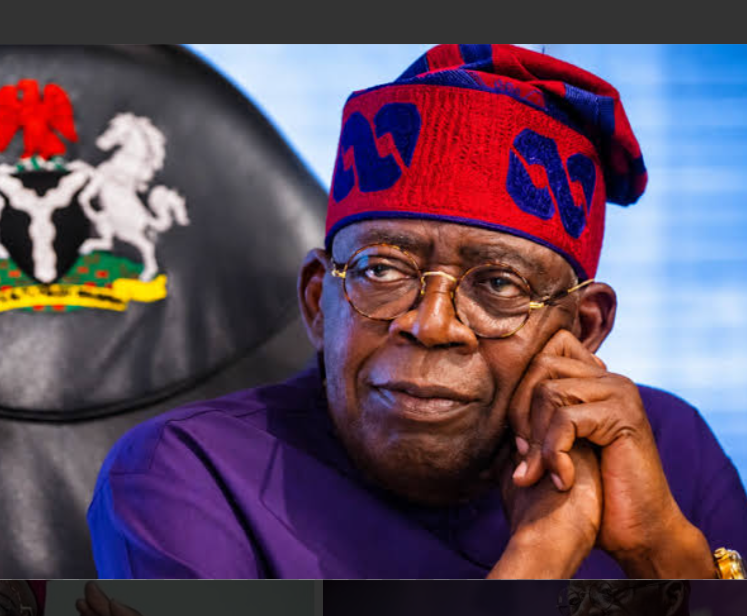
On social media over the weekend, I watched a clip of Vice President Kashim Shettima saying fervently that President Tinubu’s economic reforms have “saved the Nigerian economy from falling into pieces”, to borrow his own words. When Tinubu assumed office, Shettima said, Nigeria’s external reserves, for example, were “below $3.9 billion”, which was “not enough to import fuel for one month”. Now, however, Shettima implied, the external reserves have since climbed to $54.91 billion due to Tinubu’s fuel subsidy and currency exchange reform policies. The next video that came up on my feed, however, was that of an ordinary Nigerian asking how come Tinubu’s economic reforms have only increased the price of fuel, increased the price of food, and increased the price of electricity. “I can go on, and on. All of their reforms dey always increase price”, he added, and the clip ended by asking: “Una reform no dey ever reduce price?”
I thought the two videos captured a classic problem of economic reform and the exact quandary President Bola Ahmed Tinubu’s government finds itself in today over its signature policies. President Tinubu and his officials genuinely believe that their economic reform policies are right and working positively. In fact, the government sees these reforms as legacy policies that would positively define the administration long after it leaves office. They are not necessarily wrong. But ordinary Nigerians who complain bitterly about the negative consequences of these same policies on their everyday lives are not wrong either. So, where lies the problem? This is a classic problem of economic reform. Governments and citizens always interpret the success or failure of economic reform very differently. Governments look to macroeconomic indicators such as GDP growth rates, external reserves, increased revenues, etc., as evidence of reform success. This is why President Tinubu and his officials have repeatedly hammered on these indicators as evidence that their reforms are yielding the desired fruits. Nigerians, on the other hand, look mostly to things like incomes, food, fuel, rent, school fees, and the range of public services they enjoy daily. That is, Nigerians are looking at the benefits of reform “on the ground”, and they are right. In other words, both sides can be right at the same time.
This gap between macroeconomic indicators and the lived experience of citizens has recently been labelled “vibecession”, to explain the paradox of positive economic data alongside persistently negative public perceptions of the economy, as happened during the Biden administration in the U.S. The problem with the Tinubu administration is its inability or outright refusal to accept or understand that economic reforms can look successful at the macroeconomic level while still being perceived widely as a failure at the level of citizens’ lived experience.
Yet, the problems with Tinubu’s economic reforms are more structural than narrative. The government is not facing a policy communication problem that can be resolved simply by better messaging. It is a policy formulation and delivery problem. For Tinubu’s economic reforms to make sense to Nigerians, and for those reforms to transform into the enduring positive legacy the administration seeks, the government needs an institutional framework that captures and translates some of the gains of reform into direct and visible public benefits for Nigerians.
This must go beyond untenable CNG projects or frequent talk about increased federal revenue allocations to state governors. What the government needs right now is a policy initiative like the late General Abacha’s Petroleum Trust Fund (PTF) that translates the gains of reform into direct, specific, and visible benefits for ordinary Nigerians in their own communities. This is where I find the National Commission for Rural Infrastructure Development (NACRID), a bill for which has recently passed second reading at the House of Representatives, quite interesting as a policy initiative. Reading through the bill a few weeks ago, I found myself thinking that it ticks a lot of boxes not just for the government in terms of being able to explain the success of its reforms, but also for Nigerians as the ultimate beneficiaries of its proposed provisions.
The NACRID Bill’s underlying—and in my view innovative—proposal is that rural development interventions in Nigeria are currently fragmented across different and often overlapping institutions. NACRID seeks to resolve this problem by proposing a single national institutional framework for identifying, coordinating, financing, implementing, and evaluating rural development projects and interventions throughout the country. This all-in-one approach will directly address two immediate problems at the heart of Nigerian policy and governance. First, NACRID could address the very serious problem of inefficiency and ineffectiveness in Nigerian rural development policy, whereby multiple agencies and institutions do related things without sufficient coordination among them. This is particularly true since rural development policy tends to work best when pursued through an integrated approach. A rural electrification project can have immediate implications for water, education, sanitation, and even local industry or farming. But if projects in these sectors are pursued by different agencies, you are likely to have inefficiencies that will render all efforts redundant.
Moreover, Nigerians living in rural areas are likely to find interacting with a single agency providing their infrastructure and development needs easier than interacting with a bewildering collection of agencies and interventions. Therefore, they are better able to hold such an agency accountable for failure. Development partners are also likely to work better with an overarching agency dealing with rural development than with multiple institutions doing the same thing. But perhaps most important, the NACRID Bill provides for the establishment of the National Rural Infrastructure Development Fund. This Fund, according to the bill, will pool rural development resources from the federal, state, and local governments, as well as development partners and the private sector, and operate on the basis of two key principles. First, according to the bill, the Fund shall operate on the basis of a 70 per cent–30 per cent funding allocation principle. By this, the bill intends that 70 per cent of all funds received must go directly into project implementation, and only 30 per cent can go into administrative expenses and overheads.
This is a massive change from current Nigerian practice, whereby more than 70 per cent of federal and state government budgets go into overhead and recurrent expenditure, with often less than 30 per cent for the capital projects that would actually benefit the people directly. In addition, the bill emphasises that projects must be identified and implemented on the basis of clear and urgent need, as well as on the principle of fairness and equity across all rural areas in the country. This is particularly important in a country where projects are allocated and located merely to massage the egos of politicians and top bureaucrats, rather than serve the needs of the people.
The bill contains many other positives, not least a series of built-in transparency and accountability mechanisms. And reading through it, I could not help but feel that these are the kinds of policy initiatives the Tinubu government needs to make its economic reforms a success. More importantly, reading through the bill brought back to me positive memories of Abacha and Buhari’s PTF. The PTF was a single agency, but its impacts reached every corner of Nigeria, from hospital beds to cheap over-the-counter drugs, from classroom renovations to exercise and textbooks for school kids and university libraries, from road repairs to PTF buses. With a PTF-like agency dealing with rural development throughout the country, Nigerians will not need external reserve figures to know that Tinubu’s economic reforms are working.
However, as a person who studies and writes about public policy in Nigeria, I have seen many beautiful policies on paper. The challenge, as ever, is how to transform a beautiful policy proposal into concrete public service delivery that benefits Nigerians directly wherever they may live. On this, the record of Nigerian governments at all levels is rather poor. NACRID will therefore be a game changer for the Tinubu administration, for this National Assembly, and for its main promoter, Hon. Saidu Musa Abdullahi, Deputy Chairman of the House of Representatives Committee on Finance, only if it succeeds where so many previous policies on paper have not: that is, in turning attractive policy ambition into tangible results for Nigerians.
The post NACRID Bill: Tinubu’s game changer? By Suleiman A. Suleiman appeared first on Vanguard News.