

By Samuel Oyadongha, Yenagoa
The Niger Delta Progressives Alliance (NDPA) has endorsed President Bola Ahmed Tinubu for a second term in office, while calling for an increase in the derivation fund for the Niger Delta from 13 per cent to 25 per cent.
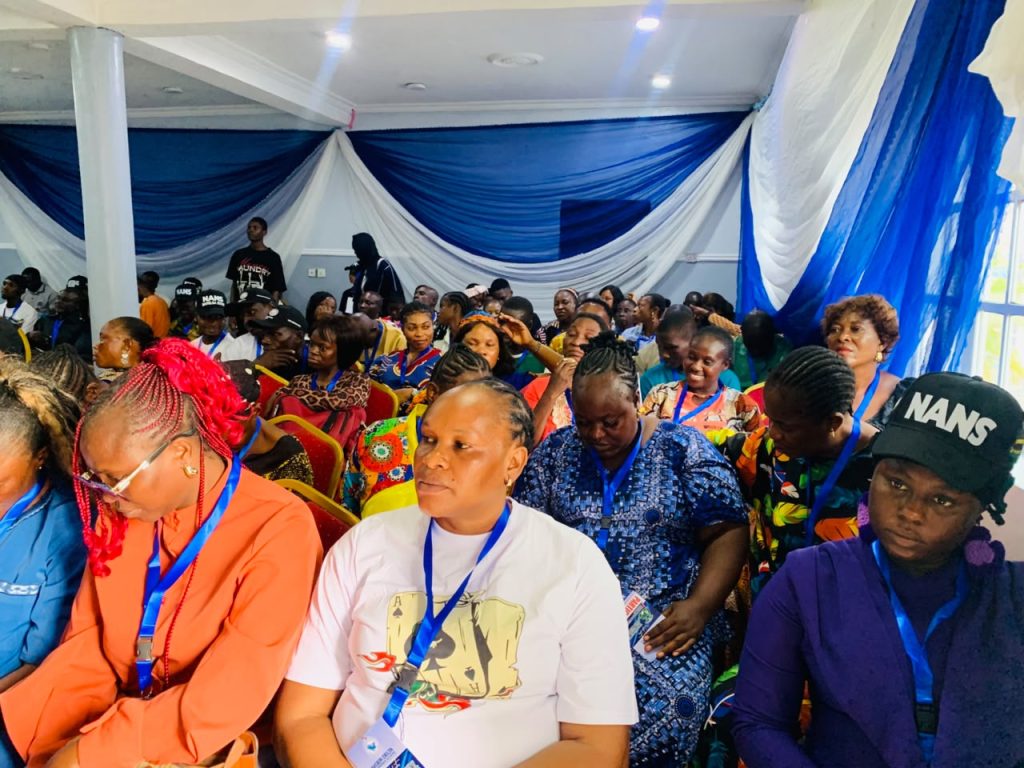
The National President of NDPA, Victor Udoh, made the declaration during a stakeholders’ meeting in Yenagoa, Bayelsa State, where he assessed the Tinubu administration’s performance in the region over the past three years.
Udoh said the administration had delivered more tangible benefits to the Niger Delta than previous administrations within their first three years, citing improvements in crude oil production, increased derivation revenue and federal interventions.
In an address titled, “Legacy of Bold Reforms: An Evaluative Overview of the Tinubu Reforms in Three Years in Relation to the Quest for Sustainable Development in the Niger Delta,” he described the region as central to Nigeria’s history and economic development.
“The Niger Delta is not a footnote in Nigeria’s story. It is the opening line,” he said, arguing that the region’s history of struggles for fiscal justice should inform its future.
Udoh referenced the region’s historical contributions, from Eyo Ita’s pre-independence political activities in Calabar to the emergence of Goodluck Jonathan as president and Godswill Akpabio as Senate President.
He said crude oil production had increased from 1.18 million barrels per day in August 2023 to more than 1.7 million barrels per day by late 2024, attributing the improvement largely to enhanced security in the creeks.
“A secure Niger Delta earns the nation more,” he said.
Udoh also disclosed that the nine oil-producing states received ₦1.51 trillion in derivation revenue in 2025, compared with ₦671.92 billion in the previous year.
Despite the reported increase in revenue, he argued that the region’s development should be measured by the impact of public spending rather than the size of allocations received.
He identified economic diversification beyond oil, local utilisation of gas for power generation, environmental restoration and transparent institutions as critical to achieving sustainable development in the region.
The NDPA president reiterated the group’s demand for an increase in the derivation share from 13 per cent to 25 per cent, describing the demand as a key component of fiscal justice for oil-producing communities.
“A larger share spent poorly is only a larger disappointment,” he warned, stressing that increased revenue must translate into tangible development for the people.
Udoh also announced the introduction of a Reform Scorecard, an annual, open-source evaluation tool designed to assess the impact and sustainability of government reforms.
He said the scorecard would be guided by three questions: “Does it flow? Does it reach? Will it last?”
He further highlighted the South-South’s 15.8 million registered voters, representing about 15.3 per cent of the national register, as a potential instrument for demanding accountability from political leaders.
“The era of docility is over, and the era of disorder was never ours,” he said, urging young people to take advantage of federal intervention programmes through agencies such as the National Directorate of Employment (NDE) and the Small and Medium Enterprises Development Agency of Nigeria (SMEDAN).
He said the NDPA had been promoting such opportunities across the nine Niger Delta states through its “The Future Is Here” initiative.
The alliance pledged to continue monitoring and documenting government reforms transparently and peacefully, with the aim of promoting accountability and regional unity.
Tinubu’s Reforms Painful but Necessary, Youth Leader Says
Also speaking at the meeting, the National Coordinator of the Niger Delta Youth Council Worldwide, Engr. Jator Abido, said Nigeria, at 66, could no longer afford to make excuses for its development challenges.
“We are a mature nation that must make bold choices,” he said.
Abido said previous administrations had largely managed the symptoms of the country’s economic challenges, while the Tinubu administration had taken steps to address structural problems.
He identified fuel subsidy removal and the unification of the foreign exchange market as two major reforms, noting that although they had imposed hardship on Nigerians, they had also increased federal allocations to states and helped restore investor confidence.
He cited Nigeria’s expenditure of about $10 billion on fuel subsidy in 2022 and the Central Bank of Nigeria’s reported $7 billion in unmet obligations at the time as evidence of the economic challenges confronting the country before the reforms.
Abido acknowledged that inflation and the rising cost of living had affected residents of Niger Delta cities, including Port Harcourt, Warri and Yenagoa, but argued that the reforms had helped address underlying economic problems.
He also said crude oil production, which had declined because of oil theft and pipeline vandalism, had improved to about 1.8 million barrels per day through collaboration between security agencies and private security firms.
On environmental concerns, Abido cited the establishment of the Presidential Committee on Ogoni Consultations and the reconstitution of the board responsible for accelerating the Ogoni clean-up as steps towards rebuilding trust and addressing longstanding grievances.
“These are steps in the right direction,” he said.
Students, Stakeholders Back Tinubu’s Re-election
In his remarks, the Bayelsa State President of the National Association of Nigerian Students (NANS), Mr Lucky Michael, commended the Tinubu administration for introducing the student loan scheme.
He urged Nigerian students to support Tinubu’s re-election bid, saying a second term would enable the administration to consolidate its initiatives.
Similarly, Chief Ubong Akpan said the administration had performed well in the Niger Delta and appealed to Nigerians to re-elect the president to enable him to complete his programmes.
The endorsements came alongside the NDPA’s demand for a higher derivation allocation, with the alliance insisting that increased revenue must be accompanied by accountable spending and sustainable development across the region.
The post NDPA endorses Tinubu for second term, demands 25% derivation appeared first on Vanguard News.