

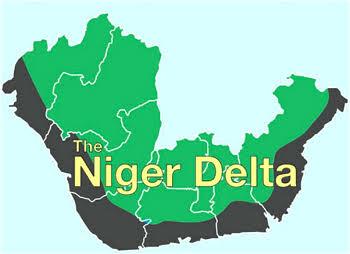
The Niger Delta’s enormous natural endowment should have made it a prosperous region. Instead, poverty, unemployment, environmental degradation and deficient public services remain widespread. This contradiction gives Dr Ngozi Okonjo-Iweala’s intervention at the Niger Delta Economic and Investment Summit in Port Harcourt an urgency that must not be lost after the glamour of the ceremonies.
The maiden summit, held from September 15 to 17, 2026, at the Obi Wali International Conference Centre, was organised by the Niger Delta Chambers of Commerce, Industry, Trade, Mines and Agriculture (NDCCITMA). Its theme, “Driving Investment, Innovation and Industrial Growth in the Niger Delta,” captured its purpose: to move the region from repeated lamentation about its potential to actual investment, industrialisation, job creation and value addition. The Niger Delta Development Commission (NDDC) was a strategic partner.
In her virtual goodwill message, the Director-General of the World Trade Organisation (WTO) warned that the region’s development indicators remained unsatisfactory. She cited an estimated 24 million multidimensionally poor people, roughly 48 per cent of an estimated population of 50 million. She also pointed to serious deficits in clean water and sanitation, while noting that only four Niger Delta states ranked among the top 10 on the National Human Development Index.
Her prescriptions were practical. She urged the private sector, led by the Chambers, to invest in the region and demonstrate that it is open for business. She called for viable special economic zones, developed jointly by governments and businesses, to anchor industrial growth. She identified critical minerals, agriculture and the coastal economy as principal avenues for diversification beyond oil.
Kaolin, silica, clay and bentonite, she said, could support industries from construction to electronics. Agricultural resources should be processed into high-value products, while the coastline, seaports, fisheries and aquaculture should power a thriving blue economy. Better ports, digital infrastructure, lower trade costs, sound project execution and a maintenance culture were equally necessary.
The region’s poverty is not caused by scarcity. It reflects the failure to convert resources into broad-based human development. Oil wealth has encouraged rent-seeking, corruption, environmental neglect and dependence on federal allocations. Weak institutions, insecurity, poor infrastructure, limited skills, inadequate electricity and the absence of sustained industrial planning have discouraged productive investment.
As Aigboje Aig-Imoukhuede observed at the summit, the Niger Delta has a “conversion problem”: resources create possibilities, but institutions, enterprise and infrastructure create prosperity. The region’s elite must therefore go beyond summits, speeches and glamour. They must produce a time-bound regional development compact, with measurable targets, transparent financing, independent monitoring and responsibilities shared by governments, businesses, communities and development institutions.
Youths must also be reoriented towards education, skills, discipline, innovation and honest enterprise, rather than towards the illusion of effortless wealth. Okonjo-Iweala has issued a wake-up call. The Niger Delta must now turn it into work, investment and accountable action.
The post Niger Delta development beyond summits appeared first on Vanguard News.