

Nigeria’s 2027 election campaign is entering a phase in which the struggle for political influence is increasingly being accompanied by a struggle for legal recognition.
Politicians are changing parties. Campaign organisations are being rearranged. Candidates are withdrawing from tickets. And the courts are being asked to determine who is entitled to contest.
But another development is becoming difficult to ignore.
Concerns about political violence, misinformation and the safety of electoral participation are growing as the campaign gathers momentum.
The latest developments in Sokoto, Kano, Cross River and Ogun illustrate the different pressures confronting political parties.
Meanwhile, the African Democratic Congress is fighting to preserve the legal validity of its national leadership and candidate nominations.

And a new report from the National Peace Committee provides a troubling picture of the campaign environment.
Taken together, these developments raise a question that goes beyond the usual calculations about party strength.
Will Nigeria’s political parties enter the 2027 elections with settled candidates, functioning organisations and sufficient public confidence in the electoral process?
That is today’s Political Signal.
SOKOTO: THE DEFECTIONS CONTINUE
In Sokoto State, the APC has received another group of defectors from the PDP and ADC.
A Sokoto Government House statement issued on November 10 identified three PDP state executive officials, several local-government party chairmen and other political organisers among those who joined the ruling party.
ADC ward officials and associated groups were also reported among the defectors.
Some reports put the number of departing PDP local-government party chairmen at seven, although the published names clearly identify six.
These are party officials, not elected local-government council chairmen.
That distinction matters.
The movement represents a change in the affiliations of local political organisers rather than a change in the composition of elected local councils.
For the APC, the development adds politicians with experience in local party organisation.
For the PDP and ADC, it raises questions about continuity in the affected ward and local-government structures.
But there is a familiar qualification.
A politician changing parties does not necessarily mean the voters who previously supported that politician will follow.
That remains to be established through subsequent political activity and, ultimately, elections.
KANO: ANOTHER CHANGE IN ADC’S ORGANISATION

Kano has produced another development involving the ADC.
A letter dated November 9 announced the appointment of a 14-member caretaker committee headed by Musa Ungogo.
The committee is expected to serve for six months.
The appointment comes against the background of earlier disagreements over the party’s state leadership.
It also arrives at a particularly sensitive moment for the ADC nationally.
The Federal High Court’s November 5 judgment invalidating the David Mark-led national leadership has raised questions about the legal authority behind the party’s nominations.
The party has appealed and applied for a stay of execution.
However, no appellate reversal or granted stay has been confirmed.
The Kano appointment must therefore be viewed in the context of both state-level organisational disagreements and the unresolved national leadership dispute.
For now, the appointment establishes a new administrative arrangement.
It does not settle every question about the party’s leadership or provide evidence of changing voter preferences.
ADC: THE LEGAL BATTLE WIDENS
The most consequential national development remains the dispute over the ADC’s leadership and nominations.
On November 5, the Federal High Court invalidated decisions taken by the David Mark-led national executive, including the process that produced Atiku Abubakar as the party’s presidential candidate.
The ADC rejected the judgment and subsequently filed an appeal and an application for a stay.
Now the controversy has taken another turn.
Candidates associated with the party have petitioned international diplomatic missions and organisations, including the United Nations, United States Embassy, British High Commission, European Union and ECOWAS.
They are seeking attention to the legal and electoral implications of the judgment and have raised concerns about delays in obtaining its certified copy.
The candidates say they intend to pursue lawful remedies.
Their petition does not overturn the judgment.
Nor does it amount to a stay of execution.
And it does not establish that every ADC candidate has been finally excluded from the ballot.
But it demonstrates that the dispute is no longer confined to the party’s national leadership.
Candidates across different states now have a direct interest in the outcome.
For the ADC, the immediate challenge is legal certainty.
For INEC, the challenge is determining how to respond to the judgment and any subsequent appellate orders.
And for the wider electoral process, the question is whether these disputes can be resolved sufficiently early to provide clarity for parties, candidates and voters.
The legal status of a party’s nominations is not the same thing as its political support.
That distinction must remain central to our Election Watch.
CROSS RIVER: A RUNNING MATE WALKS AWAY
In Cross River State, the NDC has suffered a candidate-level setback.
Stella Charles Archibong, the party’s deputy governorship candidate, has withdrawn from the ticket and declared support for Governor Bassey Otu’s re-election campaign through the Back to South Movement.
The withdrawal became public earlier in the week.
NDC governorship candidate John Odey has acknowledged the development and indicated that consultations are continuing.
This is different from an ordinary party supporter announcing a change of allegiance.
Archibong was part of the governorship ticket itself.
Her departure therefore raises immediate questions about the party’s replacement arrangements and the procedures required for recognition by INEC.
No replacement has yet been independently verified on the Commission’s published list.
For Cross River, the development concerns candidate organisation and nomination continuity.
It does not establish how many voters, if any, will change their preferences because of her decision.
OGUN: ADEBUTU’S CASE APPROACHES A DECISION
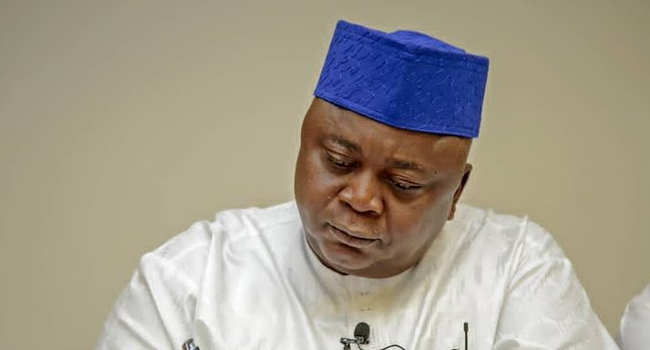
In Ogun State, the PDP’s governorship nomination dispute is approaching another important stage.
The Federal High Court is scheduled to deliver judgment on Friday, November 13, in the case concerning Ladi Adebutu’s exclusion from INEC’s published governorship list.
INEC maintains that Adebutu’s name was absent from the PDP membership register originally submitted to the Commission.
In its court filings, the Commission says searches of the register identified Adebutu’s running mate but did not establish Adebutu’s inclusion.
It also disputes membership documentation subsequently presented in support of his nomination.
Adebutu and the PDP reject the basis of his exclusion.
These are competing positions before the court.
They should not be presented as judicial findings.
The forthcoming judgment could determine the next stage of the dispute, although further appeals may remain possible.
For Ogun, the immediate issue is whether the PDP can secure recognition of its intended governorship candidate.
The political implications will depend on the court’s decision and any subsequent action by INEC.
Until then, the party’s ballot-access position remains unresolved.
ELECTORAL SECURITY: A WARNING FROM THE PEACE COMMITTEE
Away from defections and nomination disputes, another development deserves serious attention.
The National Peace Committee has released monitoring findings documenting 109 reported breaches of the electoral Peace Accord between August 19 and October 27.
The incidents were recorded across 26 states and the Federal Capital Territory.
They include 33 reported incidents involving violence or political thuggery and 29 involving misinformation.
Kaduna recorded nine reported breaches, while Edo, Enugu and the FCT recorded seven each.
These are cumulative findings covering more than two months.
They are not incidents that occurred on November 11.
Nevertheless, they provide evidence of the conditions under which the campaign is taking place.
The figures also follow recent concerns about political violence, including the fatal incident involving an NDC-linked procession in Asaba.
The question is not simply which party is responsible for particular incidents.
Responsibility must be established through credible investigation.
The wider concern is whether all political parties and their supporters can campaign freely and safely.
That is fundamental to a credible election.
A candidate may have widespread support in a constituency.
But if intimidation, violence or fear prevents supporters from participating, that support may not be reflected in the ballot.
Similarly, misinformation can distort public understanding of electoral rules, candidate eligibility and the conduct of the election.
The integrity of an election depends not only on counting votes accurately, but also on ensuring that citizens can cast them freely.
That is why the Peace Committee’s findings deserve continued attention.
THE YOUTH METER: PARTICIPATION REQUIRES CONFIDENCE
The latest developments also reinforce an issue we have been tracking through the Youth Meter.
Nigeria’s younger voters are frequently described as a potentially decisive electoral constituency.
But their influence depends on participation.
Registration alone is not enough.
Political enthusiasm is not enough.
And online engagement cannot substitute for turnout.
The reported incidents of political violence and misinformation raise concerns relevant to voters of every age, including younger Nigerians.
There is no fresh age-disaggregated evidence in today’s developments establishing a change in youth voting intentions.
But the underlying questions remain.
Will young Nigerians register and collect their PVCs?
Will they turn out?
Will they feel safe doing so?
And will they trust the process sufficiently to participate?
Those are the indicators we should continue to monitor.
THE ELECTORAL MAP: WHAT HAS CHANGED?
The latest developments affect different parts of the country in different ways.
In Sokoto, there has been a reported movement of party organisers towards the APC.
In Kano, the ADC has announced a caretaker committee amid continuing leadership uncertainty.
In Cross River, the NDC must address the withdrawal of its deputy governorship candidate.
In Ogun, the PDP awaits a judicial decision on Adebutu’s nomination.
Nationally, the ADC continues to challenge the judgment affecting its leadership and nominations.
And across several states, the Peace Committee’s findings raise concerns about electoral security and political participation.
These developments are significant.
But they are not all evidence of the same thing.
Defections concern political organisation.
Candidate withdrawals concern nomination continuity.
Court judgments concern legal eligibility.
Peace Accord violations concern the conditions of political participation.
None, by itself, establishes a change in voter preferences.
That distinction is particularly important when comparing the APC, PDP, ADC, Labour Party, NNPP, NDC and significant regional parties.
Nor has today’s review established a new INEC-administered election result, state electoral commission-run local-government result or credible presidential voter-preference poll requiring a revision of the electoral map.
WHAT TO WATCH NEXT
The most immediate development is Friday’s expected judgment in the Ogun PDP nomination case.
We should also watch for an appellate decision on the ADC’s application for a stay of execution and INEC’s formal response to the November 5 judgment.
In Cross River, the NDC’s replacement arrangements will require verification.
In Kano, the relationship between the new ADC caretaker committee and the unresolved national leadership dispute deserves attention.
And nationally, the Peace Committee’s findings should be followed by credible investigations, security responses and measurable efforts to prevent further violence.
These are the developments that could materially alter the legal or organisational landscape before voting begins.
THE BOTTOM LINE
Nigeria’s 2027 election is increasingly being shaped by three interconnected questions.
Who controls the political organisations?
Who is legally entitled to contest?
And can Nigerians participate freely and safely?
The first is being tested by defections and competing party structures.
The second is being tested in the courts.
The third is being tested by the conduct of political actors and the effectiveness of electoral institutions.
The answers will matter.
But they should not be confused with predictions about which party will win.
The election will ultimately be determined by the choices Nigerians make at the ballot box, under the applicable electoral rules.
For now, the evidence shows continuing political realignment, unresolved nomination disputes and documented concerns about the campaign environment.
The parties are fighting for political ground.
The candidates are fighting for legal recognition.
And the country must ensure that voters can exercise their choices freely.
That is today’s Political Signal.
Political Signals | Nigeria 2027 Election Watch
– by Channels Television
Independent, non-partisan analysis of political developments, electoral institutions and voter behaviour ahead of Nigeria’s 2027 general elections.
The post Nigeria 2027 Election Watch: The Battle For The Ballot Deepens As Parties Lose Candidates, Gain Defectors And Confront The Courts appeared first on Channels Television.