

Sixty-six years after independence, Nigeria is still a country of immense possibility and unfinished work. Its young people, its global diaspora and the resilience of its people offer reasons to believe that the next decade can be different.
On 1 October 1960, Nigeria began its life as an independent nation with a promise that seemed as large as the country itself. Its peoples, resources and talents could be brought together to build a confident, prosperous society: one that would command respect, provide opportunity and play a leading role in Africa and the wider world.

At 66, that promise remains unfinished. Nigeria has not yet turned the full measure of its human and natural wealth into security, shared prosperity and dependable public services. For millions, the cost of living is punishing. Too many communities live with fear, too many young people struggle to find work that matches their ability, and the distance between the country’s possibilities and many citizens’ daily experience remains stark.
Yet a birthday is also an occasion to ask what remains possible. Nigeria’s story cannot be told only through what has gone wrong. It must also be told through the people who keep building, inventing, serving, creating, and believing, often in circumstances that would have worn down less determined societies.
Youth Power
Nigeria’s most important asset has always been its people. It is a young country, full of energy and impatience for change. That restlessness is sometimes described as frustration, and it is. But it is also a demand to be heard: a refusal to accept that talent should be wasted, that opportunity belongs only to a few, or that the future must resemble the past.

Across the country, young Nigerians are making music that travels across borders, building businesses, developing technology, telling stories and finding new ways to reach the world. They are filling laboratories, studios, classrooms, workshops and online communities with ambition. Their creativity has already made Nigeria a cultural force; with reliable electricity, quality education, access to capital and a fair chance to compete, that energy could also power a much broader economic transformation.

The task is not to ask young people to be less restless. It is to give their drive a productive direction: better schools, skills that meet real needs, routes into decent work, and a genuine place in decisions that shape their lives. A country that listens to its young people will not always find them patient. It may find them inventive, demanding and ready to build.
Nor does Nigeria’s influence stop at its borders. Nigerians in the diaspora are doctors, researchers, entrepreneurs, artists, engineers, academics and public servants, contributing to societies around the world. Many maintain close ties to home, supporting relatives, investing in businesses, sharing expertise and connecting Nigeria to global networks. Remittances alone were recorded at about $20.9 billion in 2024, underlining the scale of this connection.
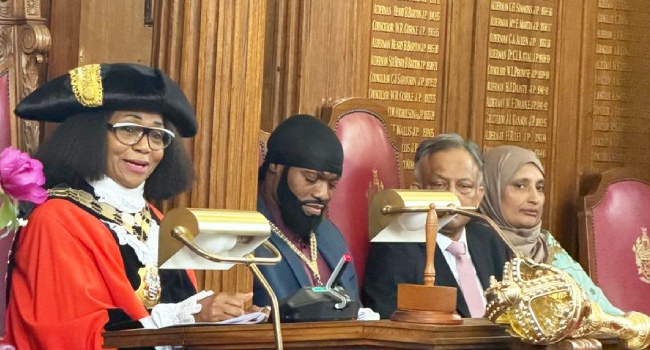
The larger opportunity is to turn that connection into a stronger partnership: one in which diaspora knowledge and capital can help expand healthcare, education, technology, manufacturing and infrastructure at home. Nigerians abroad are not merely sending support back; they are carrying Nigerian possibility into global institutions and industries and showing what Nigerian talent can achieve when it has room to flourish.
Economic Difficulties
The country’s economic difficulties are real. Recent reforms and a stronger external position have offered signs of stabilisation, but growth has not yet brought relief to enough households. The World Bank projected growth of about 4.2 per cent for 2026 while warning that inflation and pressure on incomes continue to weigh on families. The measure of progress will not be a number alone. It will be whether people can afford food, find work, keep a business open and plan for tomorrow with greater confidence.
Security remains an equally urgent test. Insurgency, banditry, kidnapping and communal violence have taken lives, displaced families and disrupted livelihoods. The United Nations has continued to report a volatile humanitarian situation in parts of the country, compounded by economic hardship and environmental shocks. No national promise can feel complete while citizens are unsafe in their homes, on their roads, in their farms or at school.
These are not challenges to be wished away by patriotic language. They require capable institutions, accountable leadership, professional security services, justice that people can trust and sustained investment in the communities most at risk. They require a country that treats safety, education and opportunity as foundations of national life.
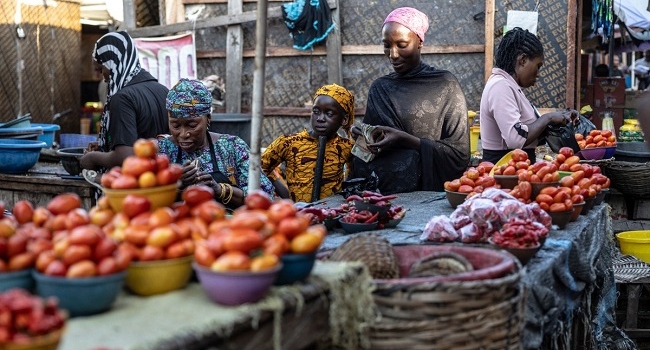
But even in difficult times, Nigerians continue to make life work. Farmers return to their fields. Traders reopen their shops. Teachers keep teaching. Health workers care for patients. Entrepreneurs improvise and expand. Families make sacrifices for children they hope will have a better chance. And across the country, people continue to create sometimes not because conditions are favourable, but because they refuse to surrender their future to those conditions.
Resilience Not Substitute For Good Governance
That resilience is not a substitute for good government. It is a resource that good government should honour and release. The country should not have to depend on extraordinary courage to overcome ordinary failures. But the courage is there, in abundance, and it is one reason hope remains reasonable.

What might Nigeria look like at 76, in 2036, if things work well? Imagine a country where power is reliable enough for businesses to grow and hospitals to serve their communities; where children learn in safe, well-equipped schools and young people can move from education into productive work; where agriculture feeds the nation and supports thriving rural economies; where manufacturing adds value to local resources; and where technology and creative industries generate jobs and global earnings.
Imagine cities that are easier to live in, public services that work, roads that connect people and markets, and a security system that protects citizens with professionalism and public trust. Imagine a diaspora partnership that channels experience and investment into ventures that endure. Above all, imagine a country where the achievements of one community strengthen the prospects of another.
This is not a fantasy. It is a direction, a set of choices that must be made consistently and carried through. Nigeria’s size and diversity make the task demanding. They also give the country an extraordinary range of skills, cultures, enterprise and ideas to draw upon.

Independence was a beginning, not a guarantee. At 66, Nigeria can renew its founding ambition by making the promise tangible in people’s lives: in safety, dignity, decent work, good schools and a fair chance for every child.
The nation still has its difficulties, and the distance to travel is considerable. But it also has a people who continue to imagine what Nigeria could be and who, through their work and resilience, are already building parts of that future.
The next 10 years need not be another chapter of postponed promise. They can be the decade in which Nigeria begins, at last, to make good on it.
The post Nigeria: A Nation Still Becoming At 66 appeared first on Channels Television.