

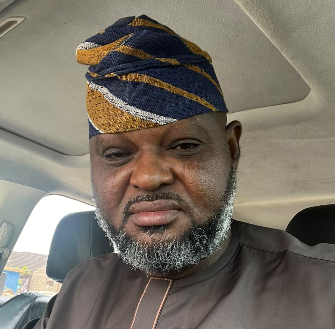
Public affairs analyst and All Progressives Congress (APC) chieftain, Otunba Lukman Taiwo Bakare, has urged Nigerians to look beyond short-term consumer relief and support economic reforms and infrastructure development, saying the country cannot achieve sustainable growth through what he described as “voodoo style of governance.”
Bakare, while assessing Nigeria’s socio-economic development ahead of the 2027 general elections, argued that the country’s economic challenges could not be resolved through the return of fuel and foreign exchange subsidies.
He said Nigeria’s relatively strong currency and lower cost of living in the 1970s and early 1980s were largely products of higher domestic production and exports rather than government subsidies.
“When Nigerians were buying things cheap in the 70s and early 80s, that comfort was not because we were subsidising forex. It was as a result of hard work,” Bakare said.
He recalled that Nigeria was then a major producer of cocoa, palm oil and groundnuts, adding that the country produced much of the food it consumed and had local manufacturing and vehicle assembly capacity.
He argued that sustained currency strength required increased domestic production and export capacity, rather than continued government intervention through subsidies.
Infrastructure over consumption
Bakare criticised successive administrations over their handling of the country’s resources, particularly the use of public funds to subsidise consumption rather than invest in infrastructure and productive sectors.
Comparing the administrations of former President Goodluck Jonathan and former President Muhammadu Buhari, he cited changes in Nigeria’s foreign reserves as part of his argument.
According to him, Nigeria’s foreign reserves stood at about $43 billion in 2010 but fell to about $29 billion by May 2015.
He contrasted this with what he described as an increase in reserves to about $36 billion by May 2023 under Buhari, despite the economic recessions and COVID-19 pandemic experienced during the period.
Bakare criticised the Jonathan administration, alleging that it failed to invest sufficiently in roads, agriculture and power infrastructure.
“Jonathan didn’t build roads that would make transportation cheaper. He didn’t invest in agriculture that would make food cheaper and our export larger. He didn’t invest in power that would improve our manufacturing sector,” he said.
He accused the administration of using foreign reserves to support fuel and foreign exchange subsidies, as well as imports.
Bakare also highlighted infrastructure projects associated with the Buhari administration, including the Lagos-Ibadan Standard Gauge Railway, Lagos-Ibadan Expressway reconstruction and the Second Niger Bridge.
The Buhari administration itself listed the Lagos-Ibadan rail project and the Second Niger Bridge among its major infrastructure projects.
Bakare also cited the Bodo-Bonny Road and Bridges Project in Rivers State and support for the development of the Dangote Petroleum Refinery as examples of investments he believes could contribute to long-term economic development.
“You praised Jonathan’s government for selling cheap imported rice that you consumed, but you insulted Buhari who built the best railway in Africa,” he said.
Tinubu reforms
On the 2027 elections, Bakare defended President Bola Tinubu’s economic policies, describing the reforms as necessary steps to address what he considered longstanding structural weaknesses in the economy.
He particularly cited major road projects, including the Lagos-Calabar Coastal Highway and the proposed Badagry-Sokoto Superhighway, as initiatives that could improve transportation and facilitate the movement of agricultural produce.
Bakare rejected calls by opposition politicians for a return to fuel subsidies, arguing that the cost would place additional pressure on the country’s finances.
“How can any sensible person be talking about subsidy returns in a country with a $37 billion budget and still having a $10 billion budget deficit and you want to add over $10 billion fuel subsidy?” he asked.
He acknowledged concerns over rising food prices and the hardship being experienced by Nigerians but argued that improving roads and other transportation infrastructure was necessary to strengthen agricultural distribution.
“Without road you can’t even have food to eat, because how can food get to your destination without good roads? Our farmers lost most of their harvest because of lack of good roads,” he said.
‘Hold government accountable’
Bakare urged Nigerians to demand accountability from government officials over the delivery of infrastructure projects, rather than focusing exclusively on immediate consumer benefits.
He specifically called for regular updates on highway projects from the Minister of Works, David Umahi, including visual evidence of progress.
The APC chieftain warned against abandoning ongoing structural reforms after the 2027 elections, arguing that sustainable development required continuity and effective implementation.
“No country develops with magic; you must pass through due process to build a nation. Stop looking for miraculous achievements from any government because it will never happen,” Bakare said.
“Nigeria must get it right through reforms and perfect implementation.”
The post Nigeria cannot progress on ‘voodoo governance’ — Bakare appeared first on Vanguard News.