

TRENDING
Transport cost pain bites despite Tinubu’s Oct 1 promise • 10 failed capital projects that could have transformed Nigeria’s economy • Minimum wage trails Africa average by 47% as NLC seeks N500,000 • 10 numbers that explain how the economy changed • White Sox continue to 'believe,' score 1st playoff series win since 2005 • 🎮 Mike Tomlin shows off 12-year build of Minecraft city • FG builds new control centre to strengthen power grid • ‘Tinubu Must Go’: Borno police defend five arrests • Follow live: Yankees opening up Game 2 lead with ALDS on the line • Nigeria @ 66: Six greatest sporting achievements, upsets since 1960 • Follow live: Yanks take advantage of wild pitch, error to increase lead with ALDS on the line • Stakeholders seek private-sector participation in power generation, distribution • N’Delta activist promises inclusive representation for constituency • Nigeria @66: PUNCH celebrates independence, harps on unity • Follow live: Contreras' solo HR puts Red Sox on board as Boston tries to force Game 3 • WNBA playoffs 2026: How the Dream swept the Mystics to reach the semifinals • Follow live: Bellinger's RBI single increases Yankees' lead with spot in ALDS on the line • PDP laments celebration of Bayelsa’s creation amid hardship • Sacked Rivers workers urge A’Court to enforce salary payment • Navy recovers 80,000 litres of stolen crude, arrests three • Transport cost pain bites despite Tinubu’s Oct 1 promise • 10 failed capital projects that could have transformed Nigeria’s economy • Minimum wage trails Africa average by 47% as NLC seeks N500,000 • 10 numbers that explain how the economy changed • White Sox continue to 'believe,' score 1st playoff series win since 2005 • 🎮 Mike Tomlin shows off 12-year build of Minecraft city • FG builds new control centre to strengthen power grid • ‘Tinubu Must Go’: Borno police defend five arrests • Follow live: Yankees opening up Game 2 lead with ALDS on the line • Nigeria @ 66: Six greatest sporting achievements, upsets since 1960 • Follow live: Yanks take advantage of wild pitch, error to increase lead with ALDS on the line • Stakeholders seek private-sector participation in power generation, distribution • N’Delta activist promises inclusive representation for constituency • Nigeria @66: PUNCH celebrates independence, harps on unity • Follow live: Contreras' solo HR puts Red Sox on board as Boston tries to force Game 3 • WNBA playoffs 2026: How the Dream swept the Mystics to reach the semifinals • Follow live: Bellinger's RBI single increases Yankees' lead with spot in ALDS on the line • PDP laments celebration of Bayelsa’s creation amid hardship • Sacked Rivers workers urge A’Court to enforce salary payment • Navy recovers 80,000 litres of stolen crude, arrests three
Nigeria spends N183bn on Cane Sugar imports
Back to Home

Nigeria spends N183bn on Cane Sugar imports

Vanguard Nigeria about 2 hours 2 mins read
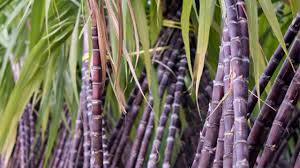
Sugarcane

… as Niger State gov. decries 97% import dependence
By Cynthia Alo 
Nigeria spent about N183.5 billion importing raw cane sugar for refining in the first half of 2026, H1’26, according to the National Bureau of Statistics (NBS) Foreign Trade in Goods Statistics data.
The data however, also shows that quarter-on-quarter, cane sugar imports declined by 26.9 percent to N77.48 billion in the second quarter of the year, Q2’26, against N106.02 billion recorded in Q1’2026.
Brazil was the sole disclosed supplier of the commodity in both quarters, with cane sugar ranking as Nigeria’s top imported raw material product in Q1’26 and third in Q2’26.
Speaking at First Bank’s Agric Expo in Lagos, Governor Umar Bago of Niger State said Nigeria imports 97 per cent of the sugar it consumes, despite having land suited to growing it locally.
He stated: “Nigeria imports 97 per cent of the total sugar we use. All our factories in Lagos, when they say they are producing, it’s not true, they process imported sugar concentrates. Only about three per cent is what we produce”.
He added, “We have arable land. In fact, in my state, sugar grows in the wild, and you can harvest it five times.”
Bago said sugarcane held far broader economic potential beyond raw sugar, citing ethanol production, molasses for confectionaries and animal feed, and bagasse for power generation.
He noted that ‘‘there is no waste’’ in the product’s value chain adding that leftover materials could even be moulded into roofing sheets.
He linked Nigeria’s food import bill to the country’s wider trade imbalance, noting that Nigeria had already imported over $3 billion worth of food this year and could approach $4 billion by year-end. 
Bago stated further: “We cannot rely on imports; we must have a balance of trade. Let 70 per cent of our trade be export-oriented, while 30 percent on imports, so that it is balanced.
‘‘But right now, we have almost 80 per cent import and about 20 per cent, maybe, export”.
Meanwhile, he pointed to Niger State’s own agricultural initiatives, including a state-owned seed research institute and a planned large-scale greenhouse project in partnership with Turkey, aimed at boosting Nigeria’s non-oil export capacity.

The post Nigeria spends N183bn on Cane Sugar imports appeared first on Vanguard News.

This article was sourced from an external publication.

Share this article
OneClick Africa Logo

Africa's premier digital hub for impactful news, entertainment, and business insights.

© 2026 OneClick Africa. All rights reserved.