

By Obas Esiedesa, Abuja
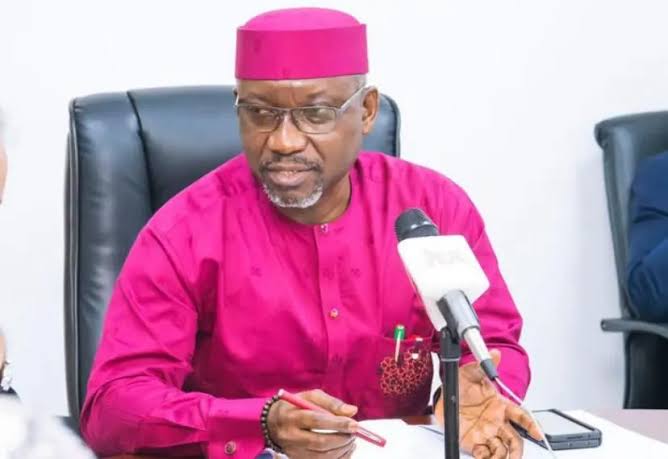
ABUJA — The Minister of State for Petroleum Resources (Gas), Rt. Hon. Ekperikpe Ekpo, has said Nigeria’s energy transition must reflect the country’s development realities, stressing that natural gas remains critical to meeting its immediate energy and industrial needs.
Ekpo spoke on Thursday in Abuja at the 2026 Annual Conference of the Association of Energy Correspondents, Abuja (AECAF), with the theme, “Sustaining Oil and Gas Investment in Nigeria Amid Energy Transition.”
He said while Nigeria supported the global drive towards cleaner and more sustainable energy systems, its transition must also address energy security, economic growth and industrialisation.
According to him, millions of Nigerians still need reliable electricity and access to cleaner cooking fuels, while industries require affordable and dependable energy.
“Natural gas therefore has an important role to play as a transition fuel and as an enabler of industrialisation,” he said.
Ekpo said Nigeria remained endowed with significant oil and gas resources, adding that the government’s responsibility was to create an investment environment that would enable the resources to support industrialisation, job creation, infrastructure development and improved living standards.
He identified policy stability, regulatory certainty, fiscal competitiveness, security and efficient project delivery as critical to sustaining investment in the petroleum sector.
The minister said the implementation of the Petroleum Industry Act (PIA) 2021 and ongoing reforms were designed to provide greater clarity for investors, strengthen regulatory institutions and create a more competitive operating environment.
He, however, acknowledged that legislation alone was insufficient to attract and retain investment, stressing that investors also needed confidence that government policies would be consistently implemented and projects executed efficiently and profitably.
On gas development, Ekpo said the Federal Government was working to make Nigeria’s gas resources a stronger foundation for economic transformation through the Decade of Gas Initiative.
He said the government was seeking to transform the role of gas from being primarily an export commodity to a resource increasingly supporting power generation, manufacturing, fertiliser production, petrochemicals, transportation and other productive activities.
The minister also urged energy correspondents to provide accurate context and balanced analysis of developments in the sector, describing the media as an important stakeholder in building confidence in Nigeria’s investment environment.
“Energy correspondents therefore have a critical responsibility not only to report developments, but also to provide the Nigerian public with accurate context and balanced analysis,” he said.
Speaking at the conference, the Commission Chief Executive of the Nigerian Upstream Petroleum Regulatory Commission (NUPRC), Engr. Oritsemeyiwa Eyesan, said Nigeria averaged about 1.68 million barrels per day of crude oil and condensate in August 2026, with crude production meeting the country’s OPEC quota for the fourth consecutive month.
Eyesan, who was represented by NUPRC Director, Surface Development, Joseph Ogunsola, said the improvement provided a stronger base for pursuing production targets of two million barrels per day in the near term and three million barrels per day by 2030.
She said the scale of investment opportunities in the upstream sector was already evident, noting that the commission had, since 2024, approved Field Development Plans representing more than $57 billion in investment.
She added that 22 major offshore projects expected between 2026 and 2030 carried estimated investment potential of between $30 billion and $50 billion.
Eyesan stressed that the priority was now to translate approvals and investment commitments into actual project execution and new production.
Earlier, the Chairman of AECAF, Mr John Ofikhenua, said the conference was designed to stimulate discussion on how Nigeria could sustain investment in its hydrocarbon resources amid changing global energy priorities.
Ofikhenua said investment in the oil and gas industry had been affected by adverse policies and global developments, citing the shale revolution in the United States, the COVID-19 pandemic and the growing global push for energy transition as factors that had contributed to investment contractions.
He said Nigeria needed to sustain adherence to the Petroleum Industry Act, strengthen national security and maintain stable policies to preserve investor confidence and attract fresh capital into the petroleum industry.
He particularly stressed the need to secure the Niger Delta, describing peace and stability in the region as important to sustaining oil and gas investment.
The post Nigeria’s Energy Transition must reflect development needs — Ekpo appeared first on Vanguard News.