

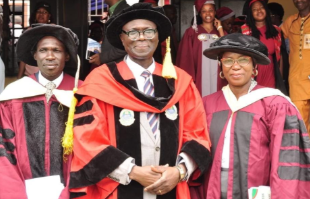
….AS FSOT graduates 93 students
By Chioma Obinna
Nigeria is facing an acute shortage of occupational therapists, with about 80 per cent of those trained in the country reportedly leaving for greener pastures, worsening access to rehabilitation services for more than 200 million Nigerians.
The Acting Registrar of the Federal School of Occupational Therapy (FSOT), Lagos, Mrs Philomena Omoike, raised the alarm at the institution’s 20th and 21st combined convocation, where 93 students graduated.
Omoike said the shortage was so severe that major health institutions were struggling to maintain adequate occupational therapy services, while the entire northern region has fewer than five occupational therapists and occupational therapy assistants.
“The shortage is very severe. Nigeria is facing an acute shortage of occupational therapists,” she said.
According to her, FSOT has trained about 900 occupational therapists over the past 24 years, but about 80 per cent have migrated or left for further studies.
She said the Medical Rehabilitation Therapists Registration Board of Nigeria had only about 160 registered occupational therapists, adding that not all were practising in Nigeria.
“In the psychiatric hospital, there are just five occupational therapy assistants and four occupational therapists. The other hospitals in Nigeria cannot boast of up to eight occupational therapists or occupational therapy assistants, while in the entire North, there are not up to five.
“These OTs and OTAs are to render healthcare to over 200 million Nigerians. So you can imagine,” she said.
Omoike called for more occupational therapy training institutions, improved infrastructure, funding and better remuneration to address the manpower crisis and stem migration.
She welcomed the Federal Government’s approval for occupational therapy programmes to be established in 20 universities across the country, but warned that a shortage of qualified lecturers could hamper implementation.
“It is going to be a real task for recruitment of lecturers in these upcoming schools because from our own end, I know that getting lecturers is a very huge task,” she said.
The Medical Director and Chief Executive Officer of the Federal Neuropsychiatric Hospital, Yaba, Dr Olugbenga Owoeye, also called for more training institutions, particularly in the North, South-East and South-South.
“There is scarcity of occupational therapists. We need to do something about it,” he said.
Owoeye said FSOT had recorded significant progress, including its elevation to a monotechnic and approval by the National Board for Technical Education to award the National Diploma in Occupational Therapy.
He said the school had also been integrated into the JAMB admission portal, while a Federal Ministry of Education waiver had created a Direct Entry pathway for past graduates seeking university degrees.
The Acting Provost, Mr Ayooluwa Oni, said the school was strengthening its curriculum through innovation and entrepreneurship, including the development of affordable rehabilitation equipment using locally available materials.
He said the institution’s five-year vision was to become a degree-awarding institution and advanced professional training centre.
Meanwhile, guest speaker and founder of Enabling Occupational Therapy, Mrs Kemi Peters, urged the graduates to embrace leadership, innovation and advocacy.
“AI needs your brain,” Peters told them, stressing that technology should complement, not replace, empathy, compassion and human interaction in occupational therapy.
Two outstanding graduates, Ms Busari Olanyika Shekinat and Ms Igho Rebecca Ebun, received automatic employment letters from the Federal Neuropsychiatric Hospital, Yaba, in recognition of their academic performance.
The post Nigeria’s rehabilitation crisis deepens as 80% of occupational therapists leave appeared first on Vanguard News.