

By Chioma Obinna
Experts in orthopaedic and trauma care have called for a fundamental shift in Nigeria’s approach to treating patients with traumatic and musculoskeletal injuries, warning that successful surgery alone does not necessarily translate into recovery or restoration of normal life.
They said effective trauma care requires a multidisciplinary, patient-centred approach in which surgeons, nurses, anaesthetists, physiotherapists, occupational therapists, nutritionists, psychologists, pharmacists and other healthcare professionals work together from diagnosis through treatment, rehabilitation and reintegration into society.
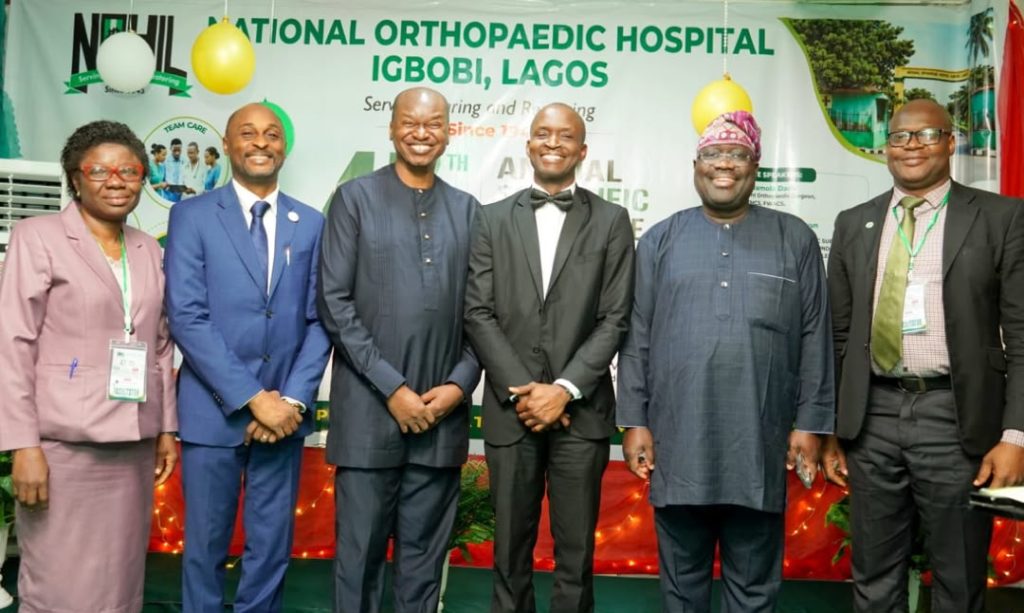
The experts spoke at the 47th Annual Scientific Conference of the National Orthopaedic Hospital, Igbobi, Lagos, NOHIL, with the theme, “Multidisciplinary Team Care in the Management of Musculoskeletal Diseases,” and sub-theme, “Burn Injuries.”
Representing the Medical Director of NOHIL, Dr Wakil O. Lawal, at the opening of the conference, the Head of Clinical Services, Dr F.C. Nwachukwu, said the era when one doctor could independently manage an injury from beginning to end had changed.
He said: “Back in the days, it was largely a one-man affair, where one individual would manage injuries from beginning to end. But over the years, things have changed. Today, there is no single individual that can manage complex injuries alone. Even for simple injuries, outcomes are much better when you have a team of individuals caring for the patient.”
Speaking on the need to move beyond the traditional approach to trauma management, Consultant Orthopaedic Surgeon and Chief Executive Officer of Redeemer’s Health Village, Dr Adedamola Dada, said the ultimate measure of successful treatment should not be limited to whether an operation was technically successful.
Using the example of a young man involved in a road traffic accident who sustained multiple fractures, Dada explained that a surgeon could successfully fix the fractures and obtain good X-rays, yet the patient might still be unable to return to work or support his family.
He said, “Technically successful treatment does not always mean recovery. A technically united fracture does not mean that the patient has fully recovered. The union of the bones is not the same thing as restoration of life. What multidisciplinary care targets is actually the restoration of life.”
According to him, the traditional silo approach, where the surgeon manages the patient and other professionals are brought in only when necessary, can result in delayed intervention, poor rehabilitation, complications and repeated hospital visits.
He said multidisciplinary care should begin from the point of presentation, with the various professionals developing shared goals and treatment plans around the patient.
Dada noted that a trauma patient should not be viewed merely as an injury requiring repair, stressing that social, economic, family and psychological factors could determine whether the patient actually recovered.
He said a patient who had lost his job following an injury might require occupational rehabilitation and support to transition into another form of employment rather than simply being discharged after his fracture had healed.
He also stressed the importance of involving families and caregivers in treatment decisions, noting that the environment to which a patient returned could affect recovery.
According to him, a patient discharged after treatment could still face serious difficulties if, for instance, he lived on the fourth or fifth floor of a building without a lift.
Dada said effective multidisciplinary care also required a change in professional relationships, with healthcare workers communicating freely and contributing to decisions regardless of hierarchy.
“It’s absolutely very important that the team must communicate in a free manner, not in a junior-senior manner,” he said.
He identified leadership commitment, clear protocols, effective communication and patient involvement as critical to making multidisciplinary care work in Nigerian hospitals.
He also advocated regular multidisciplinary meetings, electronic medical records, digital imaging and other technologies that could allow professionals to share information and coordinate treatment.
The expert said healthcare institutions should also measure and publish patient outcomes, arguing that the focus must shift from individual professional excellence to team excellence.
On burn injuries, Consultant Plastic Surgeon at the University College Hospital, Ibadan, Dr Ayodele Olukayode Iyun, said burn injuries remained a major public health concern in Nigeria, with consequences ranging from death and permanent disability to scarring and social and economic difficulties.
He noted that the pattern of burn injuries was changing, with domestic gas explosions increasingly becoming a major source of serious burns.
According to him, gas-explosion patients were being seen almost weekly at UCH, making domestic gas explosions one of the leading causes of burn-related injuries encountered at the facility.
He said children under five years remained particularly vulnerable to burns, with scalds common among children, while flame burns were more prevalent among adults.
Iyun stressed that burn management required a multidisciplinary team, including surgeons, nurses, anaesthetists, nutritionists, physiotherapists and psychologists.
He said severe burns could affect multiple systems of the body and required early assessment of the airway, breathing and circulation, as well as attention to inhalation injuries and appropriate fluid resuscitation.
He warned against inappropriate first aid practices, urging Nigerians to cool burns with running water for about 20 minutes and avoid applying substances such as toothpaste, eggs, butter, oil or baking powder.
He also advised against using ice directly on burns and urged victims to seek appropriate medical care, particularly where the injury was extensive or involved critical areas of the body.
Iyun said multidisciplinary organisation and teamwork had contributed significantly to improvements in burn outcomes, noting that mortality at his institution had declined substantially over time following improvements in organisation, protocols, interdisciplinary rounds and burn audits.
“You may have a good surgeon, but if the rest of the team is not functioning properly, the patient may not survive,” he said.
He also stressed the importance of nutrition, infection prevention, pain management, rehabilitation, psychological support and early surgical intervention where indicated in the management of serious burns.
The Chairman of the Local Organising Committee and Head, Training Schools, Education, Research and Statistics, NOHIL, Dr Oladimeji Ranti Babalola, said the conference was designed to critically examine challenges in the management of musculoskeletal diseases and develop innovative solutions for improving healthcare delivery.
He said the complexity of orthopaedic conditions made collaboration among healthcare professionals essential, particularly in a setting where patients often present late and health facilities face challenges including inadequate equipment and low health insurance coverage.
Babalola said the responsibility for restoring a patient to normal activity could no longer be viewed as belonging to the doctor alone.
“It goes beyond the role of the doctor today. It includes every other member of the healthcare team,” he said.
The experts therefore called for stronger institutional support for multidisciplinary care, better communication among healthcare professionals, improved rehabilitation services and greater involvement of patients and caregivers in treatment planning.
They stressed that the objective of trauma care should ultimately extend beyond repairing damaged bones or treating immediate injuries to helping patients regain function, independence and the ability to return to productive lives.
The post Nigeria’s trauma burden calls for coordinated care — Orthopaedic surgeons appeared first on Vanguard News.