

...Accuse FG of enriching few at expense of citizens
...Say workers, masses under siege
…Describe ₦70,000 minimum wage as cruel joke
By Victor Ahiuma-Young & Henry Obetta
Labour leaders and pro-democracy activists have called on Nigerians to unite against rising petrol prices and worsening economic hardship, accusing the Federal Government of implementing policies that impoverish workers and the masses while enriching a privileged few.
They warned that rising pump prices of Premium Motor Spirit (PMS), popularly known as petrol, had eroded workers’ purchasing power, deepened poverty and pushed millions of Nigerians into a daily struggle for survival.
The activists, including the Nigeria Labour Congress (NLC), human rights lawyer, Femi Falana, SAN, and members of the Joint Action Front (JAF), made the call at the weekend in Lagos during a symposium held as part of the first memorial celebration in honour of Comrade Abiodun Aremu.
NLC President, Joe Ajaero, represented by the union’s Acting General Secretary, Benson Upah, said the removal of the petrol subsidy had inflicted devastating consequences on workers and the wider population, insisting that organised labour would continue to demand relief from the Federal Government.
In an address delivered on his behalf, Ajaero described the prevailing economic situation as a crisis of survival, arguing that workers could no longer cope with rising transport fares, food prices, electricity tariffs and the depreciation of the naira.
“The removal of the fuel subsidy has devastated Nigeria’s working class and masses,” the address stated.
According to the NLC, rising transport costs have forced many workers to choose between paying exorbitant fares and walking long distances to their workplaces.
The union also cited increases in the prices of essential commodities, noting that a bag of rice that previously sold for about ₦30,000 now costs more than ₦80,000, while the price of a loaf of bread has risen from approximately ₦500 to ₦1,500.
It further argued that rising electricity tariffs had forced some small businesses to shut down, while the depreciation of the naira had increased the cost of imported medicines, industrial inputs and other essential goods.
The labour movement attributed the worsening conditions to what it described as anti-people economic policies implemented without adequate consultation or effective measures to cushion their impact.
“The government has effectively declared war on its own people, pushing the majority to the fringes of survival,” the address declared.
The NLC said the crisis reflected economic policies that, in its view, enriched the ruling class while deepening the hardship experienced by ordinary citizens.
NLC issues ultimatum over petrol prices
The NLC disclosed that it issued a two-week ultimatum to the Federal Government on October 9, demanding an immediate reduction in petrol prices.
According to the address, the ultimatum was intended to compel the government to address the growing disconnect between workers’ earnings and the cost of living.
Ajaero said: “Most recently, the NLC issued a two-week ultimatum to the Federal Government, demanding an immediate reduction in the price of Premium Motor Spirit (PMS), also known as petrol.
“This ultimatum is not a mere bargaining chip but a solemn warning. If the government does not act within the stipulated timeframe, the NLC will have no choice but to seek remedial steps with all of us in this hall today.”
He argued that petrol prices should be reduced to a level consistent with the purchasing power of workers earning the national minimum wage of ₦70,000 monthly.
The NLC recalled that when the minimum wage was set at ₦70,000 in July 2024, petrol sold for approximately ₦668.30 per litre, compared with prices exceeding ₦1,400 per litre in many parts of the country at the time of the symposium.
“A worker earning ₦70,000 a month cannot afford to buy petrol at ₦1,400 per litre. The government has effectively rendered the minimum wage meaningless.
“The ₦70,000 minimum wage was inadequate when it was announced. It is now a cruel joke. The NLC will not accept a situation where Nigerian workers are expected to survive on starvation wages while the cost of living continues to rise,” Ajaero declared.
Beyond demanding a reduction in petrol prices, the NLC urged the government to take concrete measures to stabilise the naira, reduce inflation and strengthen domestic refining capacity.
“The removal of the subsidy was justified on the grounds that it would attract investment in local refining. Where is that investment?
“The struggle against the fuel subsidy removal is a struggle for democracy, because a policy that is imposed on the people without their consent, and against their will, is the antithesis of democracy.
“And it is a struggle for survival, because the removal of the subsidy has made it impossible for millions of Nigerians to meet their basic needs,” the address stated.
Falana questions government’s approach to fuel pricing
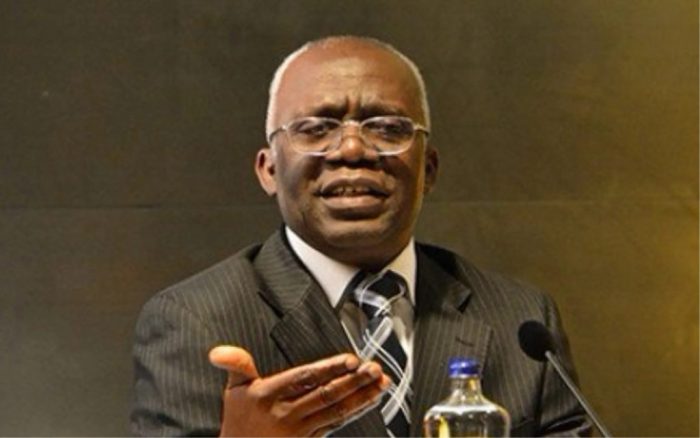
Falana, chairman of the event, challenged the argument that withdrawing the petrol subsidy was the only viable option available to the government, pointing to the continued use of subsidies in other countries.
“As you are all aware, countries across the world, including major capitalist economies such as the United States, Germany and France, subsidise not only fuel but also education, healthcare and other essential services.
“That is the reality today. A simple internet search will reveal announcements of various subsidies in different countries,” he said.
The senior advocate argued that governments should consider different policy options to protect citizens from economic shocks rather than treat subsidy removal as unavoidable.
He also referred to international developments concerning energy supplies and sanctions against Russia, arguing that countries routinely reconsider their economic positions in response to changing circumstances.
Falana criticised the Federal Government’s position on petrol prices, saying Nigerians continued to face high costs despite official discussions about reducing the commodity’s landed cost.
“Here in Nigeria, with elections approaching, the government is telling us that the best it can offer is that the landed cost of fuel will be ₦1,350 per litre.
“When the government talks about landed cost, we must consider what that means for Nigerians in Abuja, Jos, Maiduguri and other parts of the country, where additional transportation and distribution costs may apply. That is what this administration has offered the Nigerian people.
“Among those seeking to take over power, only a few, including Omoyele Sowore and Donald Duke, have reportedly stated that, if given the opportunity, they would ensure that fuel sells for less than ₦500 per litre,” he said.
₦70,000 wage buys only 50 litres of petrol — JAF
Rashidat Adesina of the Joint Action Front said the increase in petrol prices since the announcement of subsidy removal in 2023 had placed a disproportionate burden on low-income earners.
She recalled that petrol sold for approximately ₦165 per litre before the subsidy was removed, after which the price rose to about ₦500 and subsequently ₦600 per litre.
“We are now discussing prices of ₦1,350 to ₦1,400 per litre, depending on the location and filling station,” she said.
Adesina challenged Nigerians to consider what the increase meant for workers whose monthly earnings remained far below the cost of maintaining a household.
“What does this mean for workers and poor Nigerians?” she asked.
She illustrated the situation by comparing the minimum wage with prevailing petrol prices, noting that a worker earning ₦70,000 monthly could purchase only 50 litres of petrol at ₦1,400 per litre.
“The national minimum wage is ₦70,000 per month. At ₦1,400 per litre, an entire month’s minimum wage can purchase only 50 litres of petrol. That calculation does not include rent, school fees, food, transportation or other essential expenses,” she said.
Adesina said the comparison demonstrated how rising energy costs had undermined workers’ ability to meet their basic needs, even before accounting for other household expenses.
She also cited figures attributed to the National Bureau of Statistics that reportedly placed the national poverty threshold at approximately ₦345 per person per day, arguing that the figures reflected the vulnerability of households struggling with rising prices and stagnant incomes.
However, the specific figures and their reference periods were not established in the address.
“The consequences for ordinary Nigerians are severe. While workers and poor households struggle, sections of the business community continue to accumulate enormous wealth,” she said.
Her remarks reinforced the central argument at the symposium that the burden of economic adjustment was falling disproportionately on workers, traders, artisans, young people and other low-income groups.
Activists demand change in economic priorities
The speakers called on the Federal Government to review economic policies they said had increased the cost of living without providing adequate protection for vulnerable citizens.
They argued that reducing petrol prices, reviewing the minimum wage, stabilising the naira and investing in domestic refining should form part of a broader response to the economic crisis.
The post NLC, Falana, activists rally Nigerians against fuel price hike appeared first on Vanguard News.