

*Bloodline, Ballot Box, and the Bedroom: Lessons from Kano’s High Stakes Political Divorce
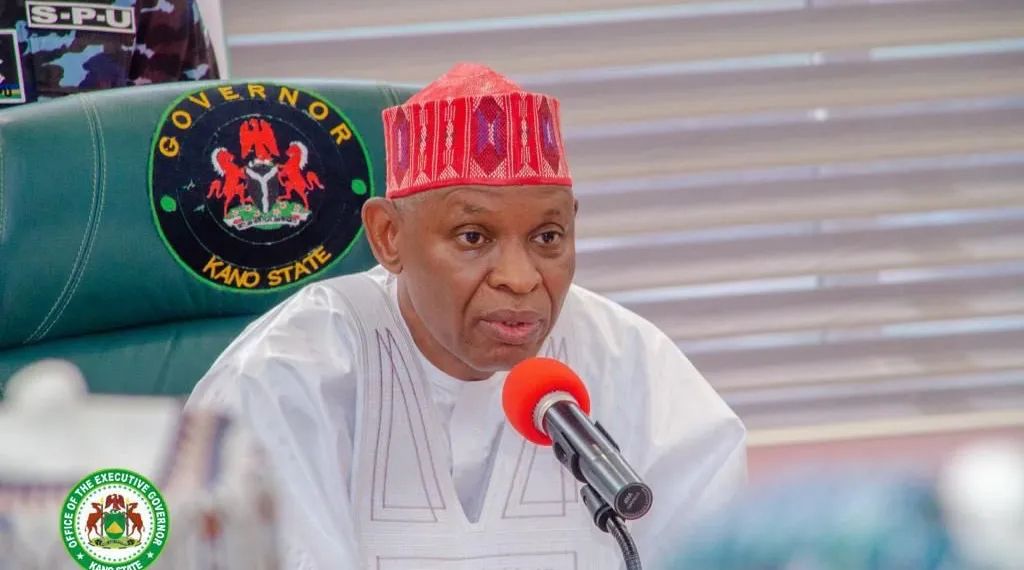
A marriage rarely belongs to two people alone. In northern Nigeria, where zumunci binds families through kinship, mutual obligations and family honour, marriage often carries expectations that extend far beyond the couple. For twenty years, the union between Kano State Governor Abba Kabir Yusuf and Zainab Musa Kwankwaso appeared to demonstrate that bloodline and political loyalty could coexist under one roof. Today, that roof has given way.

The breakdown of the marriage between Governor Yusuf and Zainab, niece of his estranged political mentor, Senator Rabiu Musa Kwankwaso, and raised in the former governor’s household, is more than a headline from Government House. It raises an uncomfortable question: what happens when the political alliance connecting two families collapses, but the marriage binding them is left caught in its aftermath?
To understand the significance of this separation, one must understand how political trust is built in Kano. Political relationships are not always sustained by ambition and party loyalty alone. Sometimes, they are reinforced through family connections.
When Zainab and Abba Yusuf married on July 29, 2006, Yusuf was already deeply embedded in Kwankwaso’s political circle, having served as his personal and special assistant during Kwankwaso’s first tenure as governor and subsequently during his tenure as Minister of Defence. Zainab, raised in Kwankwaso’s household, was not simply marrying an ambitious politician. Their union connected two families whose fortunes were closely intertwined.
Over twenty years and six children, the marriage became one of the most personal bonds surrounding the Kwankwasiyya movement. Yusuf’s years of loyalty and proximity to Kwankwaso eventually culminated in his emergence as the latter’s preferred successor and his election as governor in 2023. The trusted lieutenant had become governor, with the backing of the political establishment that had shaped his career.
Yet there is a particular difficulty with marriages surrounded by powerful family and political networks. The expectations attached to them can become difficult to separate from the personal commitments of the couple. While everyone shares the same interests, the arrangement may appear harmonious. The real test comes when those interests begin to diverge.
That divergence became unmistakable in January 2026, when Governor Yusuf abandoned the New Nigeria Peoples Party (NNPP), the platform on which he won office, and defected to the ruling All Progressives Congress (APC). The decision marked a decisive break with Kwankwaso, the political mentor who had nurtured his rise. With Kwankwaso pursuing a different political direction ahead of the 2027 elections, an alliance that once united two households became a bitter contest over Kano’s political future.
The timing of the marital separation has inevitably attracted attention. But timing is not proof of causation.
In her petition before the Upper Area Court in Gudu, Abuja, Zainab sought dissolution through khul’i, an Islamic legal procedure through which a wife may initiate divorce, ordinarily by returning her dowry or offering compensation. She cited an irretrievable breakdown of the marriage, pointing to a prolonged absence of mutual care, love, affection and emotional connection, and stated that reconciliation had failed.
These are the grounds stated in the petition. They must not be replaced with political explanations that have not been established by the court. Nevertheless, the political circumstances surrounding the separation provide an important context for understanding the wider family tensions.
When a protégé breaks with his benefactor, the consequences rarely remain confined to party offices and campaign rallies. Where marriage connects the two households, the rupture becomes harder to contain. A woman whose husband and father figure stand on opposing sides of a bitter political divide occupies a difficult position. It is not for outsiders to presume her feelings, but the circumstances illustrate the pressure competing loyalties can place on a family.
Reports that Zainab left the Kano Government House for her father’s residence before travelling to Abuja brought the domestic situation further into public attention.
On November 16, Governor Yusuf himself addressed the matter publicly. Speaking in Hausa to pensioners at the Government House, he compared having one wife remaining to being demoted from a corporal to a constable, confirmed that divorce papers had been issued and asked residents to pray for him as he prepared to marry again.
Whatever humour he intended, the remarks turned a twenty year marriage and its painful breakdown into public banter while court proceedings remained pending. Six children and two decades of shared history deserved greater restraint.
The significance of the Kano separation, however, extends beyond the political elite. Most Nigerians will never occupy a Government House or become entangled in a dispute between a governor and his political mentor. Yet the family pressures exposed by this episode are familiar in ordinary Nigerian homes.
Across our society, marriages are sometimes expected to serve purposes beyond the happiness of the people entering them. Parents seek to strengthen family alliances, secure financial stability, preserve social standing or satisfy expectations established by elders. Such arrangements may look attractive while everyone remains on the same side. But what happens when the interests that brought the families together begin to conflict?
When the architects behind a family arrangement fall out, the spouse caught in the middle may find ordinary conversations becoming loyalty tests. Visits home begin to look like taking sides. Silence is interpreted as betrayal. The individual is left negotiating between the bloodline that raised them and the partner with whom they have built a life.
This is the danger of allowing external loyalties to become the governing authority of a marriage. Family support should strengthen a home, not compete with the relationship at its centre
Whatever private circumstances brought the Yusuf marriage to this point, twenty years and six children represent a history that deserves dignity. A marriage may end, but its years of shared humanity should never be trivialised. Public office does not diminish the feelings or dignity of the other person in a marriage.
Ultimately, a lasting home requires a foundation that belongs to the couple themselves. Family connections may bring two households together, and politics may elevate their fortunes, but neither should dictate whether their marriage survives.
A person may marry into a family, but marriage should never become a lifelong contract to serve its political interests. No marriage should have to choose between two masters before it can remain a home.
Stephanie Shaakaa
08078600871
The post No roof for two masters, by Stephanie Shaakaa appeared first on Vanguard News.