

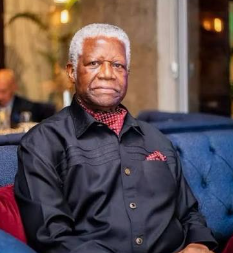
UMUAHIA — Former Chief of General Staff, Gen. Ike Omar Sanda Nwachukwu (retd.), has called for an intelligence-driven approach to tackling insecurity in the South-East, stressing that lasting peace can only be achieved through trust, inclusive governance, economic development and stronger regional collaboration.
Speaking at the South-East Regional Security Summit held in Umuahia on Thursday, Nwachukwu said security should not be viewed merely as the absence of violence but as the presence of justice, opportunity, public trust and legitimate authority.
According to him, the region’s security challenges, including kidnappings, attacks on public institutions and violent crimes, are symptoms of a deeper erosion of confidence in institutions, leadership and the future.
He noted that while military force remains essential, it cannot by itself resolve political, economic or social problems.
“Armies create the space for peace. Societies must then build the peace,” he said.
The retired general urged governments to prioritise intelligence gathering through stronger partnerships with local communities, describing public trust as the country’s greatest intelligence asset.
He also called for greater community participation in security efforts, saying parents, traditional rulers, religious leaders, youth groups, market unions and professional associations all have critical roles to play in safeguarding society.
Nwachukwu further identified development as a key component of national security, arguing that investments in education, healthcare, infrastructure, agriculture, digital technology and employment would reduce the vulnerability of young people to criminal recruitment.
He stressed the need to distinguish between legitimate democratic grievances and criminality, urging governments to create lawful channels for dialogue while ensuring that violent acts are not mistaken for political expression.
On regional security cooperation, he advocated closer collaboration among South-East states through intelligence sharing, coordinated emergency response systems, joint operational planning and sustained engagement among governors, security agencies and community leaders.
Nwachukwu also urged a review of Nigeria’s military structure, suggesting that the absence of a divisional headquarters in the South-East deserves strategic consideration.
He said the region’s economic importance, population and strategic location justify periodic assessments of military force deployment to ensure operational effectiveness and strengthen national cohesion.
According to him, military formations are not only operational assets but also symbols of national inclusion, capable of enhancing command efficiency, intelligence coordination, civil-military relations and public confidence.
He maintained that any review of military deployment should be guided by professional military considerations, emerging security realities and the need to promote national integration.
The elder statesman also cautioned against violent political competition, saying democracy should serve the common good rather than become a source of conflict.
He urged political leaders to demonstrate respect for the rule of law, democratic institutions and the sanctity of human life, warning that political violence weakens the distinction between democratic engagement and criminality.
Nwachukwu expressed optimism that the South-East could build lasting peace by harnessing its strengths in enterprise, education, innovation and community organisation through cooperation among governments, security agencies, traditional institutions, religious bodies, civil society and the private sector.
He urged participants at the summit to adopt practical measures that would strengthen security, restore public confidence and promote national unity.
The post Nwachukwu seeks intelligence-driven security, calls for army division in South-East appeared first on Vanguard News.