

By Anayo Okoli
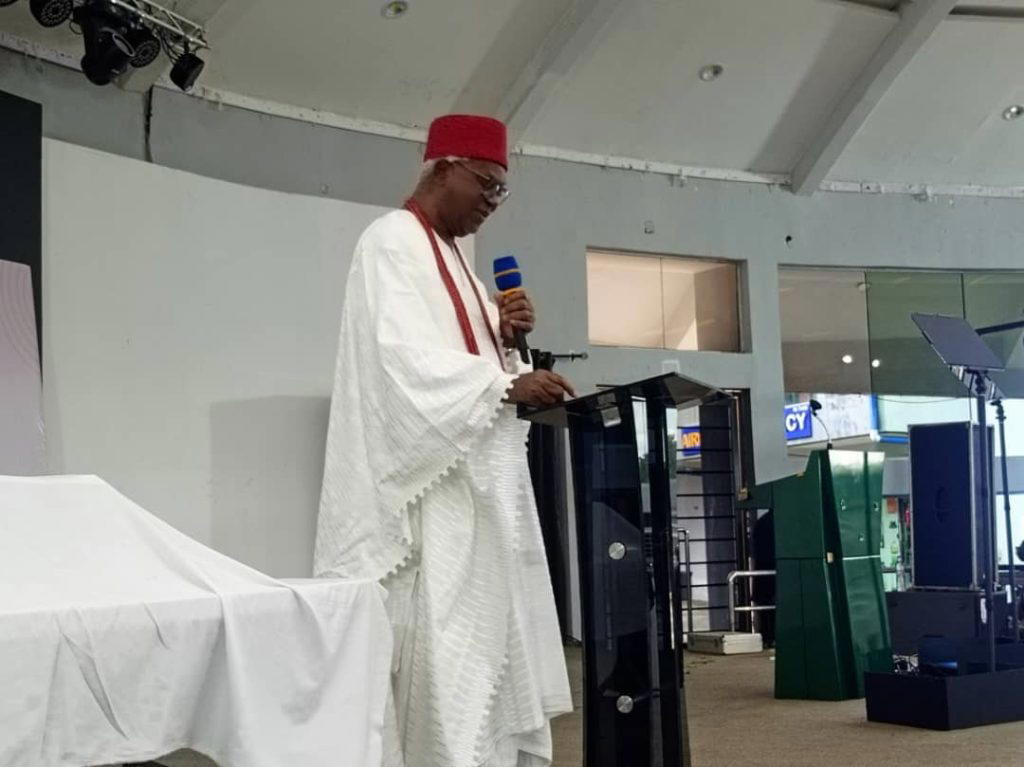
ENUGU — Chairman of the 22nd All Nigerian Editors Conference, HRH Igwe Alfred Nnaemeka Achebe, Obi of Onitsha, has urged Nigerian editors to intensify efforts to combat artificial intelligence-generated disinformation, warning that AI-powered falsehoods could undermine informed participation in elections and erode public trust in democracy.
Achebe gave the charge while setting the tone for the 22nd conference in Enugu, where he described the media as a critical guardian of democratic values.
He urged editors to ensure that Nigerians were not deceived by fabricated information, noting that the rapid development of AI had transformed the scale and sophistication of disinformation.
According to him, AI can now be used to create convincing voices, videos, images and news reports within seconds.
“A voice that sounds exactly like a governor can now say what he never said. A video can place a candidate where he never was. An image can show riots that never occurred, timed to inflame passions 48 hours to an election,” Achebe said.
The traditional ruler warned that AI-generated falsehoods in indigenous languages, including Igbo and Hausa, could spread rapidly through WhatsApp groups, town unions, family networks and other community platforms.
He said Nigeria’s diversity, highly contested politics and reliance on community and family networks could facilitate the rapid spread of fabricated content.
Achebe urged editors to prioritise verification over speed, saying journalists must resist the pressure to publish unverified information simply because they want to be first.
“The discipline of pausing to ask, ‘How do I know that this is true?’ must become as instinctive as the instinct to rush to publish used to be,” he said.
He also called on media organisations to deepen their understanding of AI and build the capacity to identify manipulated content, including synthetic voices, fabricated images and coordinated networks designed to amplify falsehoods.
Achebe urged the media to partner with institutions such as the Nigerian Communications Commission, National Orientation Agency, universities and town unions to educate citizens on identifying AI-generated content.
“A people who believe everything are as much in danger as a people who believe nothing,” he said.
The conference chairman further challenged editors to demonstrate professional integrity by debunking falsehood irrespective of the political camp that might benefit from it.
“It is easy to debunk a lie that favours your opponents. It is harder to debunk a lie that flatters your own camp,” he said.
He proposed the establishment of a joint Election Rapid Response Desk involving newsrooms to identify, verify and debunk viral falsehoods in real time before they cause widespread damage.
Achebe said such collaboration had become necessary because of the economic pressures, political intimidation and speed of information confronting Nigerian journalism.
He described democracy as “a fire lit to keep the house warm,” saying it required constant attention and protection to survive.
According to him, the ballot box represents a modern expression of the traditional African principle that legitimate authority derives from the consent and informed judgment of the people.
“The ballot gives the citizen a voice. The media is the mirror by which the citizen sees the world clearly enough to know what to say with that voice.
“When the mirror is cracked, or worse, deliberately distorted, the citizen no longer votes from truth, but votes from illusion,” he said.
Achebe urged the editors to make the Enugu conference a turning point in the fight against disinformation, saying the gathering should produce concrete action rather than speeches and communiqués.
“Let it be a declaration of war against falsehood, against the erosion of truth in our public life. Enugu should be remembered as the place where Nigeria’s editors resolved to defend the public from the lie and the citizens from deception,” he said.
He also urged Nigerians to register, participate in elections and vote according to their conscience, while calling on the media to publicise the importance of civic participation.
Welcoming delegates to Enugu, Achebe described the Coal City as “a city built by the Igbo, tested by history and known for resilience,” saying it was an appropriate venue for discussions on sustaining democratic governance.
He concluded by urging the media to remain a “constant compass” pointing the nation towards truth whenever political tensions rise or institutions face challenges.
The post Obi of Onitsha urges editors to combat AI disinformation appeared first on Vanguard News.