

By Victor Ahiuma-Young
For years, casualisation has remained one of the most contentious labour issues in Nigeria’s oil and gas industry, pitting workers’ unions against employers over the widespread use of temporary, contract and other forms of insecure employment in a sector where job stability and decent working conditions are critical to the welfare of workers.
The practice has continued to attract concern from organised labour, particularly over the vulnerability of workers employed on casual or short-term contracts, who may perform duties similar to those of permanent employees without enjoying comparable job security, benefits and protections.
Despite repeated engagements with employers and regulators, the unions have continued to push for an end to what they consider an exploitative employment arrangement.
It is against this backdrop that the Nigeria Union of Petroleum and Natural Gas Workers, NUPENG, has taken its campaign against casualisation to the highest level, seeking the intervention of President Bola Tinubu to bring an end to the practice, particularly in the upstream sector of the oil and gas industry.
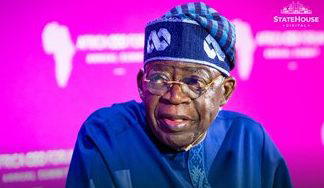
NUPENG National Executive President, Otunba Salimon Akanni Oladiti, raised the issue when the union paid a courtesy visit to President Tinubu at the State House, Abuja, urging the President to use his good offices to stop the casualisation of workers in the sector.
Oladiti said the union had engaged some of the affected oil companies without achieving the desired results, noting that NUPENG and the Petroleum and Natural Gas Senior Staff Association of Nigeria, PENGASSAN, had tolerated the practice partly because of the enormous disruption industrial action could cause to the national economy.
But the union’s appeal to the President was not limited to workers’ employment status.
NUPENG also used the occasion to commend the administration’s policies on road infrastructure, Compressed Natural Gas, CNG, gas-to-power initiatives and the revival of the country’s moribund refineries, while calling for similar attention to the nation’s neglected petroleum storage infrastructure.
Battle moves to Aso Rock
The casualisation of workers, particularly in the upstream oil sector, has become a major concern for NUPENG.
The union believes the practice is inconsistent with the importance of an industry that remains central to Nigeria’s economy.
Presenting the union’s position before President Tinubu, Oladiti said: “Your Excellency, our relationship with the International Oil Companies and the indigenous players in the upstream sector has been very cordial. However, we want to seize this opportunity to bring to your attention an unhealthy trend we have been trying to correct with little to no success. It is the casualisation of workers, particularly in the upstream sector.
“For a sector that is strategic and taken as the economic jugular of the nation, NUPENG and its counterpart, the PENGASSAN have been tolerating these unwholesome practices, knowing full well the enormous disruption that any industrial actions could cause to the economy.”
The statement captures the dilemma confronting the oil workers’ unions. While they are expected to defend the interests of their members, any prolonged industrial action in the petroleum industry could have consequences far beyond the workplace, potentially affecting fuel supply, transportation, electricity generation and government revenues.
However, NUPENG says its restraint should not be interpreted as acceptance of casualisation.
“We have engaged the management of some of the affected companies without results. Mr. President, we urge you to use your good offices to stop casualisation of workers in our sector,” Oladiti appealed.
Labour-friendly policies
Despite its demand for presidential intervention on casualisation, NUPENG’s presentation was not entirely critical of the administration.
The union acknowledged what it described as positive interventions by the Tinubu administration, particularly in infrastructure and the energy sector.
“On behalf of the entire membership of NUPENG, I extend our warmest fraternal greetings. We are deeply grateful for this audience, which underscores the importance of the relationship between the labour movement and the highest office in the land.
“We remain ever grateful for this historic audience with a leader whose bond with our Union dates back to his years as Lagos State Governor.
“We commend your Renewed Hope Agenda for being a labour friendly one, especially your bold decision to End fuel subsidy regime that had depleted the country’s reserves over the years. It was a tough action but we can see the enormous gains,” Oladiti said.
Road infrastructure
For NUPENG, the state of Nigeria’s roads is not simply an infrastructure question. It is directly linked to the safety and survival of its members, many of whom spend long hours transporting petroleum products across the country.
“We’ve seen real progress in the rehabilitation of federal highways, making journeys safer for our tanker drivers. Mr. President, your administration has turned federal highways into massive construction sites,” he said.
In particular, NUPENG highlighted the 750-kilometre, six-lane Lagos-Calabar Coastal Highway and the 1,068-kilometre Sokoto-Badagry Superhighway, which will traverse seven states.
For the union, the significance of these projects goes beyond reducing travel time.
“For our members, a good road is the difference between arriving home safely and never arriving at all. Every stretch of highway rehabilitated or constructed, means fewer accidents, fewer spillages, fewer lives lost, and lesser stress for the men behind the wheel. Mr. President, that is a reform our members feel in their bones, and for it we say thank you,” he said.
Bigger role in CNG initiative
The union also welcomed the Federal Government’s shift towards gas-based energy and the promotion of Compressed Natural Gas, CNG, as an alternative fuel.
According to NUPENG, the CNG and gas-to-power initiatives could help reduce energy costs, stimulate industrial development and create employment.
“We recognize the strategic shift towards cleaner and cheaper energy sources,” Oladiti said.
He described the promotion of CNG and gas-to-power as “a forward-thinking strategy that will drive industrialization, create jobs, and provide affordable energy for our people. The mobilization of billions of naira in private investments for CNG and the conversion of over 100,000 vehicles are milestones that we must build upon.
“We want to humbly request that our Union be given this opportunity to leverage on the CNG initiative, and we will not abuse it,” the NUPENG president told Tinubu.
Neglected depots
NUPENG also welcomed the administration’s efforts to revive the Warri and Port Harcourt refineries through partnerships with Chinese firms.
The union, however, believes the revival of refining capacity should be matched by an equally ambitious effort to restore the country’s petroleum storage and distribution infrastructure.
Oladiti specifically drew attention to the deteriorating depots operated by the Nigerian Pipelines and Storage Company.
“We also want to commend your administration’s move to revive the Warri and Port Harcourt refineries through partnership with Chinese firms.
“Your Excellency, we want to humbly request that the same energy and drive to inject life back to the refineries be extended to the decaying Nigerian Pipelines and Storage Company, NPSC, depots of country.
“We strongly recommend they can be handed over to private investors to manage under an equity arrangement,” Oladiti said.
The union’s decision to take the casualisation issue directly to the President signals a desire to resolve the matter through government intervention rather than allowing it to escalate into another major industrial dispute.
For NUPENG, however, the issue is not simply about employment contracts. It is about dignity, job security and the protection of workers in an industry that the union itself describes as the country’s “economic jugular.”
The post Oil workers take battle against casualisation to Tinubu appeared first on Vanguard News.