

By Chioma Obinna
The Lagos State Commissioner for Health, Prof. Akin Abayomi, has revealed that only five per cent of people presenting with fever in Lagos actually have malaria.
Read Also: US publishes names, photos of 124 Nigerians marked for deportation
He warned that the long-standing practice of treating every fever as malaria is fuelling misdiagnosis, unnecessary drug use and antimicrobial resistance.
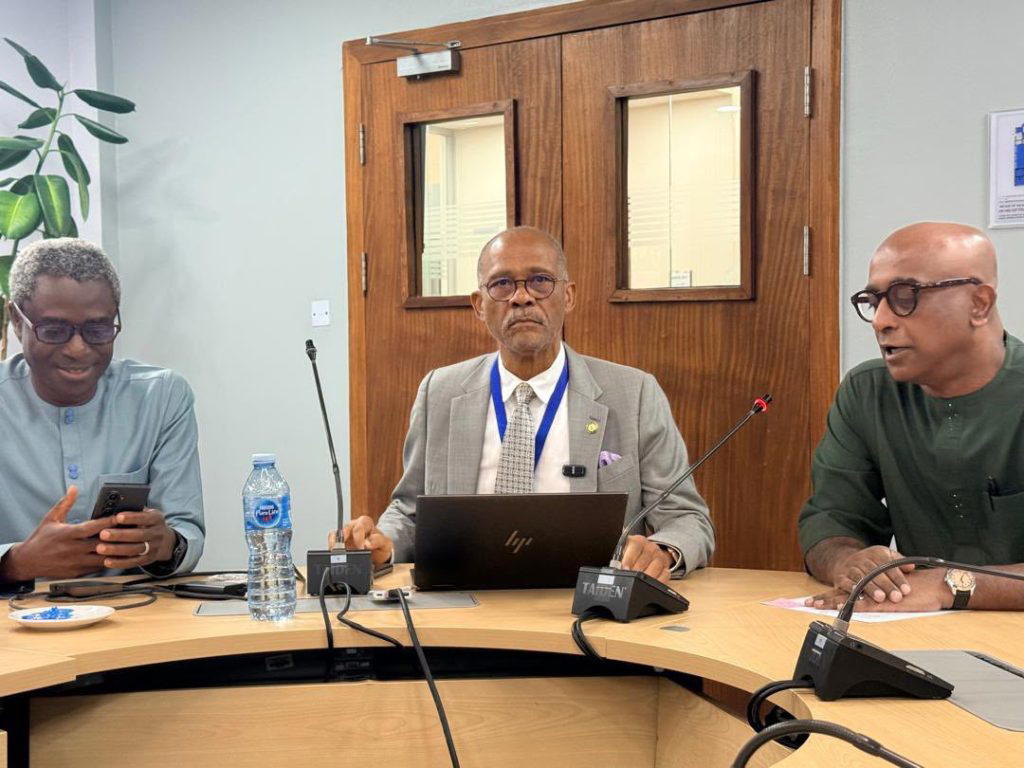
Abayomi made the remarks in a post on his official X handle, @ProfAkinAbayomi, following a special session on fever management hosted by the World Bank Nigeria Country Office.
Abayomi said findings from the Lagos State World Bank-supported IMPACT Project have fundamentally changed the state’s approach to malaria diagnosis and fever management.
According to him, the project tested nearly 78,000 patients with fever across 392 health facilities, including community pharmacies and Patent and Proprietary Medicine Vendor, PPMV, outlets, making it the largest field evaluation of malaria diagnosis ever undertaken in Nigeria.
He said the study found that while malaria had historically been diagnosed in about 70 per cent of fever cases, laboratory testing showed that the true malaria prevalence was only five per cent.
“For decades, fever has become synonymous with malaria in our communities. Patients often present convinced they have malaria, while healthcare providers have historically treated fever as malaria until proven otherwise.
“That approach served us during an era of high malaria transmission. Today, the evidence tells a different story,” he said.
Abayomi explained that the findings were confirmed using World Health Organization-accredited malaria Antigen Rapid Diagnostic Tests, validated by expert microscopy and Polymerase Chain Reaction, PCR, regarded as the gold standard for diagnostic accuracy.
He said the evidence has prompted Lagos State to adopt quality-assured malaria Rapid Diagnostic Tests, RDTs, as the first-line test for all suspected malaria cases.
According to him, the state is also collaborating with the Pharmacy Council of Nigeria, PCN, to make accredited RDTs widely available in community pharmacies and PPMV outlets, where many Nigerians first seek treatment.
“This changes everything. It changes how we diagnose patients. It changes how we prescribe medicines. It changes how we train healthcare professionals. It changes how we allocate public resources. And ultimately, it changes how we protect our communities,” he stated.
The commissioner said Lagos has now adopted a new fever management strategy anchored on the principle of “Test. Treat. Track”.
He explained that every fever should undergo proper diagnostic evaluation before treatment begins, while every confirmed malaria case should receive prompt treatment and trigger surveillance and environmental measures to curb transmission.
Describing fever as a symptom rather than a disease, Abayomi stressed that patients who test negative for malaria should be investigated for other illnesses such as respiratory viral infections, dengue fever, Lassa fever, bacterial infections and inflammatory conditions.
“Perhaps the most important message is this: A negative malaria test is not the end of the story. It is the beginning of finding the true cause of a patient’s illness,” he said.
He warned that indiscriminate use of antimalarial drugs and antibiotics delays accurate diagnosis, wastes scarce health resources and contributes to the growing threat of antimicrobial resistance.
Abayomi noted that discussions at the World Bank Nigeria Country Office focused on scaling the Lagos model across the country through stronger regulation, wider access to quality diagnostics and greater involvement of private healthcare providers.
He also expressed appreciation to the World Bank Country Director for Nigeria, Matthew Verghis, and Senior Health Specialist, Dr. Onoriode Ezire, for convening stakeholders to advance evidence-based fever management.
“The future of malaria elimination is not simply about reducing malaria.
“It is about transforming how we manage fever and ensuring every patient receives the right diagnosis, the right treatment, and the right care,” he said.
Vanguard News
The post Only 5% of fever cases in Lagos are malaria – Commissioner appeared first on Vanguard News.