

Wage awards, palliatives no solution, analysts warn
•Demand structural solutions,
targeted relief for vulnerable people
•LCCI seeks more crude for local refineries
By Nnamdi Ojiego
As the rising cost of living continues to pressure households and businesses across the country, economic, financial and social analysts have warned that wage awards and palliatives alone cannot resolve the crisis.
The analysts said immediate relief may be necessary for vulnerable Nigerians, but argued that lasting solutions require lower transportation, energy, food, housing and other essential costs.
Their positions followed renewed calls by the Nigeria Labour Congress, NLC, for wage awards and palliatives to cushion the impact of rising petrol prices.
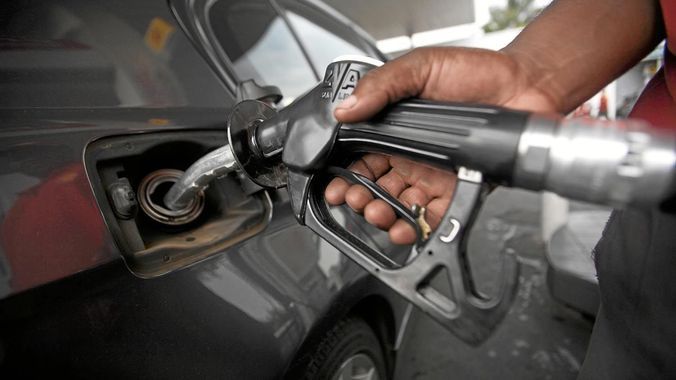
NLC, in a statement titled “Save the Situation Now,” signed by its President, Joe Ajaero, on Wednesday, said petrol now sells for about N1,430 per litre in major cities, with prices reportedly higher in less accessible locations.
The labour centre said rising petrol prices would worsen transportation costs and trigger further increases in food, rent, school fees and other essential goods and services.
“As a nation, and as a people endowed with enormous fossil resources, we are deserving of a certain level of protection or buffer against the gales from the Gulf, and indeed, other gales.
“There is nothing wrong with government subsidising the needs of citizens, especially in emergency situations like this. On a long-term basis, we are equally concerned that local refineries are importing crude. This is unreasonable and unacceptable and defeats the logic and purpose of local capacity,” the statement said.
Energy pressure
The latest movement in energy prices illustrates the pressure already being transmitted through the economy.
The price of cooking gas has risen by 25 per cent to between N1,500 and N1,600 per kilogramme from N1,200, while diesel prices have climbed to as high as N2,300 per litre at some filling stations.
The September 16, 2026 mid-day depot price report showed sharp increases in diesel prices, particularly in Lagos and Port Harcourt.
In Lagos, Ibachem recorded the biggest increase, with AGO rising from N1,830 to N2,000 per litre, while Ibeto increased from N1,835 to N1,970. Duport and Integrated rose by N110 each to N1,940 per litre.
Ardova increased its AGO price by N20 to N1,970, while Eterna and Rain Oil sold at N2,000. Nipco was at N1,950.
In Port Harcourt, African Terminal, Duport and Integrated increased their AGO prices by N110 each to N1,940, while Matrix in Warri raised its price from N2,080 to N2,120 per litre.
Higher diesel prices are particularly significant for manufacturers, transport operators, telecommunications companies, small businesses and other users that depend on diesel for power, transportation and other operations.
Petrol prices, meanwhile, remained relatively stable in some markets, ranging from N1,350 to N1,400 per litre in Lagos, with some reductions recorded in Calabar and Warri. Vice President of the Oil and Gas Service Providers Association of Nigeria, OGSPAN, Lawal Kamaldeen, said the volatility was likely to persist.
“The downstream sector has been very unstable, characterised by frequent leaps in prices due to the prolonged USA-Iran war. Prices are likely to continue to be unstable in the coming weeks,” he said.
Households under pressure
For many households, the rising cost of essentials has translated into reduced spending, smaller food purchases and postponed needs.
Abimbola Gbadamosi, a painter, said the rising cost of food, transportation and accommodation had put severe pressure on her income.
“Honestly, coping with the spike in the cost of living has become increasingly difficult. The high prices of food, transportation, accommodation and other basic needs have put serious pressure on the meagre income I make from my painting business.
“I have had to cut down on non-essential spending, prioritise basic needs and plan every expense carefully. Until there is greater stability in the prices of food, fuel, transportation and other essentials, many families will continue to struggle,” she said.
For 28-year-old motor mechanic, Kareem Ayodele of Ado-Ekiti, the economic situation has forced him to postpone his marriage plans.
“I had thought that before the end of this year, I would marry my fiancée, with whom I have been in a relationship for six years. But I have had to put it on hold because the traditional marriage requirements are beyond my budget,” he said.
A teacher, Matthew Babatope, said food, rent, transportation and school expenses had become increasingly difficult to afford.
He said a three-bedroom flat in remote parts of Akure now costs at least N400,000, while a plate of rice in some cafeterias sells for about N2,000. School fees, books and other expenses had also added to the burden on families.
A petty trader in Ado-Ekiti, Janet Ibikunle, said rising wholesale prices had reduced her ability to restock.
“Before, I could use a certain amount to buy enough goods and still make a little profit. Now, the money is not enough to buy the quantity I used to buy.
“If I increase my price too much, customers will complain, but if I don’t, there is hardly any profit,” she said.
Difficult to save
A civil servant, Mr Bolu, said his unchanged income had also made it difficult to support friends and relatives who increasingly turn to him for financial assistance.
“Unfortunately, my income has not changed. It has become difficult to save money because responsibilities are waiting to be attended to,” he said. He added that rising transportation and cooking gas costs had further reduced household purchasing power, with transport to school for his children rising from N500 to N700. Another civil servant, Segun Oloyede, said transportation alone consumed a significant part of his income.
“My income has not increased in the same way that the prices of food, transport and other necessities have increased. These days, my salary seems to finish almost as soon as it comes,” he said.
Oloyede said he now buys smaller quantities, reduces unnecessary spending and postpones some expenses to cope. For Folake Ajibola, a single mother of three, feeding her children has become one of her biggest challenges.
“I have had to reduce the quantity of food I buy and, sometimes, change what I cook because I simply cannot afford some of the things we used to eat regularly,” she said.
Ajibola said transportation, school expenses, electricity and healthcare costs had also forced her to prioritise one need over another.
Mr Lanre Adegboyega of Owode, Ogun State, said he had also cut unnecessary spending, limited movement and compared prices before making purchases.
Elder Ogundeyi Olufemi, a community leader, said his family had been forced to reduce food consumption because of falling purchasing power, while higher rent, electricity, transportation and cooking gas costs had added to the burden.
He said the pressure was so severe that he was considering leaving his salaried job and relocating his family to their farm in the village to reduce household expenses.
In Abakaliki, Ebonyi State, Mr Onuabuchi Nwite said many low-income families were finding it difficult to send their children back to school because of rising costs.
“With the recent increase in fuel price, a poor man cannot afford transport fare and has resorted to trekking to various destinations. Some of my children have not resumed school because of lack of money to pay school fees, buy books and meet other expenses for the first term.
Another resident, Mrs Chinwe Ogba, said women were bearing a significant share of the hardship because of the pressure of meeting household needs.
“The cost of living is now beyond every average person in this country, not only in Ebonyi. There is no hope again because things keep deteriorating daily without any solution to the problem.
“We are being choked by harsh policies, high taxes and increases in petroleum pump prices, leading to higher transport fares. Eventually, everything in the market has increased astronomically without any solution in sight. We only trust in God for our daily survival,” she said.
Structural solutions
Against this backdrop, Chief Executive Officer of the Centre for the Promotion of Private Enterprise, CPPE, Dr Muda Yusuf, said the current pressures required urgent intervention but cautioned against a return to universal petrol subsidy.
According to him, relief should address the sources of household vulnerability and high business costs rather than subsidising petrol consumption indiscriminately.
Yusuf said priority should be given to mass transit and logistics, improved electricity and alternative energy, food production, targeted social protection, healthcare and education, as well as measures to reduce energy, logistics and financing costs for businesses, particularly MSMEs.
He said the government must ensure that additional revenues from subsidy removal translate into visible improvements in citizens’ welfare. “Citizens must see tangible benefits through improved public transportation, electricity, healthcare, education, food security, infrastructure and social protection,” Yusuf said.
He added that the issue had increasingly become one of fiscal accountability and expenditure quality, stressing that governments should transparently demonstrate how additional fiscal resources were improving economic and social outcomes.
“The more consequential issue is how Nigeria can convert the gains of the reform into lower structural costs, stronger domestic production, improved competitiveness, greater energy security and measurable improvements in citizens’ welfare,” he said.
Long-term solution
The President of the Lagos Chamber of Commerce and Industry, LCCI, Leye Kupoluyi, called for increased domestic refining to reduce fuel-price pressures.
Kupoluyi said the Chamber had consistently advocated supplying more crude oil to local refineries so that more petroleum products could be refined locally and paid for in naira.
“The Chamber has consistently advocated for the supply of more crude to the local refineries so we have more fuel refined locally and in local currency,” he said.
He expressed reservations about previous social protection programmes, saying, “The negative reports on previous social protection interventions, such as cash transfers, cast doubt on the positive impact of such programmes.”
The LCCI president said the business community had also opposed subsidising consumption instead of supporting production.
“We have also spoken against subsidising consumption rather than intervening in production. The cost of living and the cost of doing business are reaching unbearable levels and definitely need immediate interventions,” Kupoluyi said.
He identified fuel prices as a major source of pressure, saying, “Most cost and price pressures are driven by high fuel prices, including petrol, diesel, and jet fuel.”
For the long term, he said Nigeria must reduce its exposure to external shocks.
“The real long-term solution is to devise ways to avoid shocks from global markets and disruptions to global supply chains. We need to work together to put more pressure on the government to do the needful in a timely manner.
“We reiterate our position that we need a local solution to the oil price crisis threatening economic activities, and that this should not be left unattended at this time,” he stated.
Fixing the country
Financial and social analyst, Blessing Iloh, said wage awards and palliatives could provide only temporary relief unless the underlying problems were addressed.
“In all honesty, except for situations like COVID, palliative and wage awards usually provide temporary relief,” she said.
Iloh said the NLC should instead push for the implementation of earlier promises on cheaper transportation and improved infrastructure, while identifying food production as an urgent priority.
“Improved security that would allow farmers go back to farm. Honestly, if we have food like other countries do, we won’t be chasing wage awards just because of a temporary increase in oil prices,” she said.
She also called for affordable credit and government-backed financing for solar power systems to reduce household and business energy costs.
“Nigeria needs to stop being reactive. We need to fix this country once and for all. We must stop pretending to be fixing the country and show workings,” she said.
The analyst argued that increasing workers’ pay without addressing the costs of housing, food, transport and other essentials would leave much of the problem unresolved.
“Paying more money to workers without fixing the country is same as printing more naira notes. You cannot fix a country with more money. You fix it by addressing what caused the problem,” she said.
•Additional reports by Dayo Johnson, Rotimi Ojomoyela, James Ogunnnaike, Jeff Agbod and Deola Badru
The post Petrol, gas: Cost of living spikes appeared first on Vanguard News.