

…Governor vows stronger push against insecurity, seeks stakeholders’ unity
By Golok Nanmwa
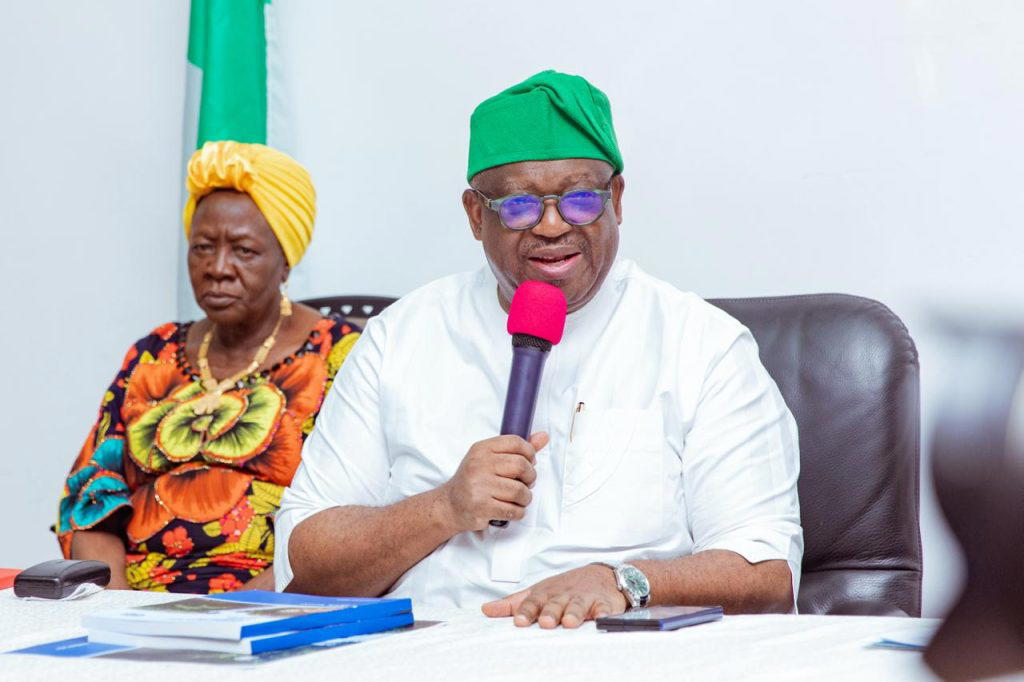
JOS — Plateau State Governor, Caleb Mutfwang, has said the state government will facilitate the return of internally displaced persons (IDPs) to their ancestral homes once security conditions become conducive.
Mutfwang also called for stronger collaboration among stakeholders to tackle insecurity and restore lasting peace across the state.
The governor spoke on Thursday in Jos at a leadership retreat organised by the Plateau Initiative for Development and Advancement (PIDAN).
He said restoring peace and creating a safe environment for displaced communities to return home remained a priority of his administration.
Against the backdrop of recent security challenges in parts of the state, Mutfwang said the government would continue to work with security agencies, traditional institutions, communities and other stakeholders to ensure that IDPs returned safely to their ancestral communities.
He stressed the importance of intelligence gathering, effective communication and active community participation in preventing attacks.
The governor urged stakeholders across ethnic, religious, political and professional divides to renew their commitment to unity, peace and inclusive development, saying Plateau could not overcome its challenges without collective action.
According to him, stronger collaboration among government, citizens, traditional institutions, civil society organisations and development partners was necessary to secure the future of the state.
Mutfwang linked peace and development to improved connectivity, rural infrastructure, communication and economic opportunities, assuring that his administration would continue to expand road infrastructure and rural connectivity.
He said improved access to rural communities would strengthen economic activities while reducing the isolation of vulnerable communities.
The governor also identified Plateau’s mineral resources and livestock sector as major economic opportunities, urging stakeholders to ensure responsible management of the resources for the benefit of the people.
He called for organised artisanal mining, stronger regulation, environmental responsibility and greater value for host communities.
On livestock development, Mutfwang urged citizens to look beyond concerns surrounding ranching and focus on the economic opportunities available across the livestock value chain.
He said Plateau must be positioned to benefit from the huge market for milk and other livestock products, while ensuring that any policy was implemented in the interest of the people.
“There will be no forceful acquisition of land,” Mutfwang assured.
The governor further urged the people of Plateau to rise above political, ethnic and religious differences, particularly on social media, warning against the use of such differences to create unnecessary divisions among leaders and citizens.
“Our differences can become a source of assets that we can leverage upon to advance our people,” he said.
Mutfwang commended PIDAN for creating a platform for dialogue, saying unity was indispensable to the progress of Plateau, particularly at a time when the state was confronting security challenges and seeking to unlock its economic potential.
“If there was a time that PIDAN was needed, I want to say the time is now. PIDAN has come to stay,” he declared.
He said the government would partner with relevant stakeholders to strengthen strategic community engagement, peacebuilding and the long-term development of Plateau.
In his speech, PIDAN President, Ambassador Nanpon Danjuma Sheni, said the organisation had built its reputation on dialogue, advocacy, research and constructive engagement.
Sheni said PIDAN’s responsibility was not only to preserve the legacy of its founding leaders but also to strengthen the institution for future generations.
“Our responsibility today is not only to preserve the legacy of PIDAN but to strengthen it for the future,” he said.
He added that PIDAN would continue to promote unity, community development, youth empowerment and the protection of Plateau’s cultural heritage.
The PIDAN president noted that the organisation’s non-partisan character had enabled it to engage governments, traditional institutions, religious leaders, civil society organisations and development partners in promoting peaceful coexistence and mutual understanding.
He also highlighted PIDAN’s sustained advocacy on security, constitutional rights, peaceful coexistence and equitable development, as well as its research and documentation of the history and crises of Jos and Plateau State.
Sheni said the organisation’s publications had contributed to public education and provided useful resources for researchers, policymakers, students and the media.
He explained that PIDAN’s structure, which brings together presidents representing the 56 ethnic nationalities of Plateau State, provided a platform for broad-based consultation and collective action.
Also speaking, the Senior Special Assistant to the President on Community Engagement for the North-Central Region, Dr Abiodun Essiet, reaffirmed the Federal Government’s commitment to closer engagement with communities.
Essiet said sustainable development could not thrive without peace and security, stressing that community engagement must move beyond government offices to direct interaction with affected communities.
She said the experiences, concerns and recommendations of affected communities should inform government responses to security and development challenges.
She also announced plans for a North-Central Security Summit scheduled for August 31, 2026, in Benue State, where government officials, security chiefs, traditional and religious leaders, farmers’ associations and other stakeholders are expected to deliberate on insecurity and strategies for sustainable peace in the region.
The post Plateau to return IDPs to ancestral homes when safe — Mutfwang appeared first on Vanguard News.