

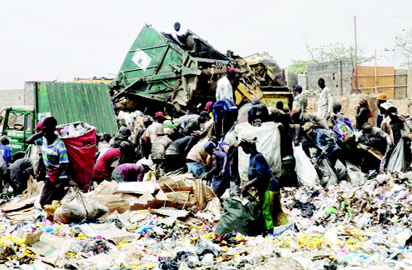
The viral images of scavengers allegedly dismantling pillars of bridges in Lagos should alarm every responsible citizen. Any person who vandalises public infrastructure must face the law. But the disturbing conduct of some scavengers should not become an excuse for criminalising scavenging itself, an activity that provides livelihoods for thousands while performing an often-overlooked environmental service.
Waste picking is an important link in the recycling chain. Across Nigerian cities, scavengers recover plastics, metals, bottles, paper and other materials that would otherwise swell already overflowing drainages, dumpsites and landfills. Their work reduces the volume of waste requiring disposal and supplies raw materials to recycling enterprises. The problem is that this largely informal activity operates with little regulation, training, identification or accountability.
The consequences are increasingly visible. Scavengers routinely tear open refuse bags, overturn waste containers and scatter their contents while searching for valuables. What people no longer need is often abandoned on roads or pushed into gutters and drainage channels. In cities already vulnerable to flooding, this is dangerous. Scattered refuse also creates breeding grounds for rodents and insects and contributes to unsanitary living conditions. More seriously, some waste pickers remove manhole covers, steal electrical cables, vandalise public facilities and enter restricted sites.
Such conduct is not scavenging; it is criminality and should be treated accordingly. Society cannot permit the pursuit of recyclable materials to endanger lives or destroy public assets. Yet government must resist the simplistic response of indiscriminate raids, arrests and evictions. Many scavengers are poor Nigerians eking out a living from discarded materials. Driving them from one neighbourhood merely pushes them elsewhere. The sensible solution is to bring them into a regulated waste-recovery system. State governments and municipal waste authorities should establish registration schemes under which waste pickers receive identification cards, training and clearly defined operating rules. Designated collection points can prevent indiscriminate rummaging, while penalties should apply to vandalism, theft, illegal dumping and other offences.
Recycling companies must also be incorporated into the system. They can contract registered waste pickers, guarantee collection channels and purchase recovered materials directly. Households, markets, offices and businesses should similarly be encouraged to separate recyclable materials at source. There is an economic opportunity here that Nigeria has not begun to exploit. A properly organised recycling value chain can create jobs, support manufacturing, reduce pressure on dumpsites and contribute to the emerging green economy.
Government must therefore distinguish between waste recovery and criminal conduct. The former deserves regulation and integration; the latter deserves firm criminal enforcement. Nigeria does not need a war against scavengers. It needs a modern waste-management policy that transforms an informal survival activity into a productive environmental enterprise. The people currently regarded merely as a nuisance can become partners in keeping our cities clean, protecting public infrastructure and building a more sustainable economy.
The post Regulate scavenging, don’t criminalise it appeared first on Vanguard News.