

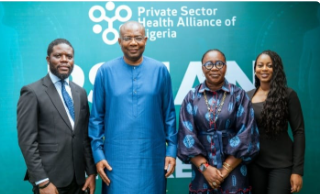
By Sola Ogundipe
The Adopt-a-Primary Healthcare Facility Project (APHFP) has provided healthcare services to nearly one million Nigerians in the past three years, underscoring the impact of revitalising primary healthcare centres and expanding access to quality care, the Private Sector Health Alliance of Nigeria (PSHAN) has said.
Speaking on the initiative’s impact, PSHAN’s Director of Policy, Dr. Anne Adah-Ogoh, said the project has transformed access to healthcare in communities where primary healthcare facilities were either non-functional or operating below capacity.
Adah-Ogoh who spoke in Lagos during the PSHAN annual conference 2026 themed “Driving Digital Innovation For a Healthier Nigeria” noted that restoring the centres to full functionality has not only improved access to healthcare but led to a rise in service utilisation.
“Although these primary healthcare centres were already operating before the intervention, utilisation increased by more than 1,000 percent after the revitalisation and that sends a clear message. Nigerians will use healthcare services when they are affordable, of good quality and available when they need them, without exposing them to financial hardship,” she said.
Adah-Ogoh remarked that strengthening primary healthcare remains the most effective way to tackle the country’s disease burden, as close to 80 per cent of Nigeria’s health challenges can be addressed at that level before they progress to conditions requiring secondary or tertiary care.
She also highlighted the importance of health insurance in improving access to healthcare, especially when many Nigerians still pay out of pocket.
“Healthcare cannot be considered truly accessible if people are forced into financial hardship to obtain treatment. The most effective solution is health insurance, where people pay affordable premiums into a pooled fund. Those pooled resources enable them to access healthcare services whenever they need them without paying directly at the point of care,” she said.
On maternal and child health, Adah-Ogoh said the project has significantly expanded access to skilled birth attendance, enabling more women to receive antenatal care, pregnancy counselling and safe delivery services within their communities.
“In the past three years, we have provided skilled birth attendants, this means a woman can go to the facility, have antenatal care, be advised about her pregnancy, and be able to give birth in the facility over the period of time where these healthcare centers have been revitalised.”
She disclosed that nearly 300,000 women had received care at the revitalised primary healthcare centres over the past three years, helping to reduce the risk of maternal deaths linked to pregnancy, childbirth and the postpartum period.
The programme has delivered routine immunisation services to almost 250,000 infants, contributing to improved child survival and a reduction in vaccine-preventable diseases.
“This means if we can fix our primary health care system, then the chances that our health care indices will be better,” she said.
In his keynote address, the Country Head, Nigeria, Flutterwave, Chizoba Okafor observed that the same financial infrastructure that transformed payments can also transform healthcare.
“Healthcare must follow a seamless interconnected ecosystem. Hospitals, pharmacies, laboratories, insurers and government agencies still operate largely as disconnected systems, the next major breakthrough in healthcare will not come from a single innovation, but from how effectively these systems work together, just as our banking and telecommunications sectors have done,” Okafor said.
According to him, digital health must be built on strong governance, robust cybersecurity and effective data protection. “The goal is for patients to move seamlessly through every stage of care, from booking appointments and making payments to receiving prescriptions and processing insurance claims, without unnecessary stress or delays. Their focus should be on getting well, not on navigating the healthcare system.”
The post Revitalised PHCs deliver care to 1m Nigerians — PSHAN appeared first on Vanguard News.