

Backs targeted transport subsidies to cushion Nigerians against fuel costs
Recommends more spending on health, education, infrastructure
Warns against fiscal measures that worsen cost-of-living crisis
By Babajide Komolafe, Economy Editor
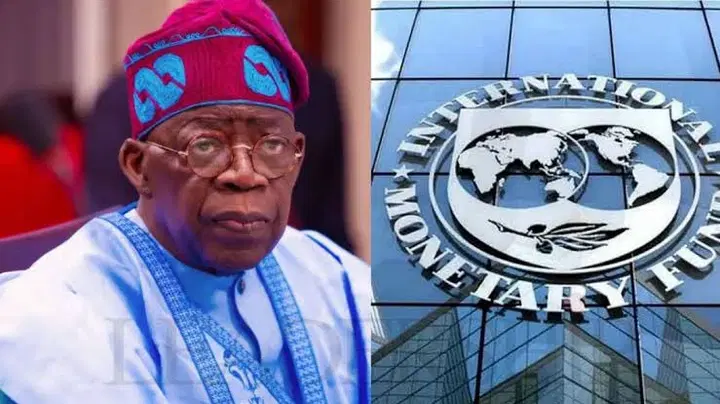
Bangkok, Thailand: The International Monetary Fund, IMF, has urged the Federal Government to boost revenue mobilisation, eliminate distortions in the tax system and redirect public spending towards growth-enhancing sectors as Nigeria grapples with rising debt and debt-servicing costs.
The Fund also backed targeted transport subsidies to cushion vulnerable Nigerians against rising fuel costs, warning that blanket subsidies are expensive and less effective than directing assistance to those who need it most.
Rodrigo Valdés, Director, Fiscal Affairs Department, IMF, and Davide Furceri, Division Chief in the department, gave the recommendations at a press briefing on the Fund’s Fiscal Monitor October 2026 report, during the ongoing IMF/World Bank Annual Meetings in Bangkok, Thailand.
The IMF’s recommendation is at the background of the continued rise in the nation’s public debt in spite of a sharp increase in government revenue.
Nigeria’s total public debt rose by 71 per cent to N166.788 trillion at the end of June 2026 from N97.34 trillion at the end of 2023. This was in spite of a sharp increase in government revenue, reflected in the 112 per cent increase in statutory allocation to the three tiers of government to N23.15 trillion in 2025 from N10.9 trillion in 2023.
Commenting on Nigeria’s rising debt despite increased revenue following tax reforms and fuel subsidy removal, Valdés cautioned against a blanket approach to fiscal consolidation.
“It’s very important to nuance the message of consolidation now, because not all countries are in the same position,” he said.
“Many major economies need to start consolidation now. But there are other countries that, let me just mention the UK, where our recommendation is stay the course. We’re not saying accelerate the pace of consolidation.”
On the political and economic implications of higher fuel prices, Valdés acknowledged the difficulty of managing the impact on households but argued that governments should avoid spending scarce resources on blanket subsidies.
“At the end of the day, it’s very tempting politically speaking because the political effect of the price of oil, of fuels, of gasoline, of diesel is not trivial,” he said.
“But you have to explain that this is a growth shock. Second, it’s very, very expensive for the country not to recognise that shock, and third, it’s much better to use some of that money that you would spend on the subsidies, channelled towards more vulnerable people.”
He suggested that governments could provide more focused assistance to cushion the impact of higher fuel prices, particularly on public transportation.
“Gasoline could go up, and perhaps bus fees may be subsidised in a way. That is a much better policy at the end of the day than just a blanket subsidy for everybody,” Valdés stated.
Furceri said Nigeria and other countries with relatively low tax bases needed to mobilise sufficient revenue both to meet rising interest obligations and finance investments that support economic growth.
“For many countries that are starting from a very low tax base, and this is, for example, the case of Ethiopia, the case of Nigeria, it’s important to have sufficient revenue for two reasons,” he said.
“One, because this revenue will help the countries to pay high interest costs, and second, because it will generate sufficient resources the countries can use to spend on growth.”
He, however, stressed that increasing revenue should not be the only objective of tax reform, arguing that better-designed taxes could support growth without necessarily increasing the overall tax burden.
“There are many distortions that are in current tax systems. Clearly, removing the distortions can be revenue-neutral, but they can actually increase growth and also address this trade-off,” Furceri said.
On expenditure priorities, he urged the Federal Government to redirect resources towards sectors with long-term economic benefits.
“Many countries have the scope to reprioritise spending for things that matter for long-term growth. Think about spending on education, spending on health, spending on investment, and, in the current circumstances, to again move away from subsidies to more targeted interventions,” he said.
Furceri acknowledged that targeted support could be difficult in countries without comprehensive national registries and digital payment systems. However, he said governments could use alternative mechanisms while building the infrastructure needed for more effective delivery.
“Typically, one argument that many countries say is that it’s very difficult to target subsidies because we don’t have a national registry, we have to have digital payment. It is important that countries prepare these systems in the medium term,” he said.
“In the short term, there are alternative ways. Rodrigo mentioned one. For example, school feeding is another one. Doing geographical targeting is another one. If countries have vulnerable farmers, there is scope to compensate them.”
The recommendations come as the IMF warns of mounting global fiscal risks. Its Fiscal Monitor October 2026 projects that global public debt could reach 100 per cent of gross domestic product by the end of the decade, while higher interest rates are expected to raise government debt-servicing costs as existing obligations are refinanced.
The Fund also estimated that measures used to suppress energy prices cost governments approximately 1.5 per cent of global GDP, warning that broad-based subsidies are fiscally expensive and often regressive.
It called on governments to improve tax systems, make public expenditure more growth-friendly and undertake fiscal consolidation where necessary, backed by credible plans, stronger institutions and greater transparency.
The post Rising debt: IMF urges FG to boost revenue, cut waste appeared first on Vanguard News.