TRENDING
Marriage counselling: Why many African men are losing control in their marriages • The A1 Block and the data room question: Has Gambia fully examined the geological treasure BP left behind? • APC primary dispute: Lagos lawmaker Apata appeals to Tinubu over denied ticket • Kenneth Okonkwo reacts to Peter Obi’s N5bn lawsuit threat • Sahara Group Advocates For ‘Just’ Treatment For Africa In Global Energy Transition Push • Edo shuts schools as DSS allegedly uncovers plot to abduct students • Sahara Group Advocates ‘Just’ Treatment For Africa In Global Energy Transition Push • World Cup 2026 preview: Groups I-L – Football Weekly • Jackie Appiah Just Served Pure Opulence in Structural Magenta at the 2026 Ghana Movie Awards • Oyebamiji sues for peace, condemns political violence across Osun • Top 10 African countries Nigeria imported goods from in Q1 2026 • Iran attacks US bases in Jordan, Bahrain • Gambia Red Cross launches country’s first pre-hospital care • Nafa cash transfer reaches 46 households in Greater Banjul • Omar Artan given hero’s welcome in Somalia after referee’s US entry blocked • World Cup 2026 news: England latest; protesters block road to Azteca; Messi scores on return – live • David Sullivan’s contact with West Ham women’s and youth teams restricted since 2023 • Chelle reveals “most important objective” ahead of Portugal, Nigeria friendly • Rethinking the fight against corruption in The Gambia • Community leader calls for peaceful resolution of Warri South-West delineation crisis by INEC • Marriage counselling: Why many African men are losing control in their marriages • The A1 Block and the data room question: Has Gambia fully examined the geological treasure BP left behind? • APC primary dispute: Lagos lawmaker Apata appeals to Tinubu over denied ticket • Kenneth Okonkwo reacts to Peter Obi’s N5bn lawsuit threat • Sahara Group Advocates For ‘Just’ Treatment For Africa In Global Energy Transition Push • Edo shuts schools as DSS allegedly uncovers plot to abduct students • Sahara Group Advocates ‘Just’ Treatment For Africa In Global Energy Transition Push • World Cup 2026 preview: Groups I-L – Football Weekly • Jackie Appiah Just Served Pure Opulence in Structural Magenta at the 2026 Ghana Movie Awards • Oyebamiji sues for peace, condemns political violence across Osun • Top 10 African countries Nigeria imported goods from in Q1 2026 • Iran attacks US bases in Jordan, Bahrain • Gambia Red Cross launches country’s first pre-hospital care • Nafa cash transfer reaches 46 households in Greater Banjul • Omar Artan given hero’s welcome in Somalia after referee’s US entry blocked • World Cup 2026 news: England latest; protesters block road to Azteca; Messi scores on return – live • David Sullivan’s contact with West Ham women’s and youth teams restricted since 2023 • Chelle reveals “most important objective” ahead of Portugal, Nigeria friendly • Rethinking the fight against corruption in The Gambia • Community leader calls for peaceful resolution of Warri South-West delineation crisis by INEC
Shell Identifies Strategic Pathways For Nigeria To Advance Gas Utilisation
Back to Home

Shell Identifies Strategic Pathways For Nigeria To Advance Gas Utilisation

Channels TV about 2 hours 3 mins read


Shell Nigeria Gas (SNG) has identified ways through which Nigeria can boost its natural gas utilisation rate. 

While sharing its experiences as one of the pioneers of gas distribution in Nigeria nearly 30 years ago at the just-concluded 2nd business forum of the Association of Local Distributors of Gas (ALDG) in Abuja, Managing Director of SNG, Ralph Gbobo, who was represented by Head, Gas Distribution, Chukwuka Amos-Ejesi said the expansion of pipeline natural gas infrastructure and the market‑making role of gas distributors are critical in moving gas from a policy aspiration to a practical energy solution for Nigerian industries.

He recalled when the SNG started in Agbara over 20 years ago.

“When SNG started in Agbara–Ota over 20 years ago, demand was nowhere near what it is today,” Gbobo recalled at a panel session on “Building a Bankable Gas Distribution Ecosystem: Infrastructure, Capital and Market Demand.

“The economics was not perfect, but there was a leap of faith anchored on Nigeria’s industrialisation trajectory. That decision has proven right.”

He said persistence, however, proved that when demand ambition, supply certainty, enabling infrastructure, and commercial clarity come together, even if not perfectly at the start, it creates industrial lusters that can grow and attract long-term capital. “Sustainability and bankability emerge over time, as utilisation deepens and confidence builds,” he pointed out.

The theme of the forum was “From Gas Abundance to Gas Access: Reassessing Nigeria’s Gas Distribution Imperatives,” with industry leaders and other stakeholders discussing the use of gas to drive industrialisation.
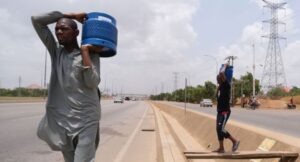
 

Residents carry cooking gas cylinders along the Airport Road in Abuja on April 18, 2020, during the ongoing lockdown aimed at containing the spread of coronavirus. Sodiq Adelakun/Channels TV


The panel session agreed on the need for “clear, supportive and credible policy frameworks, especially measures designed to improve the use of gas.

Ralph noted: “The introduction of gas-focused policies, notably the Petroleum Industry Act, marked a turning point. By reinforcing the role of gas in Nigeria’s energy and industrial strategy and embedding instruments such as the Network Code- a critical framework that governs the operations of the Domestic Gas market and ensures transparency and stability, and the Domestic Gas Supply Obligation, which compels gas producers to allocate gas to the domestic market, the PIA significantly reduced policy ambiguity around gas development.”

He added: “The introduction of clearer pricing frameworks for gas supply and transportation and a more transparent and competitive licensing regime, has also strengthened market confidence.

“Together, these measures have improved producer confidence, particularly for domestic gas projects, and signaled government’s strong commitment to gas as a driver of industrial development”, he noted.


READ ALSO: Europe Increases Jet Fuel Imports From Nigeria In May

Incorporated in 1998 as a fully Shell-owned gas distribution company, SNG currently serves over 150 clients in Abia, Bayelsa, Ogun, and Rivers states, partnering with governments and other stakeholders to take the cleaner and more affordable energy to the doorsteps of industries.

In the first half of this year alone, the company has connected two additional companies in Ogun State to its gas distribution network.


The post Shell Identifies Strategic Pathways For Nigeria To Advance Gas Utilisation appeared first on Channels Television.


This article was sourced from an external publication.

Share this article

Comments (0)

Want to join the discussion?

Sign in to post comments and engage with the community.

Be the first to comment!

Niger Delta

View All
AD
OneClick Africa Logo

Africa's premier digital hub for impactful news, entertainment, and business insights.

© 2026 OneClick Africa. All rights reserved.