

By Steve Oko
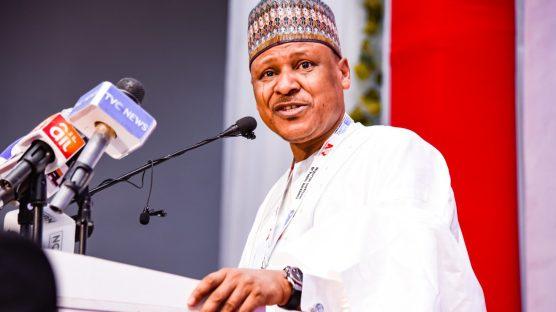
Minister of Information and National Orientation, Mohammed Idris, has said the South-East is no longer marginalised but now enjoys a greater sense of belonging in the affairs of the country.
Idris made the assertion on Friday while responding to questions during a press conference in Umuahia, Abia State, on the heels of the maiden South East regional security summit held on Thursday in the capital city.
He urged Ndigbo to discard the belief that they are being sidelined, arguing that even if such perceptions existed in the past, they no longer apply under the administration of President Bola Tinubu.
He cited ongoing road and infrastructure projects across the zone, as well as the appointment of former Ebonyi State Governor, Senator Dave Umahi, to the strategic position of Minister of Works, as evidence that the South-East is no longer being relegated.
When confronted with claims that insecurity in the South-East is linked to the continued detention of Nnamdi Kanu and the Federal Government’s refusal to engage Biafra agitators in dialogue to address their grievances—while repentant terrorists in the North are being granted pardon—the minister declined to comment, saying Kanu’s matter is already before the court.
He, however, maintained that President Tinubu is committed to inclusivity and addressing injustice and every form of exclusion that may have existed in the past.
Idris reaffirmed the Federal Government’s commitment to restoring lasting peace and security in the South-East, declaring that President Bola Tinubu’s administration is determined to create an environment where businesses, industries and communities in the region can thrive.
The minister, who spoke on the heels of the inaugural South-East Regional Security Summit on Thursday, said the Tinubu administration recognised the enormous economic potential of the South-East and is implementing security and economic reforms aimed at unlocking that potential.
According to him, the Federal Government believes that sustainable security goes beyond military operations and must be driven by economic opportunities, infrastructure development, youth empowerment and active community participation.
“The message from the Federal Government is clear: President Bola Ahmed Tinubu’s administration is committed to ensuring that every Nigerian, in every part of the country, has the right to live, work and pursue prosperity in a safe and secure environment,” the minister said.
He described the South-East Security Summit, organised by the Office of the Senior Special Assistant to the President on Community Engagement (South-East) in collaboration with the Federal Ministry of Defence and hosted by the Abia State Government, as a critical platform for charting lasting solutions to insecurity in the region.
The minister commended the organisers and participants, noting that the large turnout reflected a shared understanding that security is a collective responsibility involving government, security agencies, traditional rulers, community leaders and citizens.
Idris said the Federal Government has continued to strengthen Nigeria’s security architecture through enhanced support for security agencies, improved intelligence gathering, greater operational capacity and stronger collaboration among federal, state and community stakeholders.
He stressed that lasting peace could not be achieved through force alone.
“Peace and stability are strengthened when citizens have economic opportunities, young people have hope, businesses can thrive and communities have confidence in government,” he stated.
The minister explained that the Renewed Hope Agenda situates security within a broader framework of economic development, infrastructure renewal, human capital investment and social inclusion.
He also defended the economic reforms introduced by the Tinubu administration, saying they were necessary to address deep-rooted structural challenges inherited by the government.
According to him, the administration inherited fiscal pressures, declining revenues, exchange rate distortions and other structural weaknesses that had hampered Nigeria’s economic growth for years.
He said the removal of fuel subsidy and reforms in the foreign exchange market were designed to create a more transparent, productive and investment-friendly economy capable of delivering long-term prosperity.
Idris acknowledged that the reforms had imposed short-term hardships on Nigerians but noted that the government had rolled out interventions, including support for small businesses, consumer credit schemes, student loans and social protection programmes to cushion the impact.
He maintained that a peaceful South-East would naturally attract greater investment, stimulate economic growth and create jobs for the people.
“A peaceful South-East will attract investment. A growing economy will create opportunities. An empowered population will strengthen national stability,” he said.
The minister reiterated President Tinubu’s commitment to building an inclusive Nigeria where every region has the opportunity to realise its full economic potential and every citizen can look forward to a more prosperous future.
He also urged journalists to eschew misinformation, sensational and fake news, and always endeavour to report responsibly for peace to thrive in society.
The minister was flanked at the press conference by the Commissioner for Information in Abia State, Prince Okey Kanu; and the National President of the Radio, Television, Theatre and Arts Workers Union of Nigeria (RATTAWU), Prince Emeka Kalu (Magic Fingers).
The post ‘South East no longer marginalised’ – Information minister Idris appeared first on Vanguard News.