

By Henry Umoru
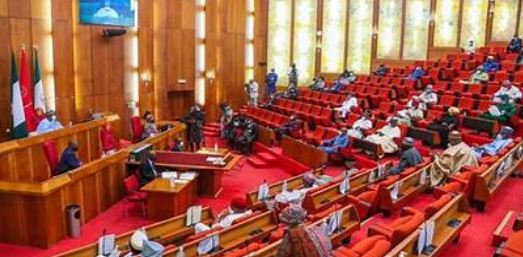
ABUJA — A bill seeking to establish state police and transfer policing powers to subnational governments, aimed at strengthening Nigeria’s internal security architecture, has passed second reading in the Senate.
The proposed legislation, titled A Bill for an Act to Alter the Constitution of the Federal Republic of Nigeria, 1999, to Provide for the Establishment of State Police and for Related Matters (Sixth Alteration), 2026 (SB. 794), was sponsored by Senate Leader, Senator Opeyemi Bamidele (APC, Ekiti Central).
The bill, when presented for consideration, received broad support from senators across party lines.
Following debate, Senate President Godswill Akpabio referred the bill to the Senate Ad-hoc Committee on the Review of the 1999 Constitution, chaired by Deputy Senate President Jibrin Barau (APC, Kano North), for further scrutiny and report.
Presenting the general principles of the bill, Bamidele said the proposal was necessitated by Nigeria’s worsening security challenges, including terrorism, banditry, mass abductions, farmer-herder clashes, cultism, armed robbery, pipeline vandalism, and cyber-related crimes.
He noted that the centralised policing structure had struggled to respond effectively to increasingly complex and localised security threats, adding that Nigerians had consistently called for decentralised policing.
According to him, the bill seeks to modernise the country’s security framework by establishing both federal and state police structures, clearly defining their responsibilities, and creating State Police Service Commissions to ensure oversight.
He also explained that the proposal would move policing powers from the Exclusive Legislative List to the Concurrent Legislative List, thereby strengthening cooperative federalism in security management.
Bamidele stressed that the reform “does not weaken national unity,” but rather enhances it by enabling each tier of government to better discharge its constitutional responsibilities.
Acknowledging concerns about possible abuse by state authorities, he said the bill contains several safeguards, including federal oversight mechanisms, uniform national policing standards, legislative confirmation of senior appointments, and periodic review of state police operations.
He added that provisions for federal intervention in cases of total breakdown of law and order were also included to ensure balance and accountability.
Bamidele further argued that local policing would improve intelligence gathering, enable faster response to security threats, and strengthen community trust in law enforcement.
He said decentralised policing would also ease pressure on the Federal Police, allowing it to focus on interstate crimes, terrorism, organised criminal networks, border security, cybercrime, and protection of federal assets.
Describing the proposal as consistent with federal principles, he noted that several countries, including the United States, Canada, Australia, and Germany, operate multi-layered policing systems combining federal and subnational law enforcement.
He argued that Nigeria, as a federal system, should not be an exception.
Senators, particularly from the northern region, largely supported the bill, describing state police as a potential long-term solution to the country’s security challenges.
Senate Chief Whip, Senator Tahir Monguno (APC, Borno North), also backed the proposal, saying it would help regulate the proliferation of vigilante groups across the country.
He added that the bill would provide a legal framework for state policing, ensuring proper structure, accountability, and effectiveness.
The bill was subsequently referred for further legislative consideration.
The post State Police Bill scales second reading at Senate appeared first on Vanguard News.

 Daily Post
 Premium TImes
 Punch Nigeria
 Vanguard Nigeria
 The Guardian Nigeria