

…Insists on petrol price cut, tax relief, others
By Victor Ahiuma-Young
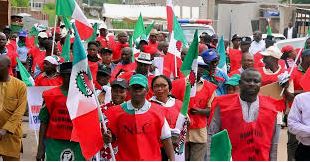
The Nigeria Labour Congress, NLC, has rejected the Federal Government’s response to its demands for urgent economic relief and the commencement of negotiations for a new national minimum wage, raising concerns over a possible escalation of industrial tension as its 14-day ultimatum runs its course.
The Congress, in a letter to the Minister of Labour and Employment, Dr Muhammad Maigari Dingyadi, faulted the government’s position that negotiations for a fresh minimum wage review would be premature before June 2027, insisting that preparations for a new wage agreement should begin immediately.
The NLC in the letter by its President, Joe Ajaero, also insisted on a reduction in petrol prices, the implementation of tax relief measures agreed upon in 2023, immediate wage awards to cushion the rising cost of living, and the implementation of agreements with the Joint Health Sector Unions (JOHESU) and the Joint Public Sector Negotiating Council, JPSNC.
Although the NLC in the letter did not expressly declare an imminent strike, sources within the NLC told Vanguard that its rejection of the government’s response to NLC’s ultimatum and insistence on urgent action by government is an indication of a looming industrial confrontation if the dispute remains unresolved before the ultimatum expires.
FG response to NLC Ultimatum
In the federal government response to the NLC’s communiqué, the minister of Labour and Productivity maintained that the current national minimum wage of N70,000, signed into law on July 29, 2024, would become due for review on June 1, 2027.
According to the minister, the law provides for a review of the national minimum wage every three years, making an earlier review premature.
“Commencing a fresh review exercise barely two years into the implementation of the current wage, which represented an increase of over 133 per cent from the previous minimum wage of N30,000, would be premature, inconsistent with the law, and disruptive to the orderly industrial relations system envisaged by the Act,” the minister stated.
The government also cited its efforts to cushion the effects of economic hardship, including the Presidential Compressed Natural Gas, CNG, Initiative, food security interventions and other social support programmes.
It assured the NLC that the Ministry was engaging relevant Ministries, Departments and Agencies, MDAs, to address other demands within the Federal Government’s jurisdiction.
The minister noted that the government would convene the National Minimum Wage Tripartite Committee “at the appropriate time” to commence negotiations for the next review.
The Federal Government reiterated its commitment to tripartite engagement, decent work and workers’ welfare, while urging the NLC to sustain cooperation in the interest of industrial peace.
The minister added that his office remained open to constructive dialogue and appealed for the Congress’s continued understanding and collaboration.
NLC rejects govt’s response
In its letter dated October 13, 2026, and addressed to the minister, the NLC acknowledged the Ministry’s prompt response to its communiqué but argued that the government’s position failed to address the substance of workers’ grievances.
“The Congress notes that, for the first time in recent history, the Ministry has responded with relative speed to our resolutions. We acknowledge this departure from the usual culture of bureaucratic silence,” the letter stated.
“However, while we appreciate this prompt acknowledgement, we are constrained to observe that speed without substance may amount to an empty gesture.”
The labour centre further argued that the Federal Government’s position was “fundamentally incorrect in law, economics, and social justice.”
The dispute centres on the interpretation of the National Minimum Wage Act, 2019, as amended in 2024, and the appropriate time to begin negotiations for a new wage agreement.
However, the NLC rejected the government’s interpretation of the law, arguing that the statutory timeline for reviewing the minimum wage should be calculated from the commencement of the 2019 Act.
“The National Minimum Wage Act, 2019, which the 2024 Amendment Act amended, was signed into law on 18 April 2019. Under the clear provisions of that Act, a review was statutorily due by 18 April 2024,” the Congress argued.
It further maintained that the 2024 amendment did not extinguish the original statutory timeline for wage negotiations.
“The 2024 Amendment Act did not abrogate the 2019 Act,” the letter stated.
The NLC also claimed that, during negotiations for the 2024 minimum wage, organised labour agreed to a reduction in retrospective arrears following appeals by the Federal Government to reduce the financial burden on government and employers.
“This patriotic gesture cannot be construed as a forfeiture of the statutory timeline for implementing the National Minimum Wage,” the Congress said.
The labour centre argued that negotiations should commence at least six months before the proposed implementation of a new wage to prevent the accumulation of arrears.
“Under this scenario, effective negotiations should commence by 17 October 2026,” it stated.
The NLC insisted that it was not demanding the immediate implementation of a new minimum wage but the commencement of the necessary administrative and negotiation processes.
“The Government is not being asked to implement a new wage immediately, but to commence the negotiation process,” the letter stated, listing the call for nominations, inauguration of the tripartite committee and setting of the negotiation agenda as preliminary steps.
Beyond the legal dispute, the Congress said the economic realities facing workers had eroded the value of the current N70,000 minimum wage, despite the increase from N30,000.
The NLC argued that the nominal increase had failed to translate into a corresponding improvement in workers’ purchasing power because of inflation, the depreciation of the naira and rising living costs.
“The Federal Government must understand that a wage increase immediately eroded by inflation is not a meaningful improvement in workers’ purchasing power; it is merely a statistical illusion. While the nominal wage increased by 133 per cent, real wages have actually declined ,” the Congress said.
The NLC blamed the rising cost of living partly on the government’s macroeconomic policies, particularly the increase in petrol prices, which it said had pushed up the cost of transportation and other essential goods and services.
According to the Congress, workers are increasingly unable to afford basic necessities, including food, shelter, healthcare, education and transportation.
It also questioned the effectiveness of the CNG initiative, alleging that inadequate infrastructure and shortages of gas supplies and conversion kits had undermined its intended benefits.
“Workers cannot feed their families with an initiative that has yet to deliver the promised relief, especially when their children are hungry today,” the letter stated.
The Congress consequently called on the government to provide immediate tax relief and wage awards rather than continue to demand sacrifices from workers.
On the outstanding demands, the NLC asked the Federal Government to implement tax relief measures agreed upon in 2023 and introduce immediate wage awards to cushion the impact of rising living costs.
It also demanded that petrol prices be reduced to the level prevailing when the current national minimum wage was signed into law in 2024.
In addition, the Congress called for the implementation of the terms of settlement with JOHESU and the resolution of demands raised by the JPSNC.
The labour centre warned that further delays in addressing the issues could worsen workers’ hardship, insisting that the government had the capacity to provide relief if it demonstrated the necessary political will.
“Procrastination is no longer a policy choice; it constitutes a direct threat to the survival and well-being of Nigerian workers,” the letter stated.
It also cautioned that dialogue without definite timelines and immediate relief measures would amount to rhetoric.
“We acknowledge your assurance that your office remains open to dialogue. However, dialogue without concrete timelines and immediate relief measures amounts to mere rhetoric,” the Congress said.
The NLC, however, maintained that urgent intervention was necessary to avert further deterioration in the living conditions of Nigerian workers, declaring that it remained “resolute, organised, and uncompromising” in its struggle for a fair and equitable Nigeria.
With the two sides holding divergent positions on the timing of the next minimum wage negotiations and the immediate measures required to ease economic hardship, attention is expected to focus on whether further engagement will produce a resolution before the labour centre’s ultimatum expires.
The post Strike looms as NLC rejects FG response to 14-day ultimatum appeared first on Vanguard News.