

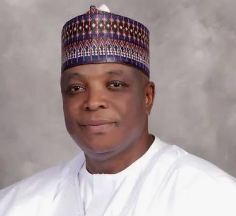
…Babayo says states, LGs received trillions in additional allocations
By Henry Umoru
ABUJA — Chairman of the Board of the Federal Roads Maintenance Agency, FERMA, Dr Musa Babayo, has backed the removal of petrol subsidy by President Bola Tinubu, urging Nigerians to hold their governors and local government chairmen accountable for the additional resources accruing to them from the reform.
Babayo warned against attributing every hardship experienced by Nigerians to subsidy removal while ignoring the significant increase in revenues available to state and local governments following the reform.
In a statement made available to Vanguard on Thursday, titled, “The Other Side of Subsidy Reform: Where Did the Money Go? Nigeria’s States and Local Governments Received Trillions More. Citizens Must Now Demand an Account,” the former Chairman, Board of Trustees of the Tertiary Education Trust Fund, TETFund, urged citizens to demand explanations from their elected leaders on how the additional funds were spent.
He said Nigerians should ask their governors how much their states received, particularly as a result of increased Federation Account revenues following the reforms, and what the funds were used for.
According to him, citizens should demand details of expenditure on infrastructure, healthcare, education, agriculture, water, rural roads, employment creation and social protection, as well as information on completed projects, their locations and costs.
Babayo said the same principle should apply to local governments, stressing that transparency should not end with the publication of allocations by the Federation Account Allocation Committee, FAAC.
“The real accountability question begins after the money reaches the state and local government accounts,” he said.
He said citizens, civil society organisations, professional bodies, traditional institutions, the media and political leaders must demand greater accountability from sub-national governments.
“There is nothing subversive about citizens asking their state government to account for public money in their custody. Indeed, it is one of the most fundamental obligations of democratic citizenship,” Babayo said.
He added that governors and local government leaders should not regard legitimate questions about public expenditure as hostility, while citizens should not be discouraged from demanding accountability simply because the political leadership belongs to their preferred party.
Babayo acknowledged the immediate effects of subsidy removal, including higher transportation costs, increased food prices, pressure on household incomes and the broader cost-of-living crisis.
He, however, said the public debate should also focus on the resources released to the three tiers of government as a result of the reform.
“The removal of the subsidy did not simply eliminate an expenditure from the Federal Government’s books. It released substantial resources into the Federation Account, from which states and local governments also benefited,” he said.
Babayo cited figures from the Federal Ministry of Finance indicating that between June 2023 and December 2025, about N15.8 trillion in subsidy savings accrued to the Federation.
Of the amount, he said, approximately N6.52 trillion, representing about 41 per cent, accrued to state governments, while N3.88 trillion, or about 24 per cent, accrued to local governments. The Federal Government’s share, he said, was approximately N5.43 trillion.
He said the more important question was whether the resources released by the reform and the larger allocations subsequently received by states and local governments had translated into measurable improvements in citizens’ lives.
“If the purpose of reform is ultimately to create a more productive, prosperous and resilient economy, then additional public resources should produce additional public value,” he said.
Babayo said the Federal Ministry of Finance had also estimated that, against the pre-removal monthly run-rate, states received approximately N9.17 trillion in additional allocations between June 2023 and December 2025, while local governments received about N6.66 trillion.
He argued that the impact of economic reforms could not be addressed exclusively by the Federal Government, noting that many services that directly affect citizens’ daily lives depend substantially on state and local governments.
He listed primary healthcare, basic education, rural infrastructure, markets, water supply, agricultural support and local economic development among such services.
“Consequently, the effectiveness of economic reform will ultimately be judged not merely by what Abuja saves, but by what the entire federation does with the resources made available by those reforms,” Babayo said.
He called for a stronger framework for tracking the application of funds at the sub-national level, urging every state to routinely publish simple, citizen-friendly fiscal accounts showing how additional revenues were received and spent.
Babayo said such measures would help shift the national conversation from the immediate pain of economic reforms to the accountability and effective use of the resources generated by them.
The post Subsidy Removal: Hold governors, LG chairmen accountable — FERMA chairman appeared first on Vanguard News.