

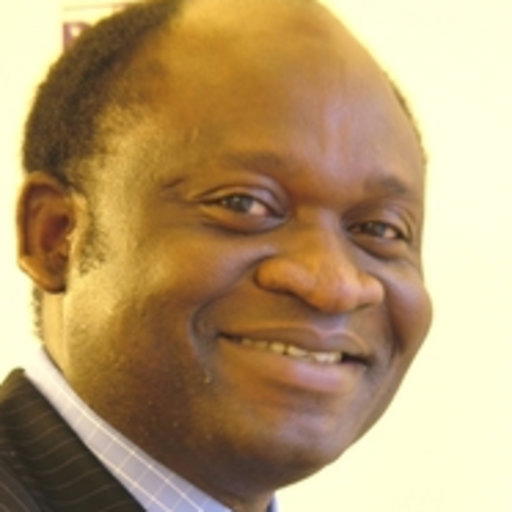
Senator Oluremi Tinubu, Nigeria’s irrepressible first lady, recently made two controversial interventions on the country’s socio-economic situation. First, she told the jobless to start selling akara, roasted corn or kuli-kuli to eke out a living. Then, she admonished rich young musicians to help the poor. She received a torrent of criticism for the comments. Yet they contain a kernel of truth and a fundamental flaw. I explore both here, arguing the remarks are more deeply flawed than valid.
Last month, at a “Renewed Hope Initiative” event in Abuja, Senator Tinubu said: “We are trying to give hope, and to start akara business doesn’t take a lot of money. To start roasting corn or kuli-kuli doesn’t take much.” A few weeks later, at another “Renewed Hope” event, she aimed her darts at young rich musicians, urging them to help the poor. “I want to appeal to Burna Boy, Asake, Davido, all of them. We want you to come together under a foundation to help the poor with your money,” she said. But what’s wrong with those comments? Well, let’s unpack them.
Take the akara/kuli-kuli/roasted-corn remarks. In truth, there’s nothing amiss in asking the jobless to take up any legitimate business, however small or menial. That’s the advice most of us would give to anyone stuck in unemployment. But when that advice comes from government, of which, in Nigeria, the “first lady” is part, then it connotes something entirely different. First, it suggests the government is glorifying the informal sector and promoting a poverty economy. In Nigeria, according to the World Bank, over 80 per cent of workers are in the informal sector and over 70 per cent of the population live below the poverty line, which shows a strong link between an informal economy and poverty. Second, Senator Tinubu’s comment portrays a government abandoning its role, because it’s the duty of any government to create the enabling climate and incentives that foster economic prosperity whereby people are either gainfully employed or self-employed through starting and running viable businesses. But there’s something terribly wrong when a government tells citizens to resort to selling akara, kuli-kuli or roasted corn to survive; it’s economic immiseration!
Politically, the real stinger in Senator Tinubu’s remarks is that she started with the following words: “We are trying to give hope.” Wow! If selling akara, kuli-kuli and roasted corn to eke out a living is the “renewed hope” her husband has been banging on about since he came to power in 2023, then what he really sold to Nigerians is not hope but despair. Because poverty and misery are not “hope” worth renewing. Thomas Jefferson famously said: “The care of human life and happiness is the only legitimate object of good government.” But under Tinubu’s “renewed hope” government, happiness and human flourishing are synonymous with pauperisation, with more than 129 million Nigerians, about 70 per cent of the population, now living in extreme poverty, according to the IMF. Asking them to sell akara, kuli-kuli or roasted corn to scrape by day to day adds insult to injury!
Which brings us to Senator Tinubu’s second remarks: her admonition to rich young musicians to help the poor. Again, hardly anyone would disagree with a call on wealthy people, young or old, musicians or not, to engage in philanthropic giving. But when the call comes from the government or any of its high-profile functionaries, such as the first lady, we must scrutinise it. For instance, why did she single out the hard-working, self-made young musicians? What about the billionaires who became stinkingly rich through state patronage or special favours? What about those who became stupendously rich through embezzling state funds, through inflated contracts, through subsidy scams, through foreign-exchange arbitrage, etc.? Put simply, what about those sitting on bottomless wealth through unjust enrichment? Why did Mrs Tinubu not ask them to help the poor with “their” money? The truth is, over 90 per cent of billionaires in Nigeria are beneficiaries of either crony capitalism or outright corruption, a small group of elites who extract wealth from the state at the expense of the people.
A few years ago, former President Olusegun Obasanjo said: “My aim when I was in government was to create 50 Nigerian billionaires. Unfortunately, I failed. I created 25.” He created the 25 billionaires through state patronage and special favours. But in a true market economy, market forces, not presidents, create billionaires. However, in Nigeria, “capitalism” is rigged to favour a small elite. Ever since Obasanjo left office, the Nigerian state has created more multibillionaires, allowing politically connected elites to become super-rich through subsidy scams, forex arbitrage, inflated contracts, not to mention those in public office who outrightly embezzled public funds. Thanks to pervasive conflicts of interest and an utter lack of transparency, unjust enrichment is undoubtedly going on apace and at scale under the Tinubu administration, which is borrowing and spending like a drunken sailor, creating its own crony and rentier billionaires.
But there are three problems with crony, rentier and corrupt billionaires in Nigeria. First, their great personal wealth does not translate into wealth for the wider society; second, some of them don’t pay tax at all and those who pay don’t pay enough tax; and third, most Nigerian billionaires lack a genuine culture of philanthropic or charitable giving.
Take the first point. Nigeria’s five richest men have a combined wealth of about $65bn, according to a Forbes analysis. Yet extreme poverty grows by six people every minute in Nigeria, according to the Brookings Institution. Why? Well, wealth is extremely concentrated in Nigeria, with the gap between the rich and the poor extremely wide by universal standards. In a powerful intervention in July 2024, Dr Kingsley Moghalu, a former deputy governor of the Central Bank of Nigeria, wrote in BusinessDay: “But let’s get it straight: Dangote’s wealth is personal to him. It hasn’t made Nigerians broadly rich on any significant scale.” Of course, he’s right. The stupendous wealth of Nigerian mostly state-made billionaires is utterly personal to them and has not trickled down to lift most Nigerians out of extreme poverty.
Which brings us to the second point: tax. For decades, successive Nigerian governments have complained that Nigerian billionaires don’t pay tax or pay enough tax. In 2018, Kemi Adeosun, then minister of finance, was quoted as saying that “over 6,772 billionaires don’t pay tax.” Yet billionaires are the real beneficiaries of President Tinubu’s much-vaunted tax reforms. Why? Because the annual tax rate for a billionaire and someone earning N50mn in Nigeria is the same: 25 per cent! In the UK, the highest tax rate, which captures billionaires, is 45 per cent!
Well, that second point leads us to the third: Nigerian billionaires are not genuine philanthropists, unlike their American counterparts, some of whom, like Warren Buffett, vowed to give more than 90 per cent of their personal wealth away to charities. Of course, some Nigerian billionaires give philanthropically. But considering that they are largely state-made, and given that they pay relatively low tax, they should be far more generous with their philanthropic giving, particularly towards poverty reduction.
Recently, the Financial Times interviewed me for a story on Dangote. I repeated my well-known view that he’s a “state-made colossus” but commended his outstanding industrial prowess. However, it’s also my long-held view that because the Nigerian state largely made him what he is, he should do a lot more to serve the common good through helping to tackle extreme poverty in Nigeria.
That’s why Senator Tinubu’s comments are fundamentally flawed. For instance, in calling on Burna Boy, Asake, Davido and their likes to help the poor, she said: “The burden on the government is huge.” But which burden? Is it poverty reduction? Absolutely not. And what are the crony, rentier and corrupt billionaires doing to help tackle extreme poverty in Nigeria? Absolutely little. Yet the onus is not on the self-made musicians, but on the crony-rentier-corrupt billionaires and the government that enriches them!
*Dr Fasan is the author of ‘In The National Interest: The Road to Nigeria’s Political, Economic and Social Transformation’, available at RovingHeights bookstores.
The post Tacking poverty in Nigeria: Onus on crony billionaires, not self-made musicians! By Olu Fasan appeared first on Vanguard News.