

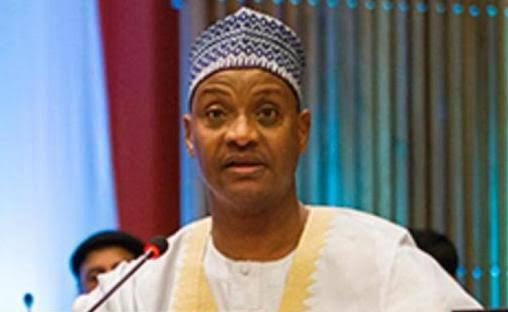
“We cannot demand twenty-first-century compliance with twentieth-century communication.” — Mohammed Idris Bultu
The first part of this article examined taxation as a relationship between the state and the citizen and ended with a fundamental question: what does the state owe the citizen after collecting his money? Two thoughtful responses to that article have since helped to sharpen the inquiry considerably.
Barrister Muhammad Betara, an Abuja-based lawyer, approached the subject mainly from the standpoint of law and public administration, while Mohammed Idris Bultu, a Tax Controller with the Nigeria Revenue Service in Kano, responded from the practical experience of a tax administrator who encounters taxpayers, assessments, compliance and collection in the field.
Taken together, their observations provide an important bridge between theory, law and administrative practice. Barrister Betara’s central point is that Nigeria is not without a legal framework for taxation. On the contrary, the Constitution and the recent tax reforms impose clear duties upon citizens and create elaborate machinery for assessment, collection and administration.
According to him, Section 24(f) of the 1999 Constitution places upon every citizen the duty to declare his income honestly and pay his tax promptly. That obligation is direct and enforceable. At the same time, the Constitution declares that the security and welfare of the people shall be the primary purpose of government and places upon the state broad responsibilities relating to economic welfare, justice and social order.
Betara’s important observation is that an imbalance exists between these two sides of the constitutional bargain. The citizen’s obligation to pay tax is concrete and enforceable, while many of the wider welfare obligations of government cannot be enforced by the citizen in quite the same manner. This immediately raises the problem of reciprocity.
If the state possesses machinery to compel compliance from the citizen, what equivalent machinery exists which enables the citizen to compel transparency, accountability and adequate service delivery from the state? This lies very close to the heart of the distinction between taxation and imposition.
The recent tax reforms have sought to strengthen and modernise the administrative capacity of government. They aim to harmonise tax administration, rationalise procedures, improve taxpayer identification, expand the tax base and provide mechanisms for objection and appeal.
Barrister Betara therefore makes the important point that the Nigerian problem is not simply the absence of laws. The problem is that the machinery of collection often appears stronger, more visible and more immediate than the machinery of public accountability.
Tax Officer Mohammed Bultu’s practical observations reinforce this point from another direction. His first proposition is simple but profound: legitimacy makes collection possible. A tax may be perfectly lawful, but if taxpayers do not understand why they are paying, under what authority, or what purpose the revenue is intended to serve, resistance increases and enforcement becomes more difficult.
This is particularly striking because it comes from a practising tax administrator. What might appear to an academic as a question of legitimacy is, to the tax officer, an operational reality that could become an impediment. Taxation with understanding is therefore not merely a philosophical ideal but an administrative necessity.
This takes us back to the historical reflections in the first part of this series. From Buchan and Morel to the present day, governments have repeatedly confronted the same question: how can taxation be made legitimate in the eyes of those who are compelled by law to pay? Legality is indispensable, but legitimacy requires something more.
Bultu’s second observation concerns the effect of the oil era on the Nigerian fiscal relationship. For decades, governments relied heavily upon petroleum revenues rather than upon the direct contributions of citizens. This relaxed the psychological link between taxation and citizenship.
The citizen did not always feel that government depended financially upon him, and government did not always feel compelled to explain itself to the citizen in the manner that a truly tax-dependent state might have required. That era is now changing.
As taxation becomes increasingly central to financing government, the psychology of government and citizenship must change with it. Citizens will naturally demand greater explanation of what government costs, what it collects and what it delivers. Bultu’s third point is equally important: law alone does not create trust.
A modern tax regime may expand the tax base and improve collection, but if implementation is perceived as aggressive, rushed or overly focused on targets and penalties, citizens may experience reform not as a social contract but as an imposition. This is why taxpayer education becomes crucial.
His memorable observation that Nigeria cannot demand twenty-first-century compliance with twentieth-century communication deserves to be deeply understood and taken seriously. A taxpayer who understands his obligations, his rights and the procedures available to him is more valuable to the state than one who complies merely out of fear and with resentment.
Taxation should therefore not be organised simply around collection targets. It must also be organised around explanation, simplicity, fairness and confidence.
Barrister Betara similarly draws attention to rights already available to taxpayers, such as rights to proper assessment, objection, appeal and protection from unlawful or multiple taxation. But rights are of little practical value where citizens do not know that these exist or cannot exercise them without excessive cost and difficulty.
Both responses therefore converge on one principle: the state must not only collect efficiently; it must also communicate efficiently, account efficiently and protect the taxpayer efficiently. A second area of convergence concerns taxable capacity. The law may identify income and calculate liability according to established rules, but this does not necessarily reveal the citizen’s real economic condition.
A Nigerian may earn what appears on paper to be a taxable income, while much of that income may already be committed to privately providing electricity, water, transportation, healthcare, education and security. This affects not only personal welfare but the capacity to save, accumulate assets, invest and achieve long-term financial security.
The Nigerian who appears reasonably comfortable on paper may, in reality, possess very little disposable income after meeting expenses that, in other societies, are substantially supported by public services. The same problem confronts businesses even more starkly.
An enterprise may pay taxes and levies while still providing its own electricity, water, security, communications and sometimes access roads, in addition to absorbing transportation costs created by deficient infrastructure and meeting minimum wage requirements for its employees.
This creates what might be described as a double fiscal burden, under which the citizen finances the state and then privately finances the substitutes for services the state has failed adequately to provide. This raises a question that deserves greater attention in Nigerian fiscal policy: should taxable capacity be considered simply in terms of nominal income, or should government become more sensitive to the total economic burden already borne by citizens and businesses?
Both Betara and Bultu also emphasise accountability. If the taxpayer must keep records, disclose income, file returns and prove compliance, then government should be equally capable of showing what it collected, where the money went, who authorised the expenditure and what public value resulted. This symmetry is indispensable. The taxpayer should not be transparent to the state while the state remains opaque to the taxpayer.
There should therefore be a traceable public chain of collection, receipt, appropriation, expenditure, delivery, audit and reporting. Citizens should be able to understand, in reasonably simple language, how public revenue moves from their pockets into the treasury and from the treasury into roads, schools, hospitals, water systems, security and other public services.
This need not require every Nigerian to become an accountant or forensic auditor. Governments themselves should make fiscal information intelligible and accessible in this digitally connected world.
Imagine if every tier of government periodically told citizens, in plain language: this is what we collected; this is what we received; this is what we spent; these are the projects completed; this is what remains; and this is what the auditors found. Such a practice would not weaken government but would strengthen it considerably and grant it legitimacy.
For taxation does more than raise revenue. Properly organised, it strengthens democratic governance and creates a citizen who asks questions, scrutinises expenditure and recognises public money as partly his own contribution to the commonwealth. Nigeria therefore needs more than a tax-paying culture. It needs a tax-accountability culture.
The true reform is not simply a new tax rate or collection mechanism but a new fiscal bargain. The citizen should be able to say: “I will declare honestly, comply with the law willingly and pay what is lawfully due diligently.” The state must also be able to answer: “We will make the system fair, simple, transparent and accountable, and we will show you what your contribution has achieved.”
Until both sides of that bargain are visible and credible, the Nigerian taxpayer will continue to ask the question around which this series revolves: Is this taxation, or is it merely collection? And when does collection become imposition? That question leads naturally to the third and final part, which concludes with the profound issues that Betara and Bultu raised.
The post Taxation or imposition: The state, economy and citizenship in Nigeria (2), by Usman Sarki appeared first on Vanguard News.