

…Projects to deliver 143,001 electricity connections
By Udeme Akpan
The Rural Electrification Agency (REA) has commenced the development of 8.5 megawatts (MW) of renewable energy infrastructure across four agricultural and commercial hubs in Jigawa State, pioneering an integrated electricity and commodity exchange model aimed at boosting agricultural productivity and rural industrialisation.
The groundbreaking ceremony, held in Jigawa State on Thursday, marked a strategic collaboration involving the Federal Ministry of Power, the Federal Ministry of Industry, Trade and Investment, the Jigawa State Government, the Nigeria Commodity Exchange (NCX) and private-sector partner, Astound Power Limited.
The partnership brings together the complementary mandates of the five organisations to transform rural agricultural communities into commercially viable agro-industrial clusters.
While the Federal Ministry of Power, through REA, is responsible for decentralised renewable energy deployment, the Ministry of Industry, Trade and Investment provides policy support for industrialisation and export promotion.
Similarly, NCX will facilitate structured commodity markets, warehousing, quality grading, transparent price discovery and warehouse receipt financing, while the Jigawa State Government provides an enabling investment environment. Astound Power Limited is contributing private capital and commercial execution.
By integrating NCX-backed warehouse receipt systems with reliable electricity supply, the partnership seeks to address persistent challenges in Nigeria’s agricultural value chain, including post-harvest losses, inadequate storage, fragmented markets and limited access to credit.
Under the arrangement, stored agricultural produce can serve as collateral, enabling farmers and aggregators to access financing rather than being compelled to sell immediately after harvest at depressed prices.
The Jigawa initiative will serve as a pilot for a wider seven-state agro-industrial cluster programme covering Jigawa, Taraba, Kaduna, Kebbi, Ekiti, Osun and Ebonyi states.
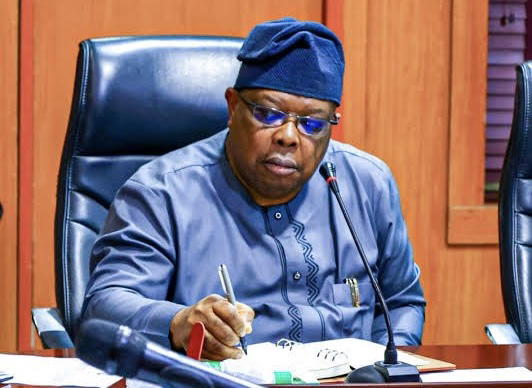
At the ceremony, the Minister of Power, Chief Joseph Tegbe, and Governor of Jigawa State, Malam Umar Namadi, also commissioned 33 mini-grids and performed the groundbreaking for an additional 65 mini-grids. When the wider programme is completed, it is expected to deliver a total of 143,001 electricity connections under REA’s interventions in the state.
In his remarks, Namadi reaffirmed his administration’s commitment to leveraging Jigawa’s agricultural strengths and strategic markets to attract private investment.
“Through this strategic partnership with the Federal Government, the Nigeria Commodity Exchange and the private sector, we are laying the foundation for Jigawa to move beyond being predominantly a producer of agricultural commodities to becoming a competitive centre for agricultural processing, value addition, structured commodity trading and exports,” the governor stated.
Speaking on the significance of the groundbreaking and the commodity exchange model, Tegbe stressed that electricity infrastructure must be deliberately integrated into productive economic activities.
“Electricity must not be treated as an isolated infrastructure investment. It must be deliberately integrated into the productive sectors of our economy. What we are pioneering in Jigawa demonstrates the enormous possibilities that emerge when power, agriculture, industry, trade and private capital converge around a common development objective,” he said.
He added that the partnership underscored the Federal Government’s commitment to decentralised renewable energy as a pathway to industrial competitiveness and food security.
Commending the Jigawa governor, Tegbe said the initiative also demonstrated the practical application of the Electricity Act 2023, signed into law by President Bola Ahmed Tinubu, by enabling states to exercise their powers in developing electricity markets and improving supply.
“Jigawa moved early and established a Ministry of Power and Renewable Energy, legislated for its own electricity regulator and partnered with REA to plan electrification. The state has also increased its stake in KEDCO and signed an agreement for a solar panel assembly plant here in Jigawa. I commend His Excellency, the governor, for turning that opportunity into practical action,” he said.
Addressing stakeholders, the Managing Director and Chief Executive Officer of REA, Dr. Abba Abubakar Aliyu, explained that the four project locations were selected based on their commercial importance and potential for expansion.
“We are not simply bringing electricity to Jigawa. We are bringing electricity to what Jigawa does best: agriculture, commerce and enterprise,” Aliyu said.
He explained that the agency measures success not merely by installed megawatts but also by the volume of agricultural produce preserved and processed, jobs created and incomes improved.
The projects are designed to address the specific economic needs of each location.
The 2MW interconnected mini-grid in Gujungu will provide electricity for rice milling, warehousing, packaging and digital commodity trading at one of the state’s major agricultural markets.
The 2MW facility in Malam Madori will support grain processing, commercial activities and value addition within the gum Arabic export value chain.
In Ringim, the 3MW interconnected mini-grid, the largest of the four projects, will support irrigation, vegetable preservation, grain milling, groundnut oil extraction and cold-chain facilities.
The 1.5MW isolated mini-grid in Sara will serve livestock enterprises, refrigeration, food preservation and rural micro, small and medium-sized enterprises.
Aliyu disclosed that the new projects would expand REA’s existing interventions in Jigawa, where the agency has a portfolio of 98 mini-grid interventions, comprising 33 active projects and 65 in its development pipeline.
The initiative is designed to move beyond conventional rural electrification by connecting reliable decentralised renewable energy directly to agricultural production, commodity aggregation, processing, storage, structured trading and export markets.
The four projects comprise a 2MW interconnected mini-grid in Gujungu, another 2MW interconnected mini-grid in Malam Madori, a 3MW interconnected mini-grid in Ringim and a 1.5MW isolated mini-grid in Sara.
Nationally, REA is expanding decentralised electricity delivery through the $750 million World Bank-supported Distributed Access through Renewable Energy Scale-up (DARES) programme, which targets electricity access for 17.5 million Nigerians through approximately 1,350 mini-grids.
The agency is also developing a separate portfolio of 48 interconnected mini-grids, with a combined capacity of about 288MW and battery storage, across seven electricity distribution companies.
Recent nationwide milestones include groundbreaking for 39 mini-grids with a combined capacity of approximately 27MW in Adamawa State and five interconnected mini-grids totaling 17.7MW in Oyo State.
The agency is also advancing 28.9MW of interconnected and isolated mini-grids in Yobe State, 11.9MW of projects targeting more than 13,000 households in Rivers State and 37 solar mini-grid projects with a combined capacity of approximately 22MW in Zamfara State.
REA has also commissioned the 1MW Balanga solar power project, supported by 2.4MWh of battery storage, in Gombe State, as well as 1.15MW of solar hybrid mini-grids across five communities in Nasarawa State in partnership with the African Development Bank.
These interventions form part of the Federal Government’s efforts to translate President Tinubu’s Renewed Hope Agenda into productive rural infrastructure, expand electricity access and stimulate economic activities across underserved communities.
The post Tegbe, Namadi flag off 8.5MW renewable energy projects in Jigawa appeared first on Vanguard News.