

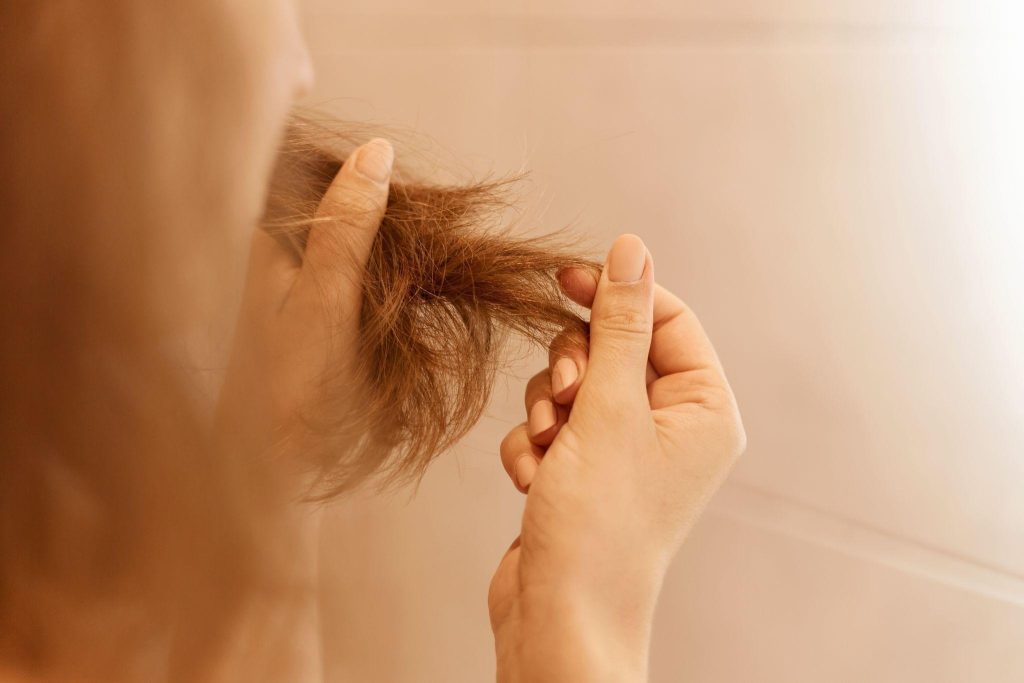
Most people treat dandruff like a minor inconvenience — a bit of white fluff on a dark shirt, easily brushed away. But if the flakes keep coming back month after month, and you’re also noticing more hair in the drain or a slowly thinning hairline, that’s worth paying attention to. The connection between persistent dandruff and hair loss is real, and understanding it can change how you approach both problems.
Why Dandruff Is More Than a Scalp Hygiene Problem
The most common cause of dandruff is an overgrowth of a yeast-like fungus called Malassezia. This organism naturally lives on everyone’s scalp, but in some people, it multiplies excessively and triggers an inflammatory response. The scalp reacts by speeding up its cell turnover, which is why you see those visible flakes — they’re dead skin cells being shed faster than normal.
What most people don’t realize is that this inflammation doesn’t stay confined to the surface. It reaches down into the hair follicles themselves, and that’s where the real damage starts.
How Scalp Inflammation Disrupts the Hair Growth Cycle
Each hair follicle goes through a cycle — growth, transition, rest, and shedding. When the scalp is chronically inflamed, it interferes with this cycle in a few important ways:
- The inflammation narrows blood flow to the follicle, reducing the supply of oxygen and nutrients that hair needs to grow
- Immune cells responding to the irritation can mistakenly attack follicle tissue
- Elevated levels of certain inflammatory molecules have been linked to a condition called follicular miniaturization, where hair strands gradually become thinner and shorter with each cycle
Over time, follicles that go through repeated stress may produce hair that is visibly finer, or in more advanced cases, may stop producing hair altogether. This is not an overnight process — it happens gradually, which is exactly why many people miss the connection until the hair loss is already significant.
The Role of Seborrheic Dermatitis in Long-Term Thinning
Dandruff in its more persistent, oilier form is often classified as seborrheic dermatitis. This condition tends to affect areas with a high concentration of sebaceous glands — the scalp, eyebrows, sides of the nose, and ears. On the scalp specifically, excess sebum combined with Malassezia activity creates a feedback loop that keeps inflammation running in the background for months or even years.
Research has found that people with long-standing seborrheic dermatitis are more likely to show early signs of androgenetic hair loss — commonly known as pattern baldness. The working theory is that chronic inflammation acts as an accelerant. It doesn’t necessarily cause pattern hair loss on its own, but it can push someone who is genetically predisposed into experiencing it earlier and more severely.
Scratching Makes Things Worse Than You Think
It’s almost impossible not to scratch an itchy scalp. But scratching adds a layer of mechanical trauma to an already inflamed follicle environment. Repeated scratching can:
- Create micro-abrasions that allow bacteria to enter the skin
- Physically disrupt the hair shaft and weaken the root’s grip
- Worsen the inflammatory response by stimulating more immune activity
Aggressive use of anti-dandruff shampoos can also backfire if overused. Stripping the scalp of all its natural oils frequently can cause rebound sebum production, making the underlying oiliness — and therefore the flaking — worse.
Addressing Both Problems From the Root
The mistake most people make is treating dandruff and hair loss as two separate problems. In many cases, they share the same underlying driver: a scalp environment that is inflamed, imbalanced, and not being addressed at the source.
A good starting point is learning how to manage scalp health at home through evidence-based methods. If you’re looking for dandruff treatment at home, the focus should be on restoring the scalp’s microbial balance, not just suppressing the visible symptoms temporarily. For those dealing with both active flaking and ongoing hair thinning, Traya hair treatment takes an integrated approach that looks at scalp health, hormonal factors, and nutritional gaps together rather than in isolation.
Final Thoughts
Persistent dandruff and gradual hair thinning are not two unrelated problems happening to share the same patch of skin. They are often expressions of the same deeper imbalance in the scalp environment. The sooner that connection is understood, the sooner it becomes possible to address both — not just cosmetically, but at the root cause level where they actually begin.
The post The Hidden Connection Between Persistent Flakes and Long-Term Balding appeared first on Vanguard News.

 Punch Nigeria
 Modern Ghana
 Vanguard Nigeria
 Business Day