

—Charges continent to stop exporting raw materials, embrace value addition
—Says Africa’s mineral future must serve its people
By Johnbosco Agbakwuru
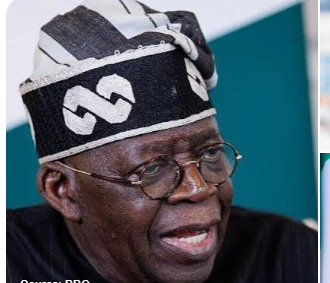
ABUJA — President Bola Tinubu has called for stronger cooperation among African countries to end the export of raw minerals and ensure that the continent derives greater economic value from its vast mineral resources.
Tinubu made the call in New York, United States, during the AMSG High-Level Roundtable on Critical Minerals Development in Africa, held on the sidelines of the 81st Session of the United Nations General Assembly.
The President, who was represented by Vice President Kashim Shettima, said Africa must move from being a supplier of raw materials to developing local processing, manufacturing and value chains around its mineral resources.
The roundtable, convened by Tinubu alongside AMSG Chairman and Minister of Solid Minerals Development, Dele Alake, was themed: “From Resources to Wealth: Continental Cooperation for Mineral Value Addition, Data Sovereignty, Innovative Financing and Critical Minerals Security.”
Tinubu said Africa could not continue to possess vast mineral wealth while its people remained poor and mineral-rich communities lacked adequate infrastructure, jobs and economic opportunities.
“For generations, Africa has furnished the materials of prosperity elsewhere. Our duty is to ensure that the future being fashioned from African minerals has room for African ambition,” he said.
The President noted that rising global demand for clean energy, artificial intelligence and advanced manufacturing had made minerals such as cobalt, copper, lithium and rare earth elements increasingly important to global supply chains.
He said Africa’s response should include processing, refining, battery production, component manufacturing, technology development and skills acquisition.
“The worth of a mine must be counted in the lives it improves,” Tinubu said, adding that jobs, industries, infrastructure, technology transfer, African enterprise participation and prosperity retained across generations should be used to measure progress.
Tinubu seeks common position
The President warned that African countries could weaken their collective bargaining power if they competed against one another through lower royalties, weaker local-content requirements and excessive concessions.
“Fragmentation leaves us exporting raw materials and buying finished goods at a premium. Cooperation gives our markets scale, our industries integration, our financing reach and our negotiations authority,” he said.
Tinubu said Nigeria was pursuing reforms aimed at increasing local value addition, strengthening geological data and investor access, organising artisanal miners into cooperatives, combating illegal mining and improving regulatory accountability.
He said revenue from the mining sector had risen from about N6 billion in 2023 to more than N38 billion in 2024 and between N68.1 billion and N70 billion in 2025.
The President also cited foreign investment commitments and the development of large-scale lithium processing capacity in Nasarawa State as indications of opportunities in the sector.
Tinubu said Nigeria’s mining policy direction required minerals extracted in the country to support Nigerian industries, workers, skills and communities.
He urged other African countries to adapt lessons from Nigeria’s experience while developing partnerships based on mutual benefit, sovereign equality, fair market access, industrial investment and technology transfer.
The President also called on AMSG member countries to speak with one voice in advancing Africa’s collective interests.
He said the Continental Integration and Economic Assurance Declaration adopted at the roundtable should lead to a binding implementation programme with timelines, financing arrangements and public accountability.
Alake seeks wider AMSG membership
Earlier, Alake said the proposed Continental Integration and Economic Assurance Declaration was designed as a framework for creating a unified architecture for Africa’s critical and solid minerals value chains.
He urged African countries that had yet to join AMSG to become members, saying greater cooperation would strengthen the continent’s ability to harness its mineral resources.
Alake said Africa’s mineral ambitions could not be achieved through policy alone, stressing the need for partnerships covering financing, infrastructure development and industrialisation.
Kenya’s Minister of Blue Economy and Maritime Affairs, Hassan Ali Joho, also called for greater domestic resource mobilisation to support solid minerals development.
Joho urged AMSG members to promote transparency, competitiveness and greater alignment of licensing procedures while respecting the sovereignty of member states.
Representatives of Liberia, Chad, Tanzania and other stakeholders also contributed to discussions at the roundtable.
The State House has previously said AMSG is a forum of African ministers responsible for mining and solid minerals, with the group seeking greater cooperation and value addition across the continent’s mineral sector.
The post Tinubu seeks African alliance to protect mineral wealth appeared first on Vanguard News.