

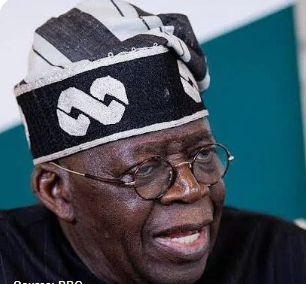
— Rep says reform has boosted government revenue, capital spending
By Anayo Okoli
ENUGU — A member of the House of Representatives, Dennis Nnamdi Agbo, has described President Bola Tinubu’s removal of the petrol subsidy as the most patriotic act by a Nigerian president since independence in 1960.
Agbo said Nigeria was technically bankrupt when Tinubu assumed office on May 29, 2023, arguing that drastic measures were required to address the country’s economic challenges.
The lawmaker, who represents Igbo Eze North/Udenu Federal Constituency, Enugu State, and is a former consultant with the World Bank and the United Nations Development Programme (UNDP), spoke while delivering the 2026 Distinguished Public Lecture Series of the Department of Public Administration and Local Government at the University of Nigeria, Nsukka (UNN).
The lecture, held at the Princess Alexandra Auditorium, was titled “Three Years of Post-Subsidy Removal: Evaluating the Socio-Economic Effects of Nigeria’s Deregulated Downstream Sector.”
Agbo acknowledged that the policy was neither populist nor politically convenient but described it as a decision driven by what he called a generational outlook and patriotic zeal.
“Truth be told, if we appreciate the true workings of our national politics, it will be understood that the removal of fuel subsidy is the most patriotic act of a president since our independence,” he said.
He argued that successive administrations had avoided removing the subsidy despite its perceived inevitability, largely because of a lack of political will.
“Many, almost all the presidential candidates in the 2023 election, campaigned with a promise to remove fuel subsidy. It was clearly inevitable considering the parlous condition of our nation then,” he said.
According to him, Tinubu has remained resolute in implementing the policy despite the public backlash, adding that the decision was intended to steer the country towards economic recovery.
“For too long, we have yearned for Nigerian and African economic renaissance, but we failed to take the bold steps that unleash the benefits of our vast economic potentials, for Nigerians, for Africans.
“The removal of fuel subsidy in Nigeria is one such bold step, and it is already redefining the outlook for our continent’s economy,” Agbo said.
He also linked the policy to investment in refining capacity across Africa, citing the Dangote refinery in Nigeria and a proposed refinery investment in Kenya as examples of the continent’s changing economic outlook.
However, the figures and details of the Kenyan project cited in his remarks were not independently established in the information provided.
Agbo listed other benefits he attributed to subsidy removal as increased government revenue, the clearance of recurrent debts owed by states, funding for major state projects, economic expansion, GDP growth, increased foreign reserves, exchange-rate stability and the growing adoption of solar energy.
The lawmaker further claimed that the Federal Government had maintained capital expenditure at about 70 per cent of the budget over the past three budget cycles, compared with between 25 and 30 per cent previously.
He said the size of the capital budget had also risen to as much as ₦40 trillion annually, adding that even after accounting for currency depreciation, the amount represented a substantial increase over previous years.
On the social and economic difficulties associated with the policy, Agbo acknowledged the pressure on household welfare and the rising cost of essential services.
He said the government recognised that the reforms, although considered necessary by the administration, had imposed significant hardship, particularly on poor and vulnerable Nigerians.
“The government is prepared to stay the course of reforms, but nevertheless, committed to attending to the plight of this group whose fortunes have been most affected by inflation, rising prices and high cost of living, mainly occasioned by after effects of economic reforms,” he said.
The post Tinubu’s subsidy removal most patriotic act since independence — Agbo appeared first on Vanguard News.