

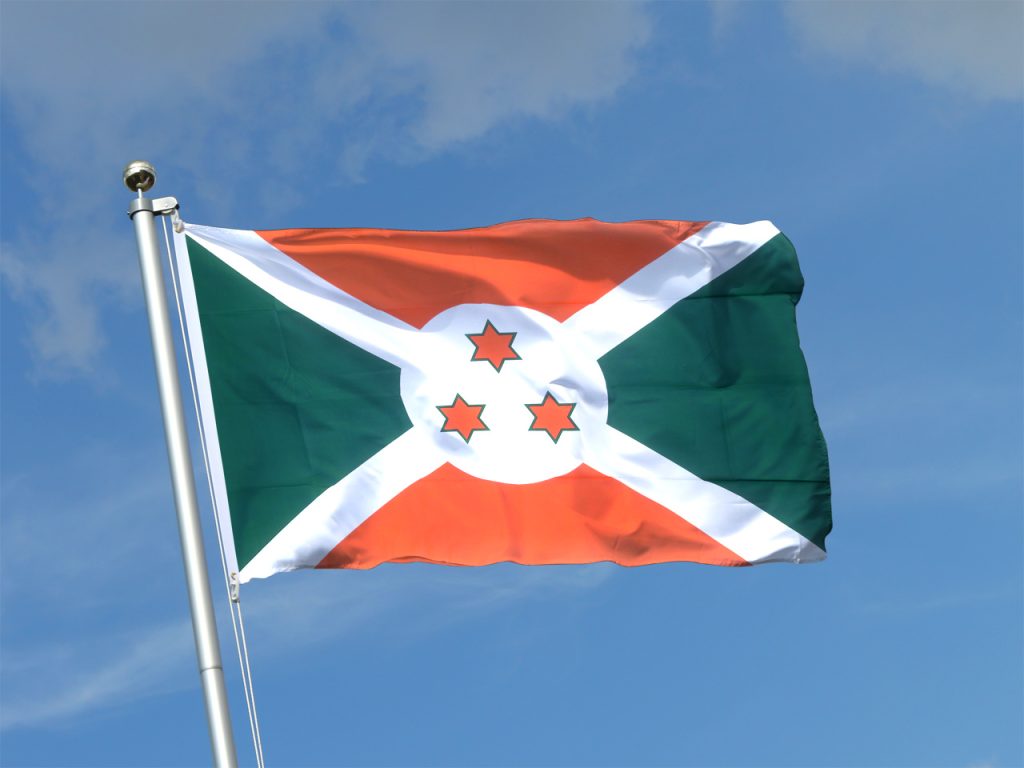
Global Finance Magazine has ranked the world’s poorest countries based on GDP per capita measured in purchasing power parity (PPP), with Burundi recording the lowest figure on the list.
Nigeria ranked 56th in the latest ranking, with a GDP per capita of $9,532.92, dropping 12 places from its 44th position in 2025.
The ranking highlights the economic challenges facing several developing countries, particularly in Africa, where conflict, political instability, poverty, weak infrastructure and dependence on agriculture continue to affect living standards.
Here are the 10 poorest countries, according to Global Finance Magazine:
10. Democratic Republic of the Congo — $2,032.68
The Democratic Republic of the Congo has struggled with political instability, conflict and poor infrastructure since gaining independence from Belgium in 1960.
Despite its economic challenges, the country has vast mineral resources and is the world’s leading producer of cobalt and a major source of copper. Global Finance noted that the DRC has the potential to become one of Africa’s wealthiest economies.
9. Madagascar — $2,030.36
Madagascar has experienced political instability, disputed elections and economic difficulties since independence in 1960.
The country also faces major climate risks, including droughts, floods and cyclones, which frequently damage crops and infrastructure. About 75% of the population lives in poverty.
8. Liberia — $1,979.42
Liberia, Africa’s oldest republic, has remained among the world’s poorest countries for decades.
The economy has recently shown signs of improvement, with growth driven by mining, agriculture and exports. Economic growth is projected to remain around 5% in 2026.
7. Somalia — $1,905.21
Somalia has made progress with economic and structural reforms despite repeated droughts, floods and other crises.
However, the continued threat posed by Al-Shabaab has undermined some of those gains. Millions of Somalis are also expected to require humanitarian assistance.
6. Malawi — $1,758.03
Malawi’s economy depends heavily on rain-fed agriculture, making it particularly vulnerable to droughts and other weather shocks.
The country continues to face high inflation, weak foreign exchange reserves and heavy public debt, while economic growth remains insufficient to significantly improve living standards.
5. Mozambique — $1,688.91
Mozambique is rich in natural resources and has previously recorded strong economic growth, but poverty remains widespread.
Islamist insurgency in the country’s gas-rich north and political unrest following disputed elections have disrupted economic activity. The economy contracted in 2025 before beginning a fragile recovery.
4. Yemen — $1,590.19
Years of conflict have devastated Yemen’s economy and infrastructure.
The ongoing struggle between the internationally recognised government and the Houthi movement has contributed to widespread poverty and one of the world’s worst humanitarian crises.
3. South Sudan — $1,467.19
South Sudan, which became independent in 2011, has been plagued by conflict and political instability.
Although the country has substantial oil reserves, disruptions to oil production and exports have severely affected government revenues. Nearly 90% of the population lives below the poverty line, according to the World Bank.
2. Central African Republic — $1,437.72
The Central African Republic possesses significant deposits of gold, diamonds, uranium and other natural resources but remains one of the world’s poorest countries.
Years of conflict and political instability have prevented sustained economic growth, while large parts of the country remain affected by armed groups.
1. Burundi — $994.23
Burundi ranks as the world’s poorest country on Global Finance Magazine’s list, with GDP per capita of just $994.23.
The landlocked East African country continues to struggle with the effects of its civil war, which lasted from 1993 to 2005. Most of its population depends on subsistence agriculture, while access to electricity, clean water and sanitation remains limited.
Despite these challenges, Burundi’s economic outlook is showing some improvement. The International Monetary Fund projects economic growth of almost 4% in 2026, alongside a more stable inflation outlook.
The ranking underscores how conflict, political instability, limited infrastructure, climate shocks and weak economic diversification continue to constrain development in some of the world’s poorest nations.
Vanguard News
The post Top 10 poorest countries in the world as African countries dominate appeared first on Vanguard News.