

By OWOLOLA ADEBOLA
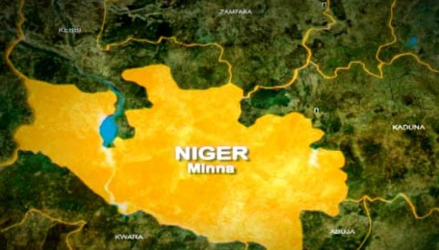
In the early hours of 17 September 2026, a grim discovery was made in Minna, capital of Nigeria’s mineral-rich Niger State. Thirty-seven young men and boys, arrested days earlier on suspicion of illegal mining, were found dead in the custody of the Nigeria Security and Civil Defence Corps (NSCDC). Many of the deceased were teenagers, some as young as 14 or 15. The circumstances remain contested and opaque, sparking public outrage, protests and urgent calls for an independent investigation. The suspects had been rounded up on 15 and 16 September during enforcement operations in the M.I. Wushishi and Lukoto areas of Minna. Artisanal mining for gold and other minerals is widespread in the state, drawing thousands of young people seeking livelihoods amid economic hardship.
Many of those arrested were youths and minors who had turned to informal mining simply to survive. Survivors and families later said the detainees were held in severely overcrowded conditions—estimates put as many as 65 people in a single cell designed for far fewer. Initial statements from the NSCDC attributed the deaths to a “suspected outbreak of disease.” The bodies were taken to the General Hospital in Minna for examination, and the Corps announced an internal probe into the conditions of arrest, custody and medical care. Niger State Governor Umar Bago described the incident as “sad” and “tragic,” confirming that a committee of inquiry had been established and that personnel involved had been suspended.
That official narrative quickly faced scrutiny. Survivors offered a starkly different account. Dauda Shehu, one of those who lived through the ordeal, told journalists the cell had no ventilation: “We were jam-packed… no ventilation for us to breathe well.” Detainees struggled for air, banged on the doors and pleaded for help as companions collapsed one after another. Guards, according to accounts, did not respond promptly.
An intelligence report cited by multiple outlets pointed to overcrowding, extreme heat, dehydration and suffocation as the likely causes rather than an unidentified disease. Videos circulating on social media showed young bodies, many appearing to be teenagers clad only in shorts, laid out on the ground as families tried to identify their loved ones.
The presence of minors among the dead has deepened the sense of national tragedy. Amnesty International Nigeria and local groups such as Women in Mining Nigeria highlighted that teenagers were among the victims and demanded a prompt, thorough, independent and transparent investigation. They insisted that anyone responsible for negligence or abuse of power face full legal accountability, not merely administrative sanctions. Families have spoken of sons who left home as breadwinners or students doing menial work to support their households, only to die in custody. One father described seeing his son’s body in poor condition and alleged mistreatment.
Protests erupted in Minna, with police firing shots to disperse crowds amid rising tensions. This incident does not stand alone. Illegal and artisanal mining across Nigeria and West Africa has long claimed young lives through pit collapses, toxic exposure and hazardous conditions. In Niger State itself, a 2024 pit collapse killed at least 15 miners, exposing weak regulation.
Across the region, children and adolescents are drawn into the sector because their smaller frames allow access to narrow tunnels and because poverty leaves few alternatives. The deaths in Minna raise deeper questions about how the state treats those arrested for survival-driven informal work and whether detention facilities meet basic standards of human dignity.
Root causes run deeper than a single night in a cell. Nigeria’s formal mining sector has struggled to absorb the large numbers of people seeking opportunity in gold and other minerals. Weak enforcement against illegal sites coexists with aggressive crackdowns that sometimes sweep up the most vulnerable. When young people are detained en masse without adequate medical screening, ventilation or monitoring, the risks escalate rapidly. Survivors’ accounts of ignored cries for air suggest a failure of basic custodial care that turned an enforcement operation into a mass-casualty event. Of course, authorities have responded with probes and suspensions. The NSCDC has emphasised collaboration with health authorities and other agencies. Human-rights organisations, however, stress that internal investigations alone are insufficient.
They call for independent oversight of autopsies, full public disclosure of findings, and prosecution where evidence of negligence or misconduct emerges. The National Human Rights Commission and other bodies have echoed demands for accountability, underscoring that every person in custody retains the right to life and humane treatment regardless of the allegations against them. Beyond immediate justice for the 37 who died, the tragedy underscores the need for broader policy reform: formalising artisanal mining, providing safer livelihood alternatives for youth, strengthening child-protection measures in mining communities, and ensuring detention facilities meet minimum standards.
Criminalising poverty while failing to protect the young from both hazardous work and unsafe custody perpetuates cycles of loss.
As autopsies continue and the official inquiry unfolds, the families of the deceased wait for answers. The images of teenage bodies and the testimony of survivors who gasped for air have seared themselves into public consciousness. What began as an operation against illegal mining has become a test of institutional accountability and the value placed on young Nigerian lives. Whether the deaths are ultimately attributed to disease, suffocation or a combination of factors, they demand clarity, transparency and meaningful change so that such a preventable tragedy is not repeated.
•Adebola, the State Publicity Secretary of Nigeria Democratic Congress NDC, Ondo State Chapter, wrote in from Akure.
The post Tragedy in custody: The deaths of young miners in Niger State appeared first on Vanguard News.