

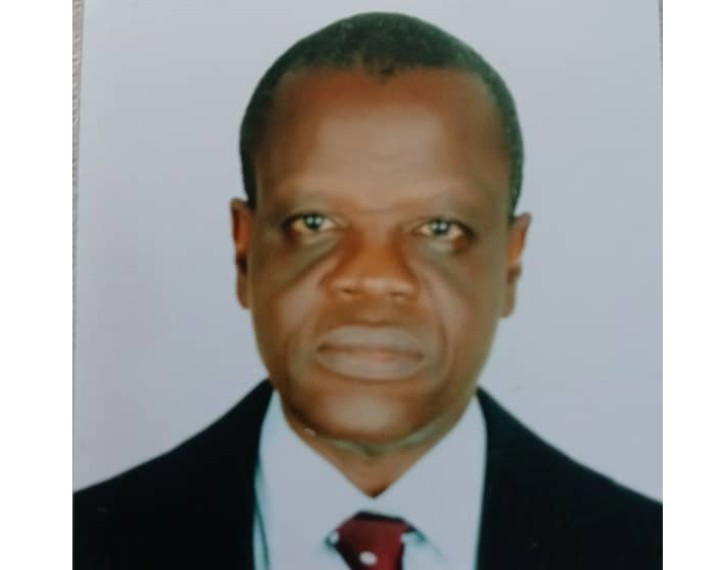
Many years ago, Pastor Tunde Bakare’s voice was particularly outstanding in the debate over the misuse of anointing oil, especially olive oil, as an effigy of the power of God. Many of us, including your correspondent, then based in Kaduna, were particularly enchanted by his one-hour Sunday evening television broadcasts on Channels Television where he blended Old Testament religious proclamations with contemporary political discourse in a manner that was both captivating and intellectually engaging.
He was in the mould of Elijah, who challenged the wicked King Ahab; John the Baptist, who confronted Herod; and Jesus Christ, who fearlessly challenged the religious establishment and the political order represented by the likes of Herod, whom He described as a fox.
Bakare projected the image of a preacher who was not afraid to speak truth to power, whether in the church or in government. His interventions were often forceful, his biblical references uncompromising, and his denunciations of religious excesses particularly refreshing to many who believed that the pulpit should remain a place of truth and accountability.
The questions about Bakare, however, began to emerge after he joined the political fray.
His association with Muhammadu Buhari during the 2011 election cycle was his first major public adventure into partisan politics. The political partnership did not produce the expected electoral outcome. Some questioned his movement from the pulpit to the political podium, particularly against the backdrop of scriptural cautions about the tension between spiritual devotion and the worldly considerations that often drive political contests.
His less-than-expected reaction to the killings of mostly Christian National Youth Service Corps members in the aftermath of the 2011 election would also have disappointed many who had looked up to him as a moral voice. Yet, his political journey continued.
Before the 2023 presidential election, Bakare made an even more remarkable declaration: that he would become Nigeria’s 16th president. Many, including yours sincerely, took the pronouncement seriously, largely because of the regard in which he was held as a servant of God. A preacher who speaks with such certainty about the future, particularly when presenting it as a divine revelation, invites people to believe that his words are informed by something beyond personal ambition.
The outcome of the APC presidential primary in June 2022 was therefore particularly instructive. Pastor Bakare scored zero votes.
Since the emergence of Asiwaju Bola Ahmed Tinubu as Nigeria’s 16th president, not much has been heard from Bakare in the kind of forceful public interventions that once defined his ministry. That is until recent reports about his role in, or apparent sanction of, the marriage of two previously married individuals: former actor and pastor Jimmy Odukoya and his new wife, Moya Jasmine Daniel, who was previously married to British-Nigerian gospel music producer Mosadoluwa Adegboye, popularly known as Mosa.
This second marriage by Pastor Jimmy Odukoya comes against the background of the controversy surrounding his succession to his late father’s church and ministry. His inheritance of the church has raised questions among some Christians about the character of religious leadership and whether a ministry established through spiritual calling should become a family inheritance passed down according to biological succession.
For critics, the concern is not necessarily about whether a son can become a pastor after his father, but whether the church of God is being treated as a personal enterprise in which leadership is transferred along family lines. Many would be hard-pressed to imagine Apostle Peter, for instance, handing over the church entrusted to him and the other disciples to his children as a family inheritance.
There has also been discomfort among some Christians over reports that Jimmy Odukoya was part of the groom’s entourage at his new wife’s first wedding to her former husband about ten years ago. The development has added another layer to the questions surrounding the circumstances of the present marriage.
Divorce and remarriage remain subjects of considerable disagreement among Christians. However, the words of Jesus in Matthew 19:6 are unambiguous about the sanctity of marriage: “What therefore God hath joined together, let not man put asunder.”
In Mark 10:11–12, Jesus also warns against divorce followed by remarriage, describing it as adultery. Apostle Paul, in 1 Corinthians 7:10–11, instructs married couples not to separate and says that where separation occurs, the parties should remain unmarried or seek reconciliation. In verse 39, he further states that a married woman is bound to her husband for as long as he lives.
There are, of course, different Christian interpretations of the biblical provisions, particularly concerning sexual immorality, abandonment and other exceptional circumstances. But the seriousness with which the New Testament treats marriage is hardly in doubt.
More significantly, the Bible sets specific standards for those aspiring to Christian leadership. In 1 Timothy 3:2 and Titus 1:6, Paul says that a bishop or elder must be “the husband of one wife.”
It is against this background that Bakare’s reported role in the marriage of the two previously married individuals raises questions. How does a preacher who once spoke so forcefully about biblical purity and the integrity of Christian doctrine reconcile his apparent involvement with the remarriage of two divorcees? What biblical considerations informed his position?
The troubling issue for many Christians is the apparent silence surrounding his reported involvement in the second marriage of Jimmy Odukoya and his new wife.
What becomes of the message preached to divorced, separated and abandoned men and women who have chosen not to remarry because they believe the Bible places restrictions on divorce and remarriage? How does a pastor explain to such people that a position they have embraced at considerable personal cost may be treated differently when the individuals involved occupy prominent positions in the church?
For a preacher whose public reputation was built partly on the courage to challenge religious excesses and insist on biblical truth, the questions deserve an answer.
Bakare once commanded attention because he appeared unwilling to bend scripture to accommodate convenience. The challenge before him now is to explain how his present actions align with the convictions that once made his voice so compelling.
The post Tunde Bakare: The Preacher, The Politician And Two Divorcees, by Emmanuel Aziken appeared first on Vanguard News.