

…Says Nigerian forces killed, arrested four of eight global terror leaders
By Kingsley Omonobi
President Bola Tinubu has disclosed that more than 2,000 suspected terrorists have been convicted following prosecution, placing Nigeria among countries with high rates of terrorism-related prosecutions globally.
The President also said Nigerian security forces had killed or arrested four of eight identified senior global terrorist leaders, describing the development as evidence of the country’s growing capacity to dismantle terrorist networks.
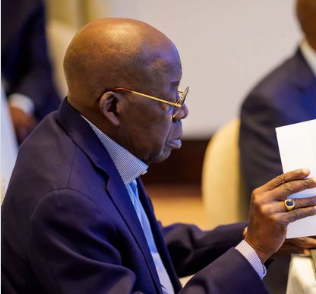
Tinubu, represented by the National Security Adviser (NSA), Mallam Nuhu Ribadu, made the disclosures on Monday at the opening of the 2026 Chief of Defence Intelligence (CDI) Annual Conference in Abuja.
Highlighting the operational successes recorded by security agencies, the President cited the elimination of senior Islamic State leader, Abu Bilal al-Minuki, in May 2026, and the arrest of Omar Hassan Ma’adou as notable examples.
He said the operations also targeted Ahmed Ohida’s ISWAP southern expansion network, while Abu Barra of Ansaru and Mamuda of Mahmudawa were arrested in 2025.
“Recent operational successes demonstrate our growing capacity to dismantle terrorist leadership, disrupt expansion networks and deny violent groups freedom of action.
“Under this administration, four of eight identified senior terrorist leaders have been killed or arrested. These gains include action against Ahmed Ohida’s ISWAP southern expansion network, the elimination of senior Islamic State leader Abu Bilal Mainuki in May 2026, and the arrests of Abu Barra of Ansaru and Mamuda of Mahmudawa in 2025,” he said.
Tinubu identified the remaining four senior terrorist figures as Ba Shuwa of ISWAP, Abdullahi Oro of IS-Sahel, Sadiku of JAS in the North-Central region and Bakura Doro in the Lake Chad Basin.
He said security operations remained focused on the remaining leaders, adding that the security services had also killed senior bandit leaders, including Halilu Sububu, alongside several of their fighters.
According to him, the operations reflected sustained and coordinated pressure on terrorist command structures, but stressed the need to translate the gains into lasting security.
On developments in the Niger Delta, Tinubu disclosed that recorded incidents of illegal oil bunkering and vandalism of critical oil and gas installations declined from 32 in the first quarter of 2026 to 21 in the second quarter and 17 in the third quarter.
He said the figures represented a 46.88 per cent reduction between the first and third quarters.
The President added that crude oil and condensate production averaged about 1.68 million barrels per day in August 2026, stressing the need to sustain the protection of the country’s energy assets and national revenues.
He attributed the security gains to closer intelligence sharing and coordinated action among the Department of State Services (DSS), Armed Forces, Police and other security agencies.
Tinubu said the administration would consolidate the gains, sustain pressure on criminal and terrorist networks and protect vulnerable communities, particularly ahead of the 2027 general elections.
“Every Nigerian must be able to live, work and exercise their democratic rights in safety,” he said.
On the changing intelligence landscape, the President said rapid technological advancement and the growing volume of information had created new opportunities and challenges for security operations.
He identified artificial intelligence, machine learning, cyber capabilities and unmanned systems as important tools for detecting patterns, mapping criminal networks and generating early warnings.
He called for the integration of AI-assisted analysis, geospatial intelligence and unmanned surveillance through secure and interoperable systems capable of converting information into timely operational action.
Tinubu, however, cautioned that artificial intelligence outputs must be subjected to verification and accountable human judgement.
He said data protection and cybersecurity safeguards must also be incorporated into intelligence systems, alongside measures to detect deepfakes and other forms of AI-enabled deception.
“Technology must strengthen the trusted human intelligence on which effective security depends,” he said.
The President further disclosed that he had directed the Special Adviser on Homeland Security, Major General A.A. Famadewa (rtd), to coordinate the preparation of a Comprehensive National Threat Assessment and a Five-Year Rolling Strategic Defence Operations Plan.
He said the initiative would place accurate, integrated and forward-looking intelligence at the foundation of Nigeria’s defence planning.
Tinubu also emphasised the importance of collaboration among the Armed Forces, Defence Intelligence Agency, DSS, National Intelligence Agency, Nigeria Police Force, Nigeria Security and Civil Defence Corps and other relevant institutions.
He said intelligence cooperation should extend to regional and international partners, subnational entities, technology companies and research institutions within appropriate legal and security frameworks.
The President listed the United States, France, the United Kingdom, China, the United Arab Emirates, Türkiye and Nigeria’s African neighbours among countries with which his administration had strengthened security relationships.
He pledged to deepen intelligence sharing, training and technological cooperation while protecting Nigeria’s sovereignty and national interest.
He also urged Defence Advisers and Attachés abroad to strengthen bilateral and multilateral engagements with host countries and international partners.
Similarly, Tinubu called on State Office Coordinators to intensify collaboration with local security agencies to ensure effective intelligence gathering and integration.
He commended the Chief of Defence Intelligence, Lieutenant General Emmanuel Akomaye Parker Undiandeye, and his team for their leadership and contributions to strengthening defence intelligence and strategic cooperation.
In his remarks, the Minister of Defence, retired General Christopher Musa, commended intelligence personnel for their professionalism and contributions to national security.
Musa urged them to remain proactive, stressing that credible, timely and actionable intelligence was critical to successful military operations.
He also reaffirmed the Federal Government’s commitment to indigenous defence production, describing local manufacturing as essential to achieving sustainable military capabilities.
The Chief of Defence Staff, General Olufemi Oluyede, said intelligence remained fundamental to operational planning, strategic decision-making and effective military responses.
Oluyede called for increased investment in artificial intelligence, advanced data analytics, geospatial intelligence and unmanned systems.
He said the Armed Forces would continue to prioritise intelligence integration, capacity development and technological innovation.
The CDS stressed the need to transform security operations from largely reactive responses to proactive, intelligence-led engagements capable of anticipating and disrupting threats before they materialise.
The conference, organised by the Defence Intelligence Agency, is themed, “Optimising Intelligence through Technological Innovations for Effective Strategic Operations in a Complex Security Environment.”
The post Updated: Over 2,000 terrorists convicted after prosecution – Tinubu appeared first on Vanguard News.