

…Atiku’s lobby firm dismisses engagement as “ lots of talk about nothing”
By Nkiruka Nnorom
Despite Nigeria’s reported prosecution of hundreds of terror suspects and recruitment of 50,000 police officers, the United States said continuing challenges remained in the fight to remove Nigeria from its Country of Particular Concern, CPC, list.
The US noted that the federal government’s efforts in supporting and returning the internally displaced persons, IDPs, to their ancestral homes were inadequate and also flagged the rising civilian deaths from terrorism as part of the challenges that would possibly constrain removal of Nigeria from the CPC list.
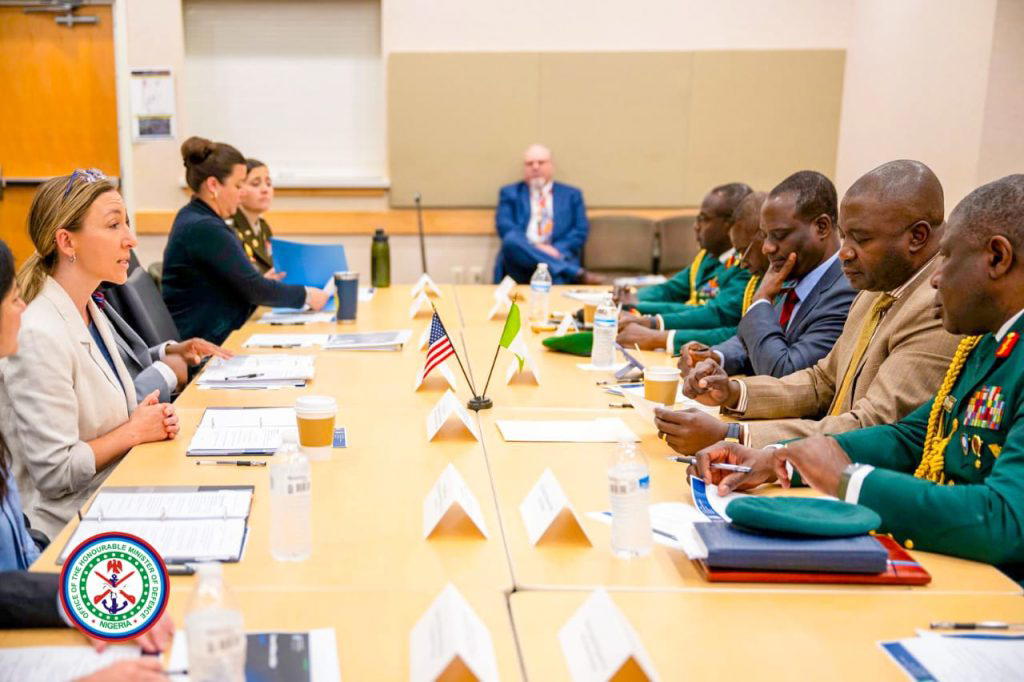
The admission came at the end of the second US-Nigeria Joint Working Group, JWG, meeting in Washington on Tuesday, where both sides reviewed progress so far in the counterterrorism efforts since the first meeting in Abuja in January 2026.
Meanwhile, US lobby firm Von Batten-Montague-York LC, hired by former Vice President Atiku Abubakar, immediately downplayed the significance of the engagement, describing it as “a lot of discussion about nothing” and said that Trump’s administration would not endorse President Bola Tinubu.
According to a media note by the US State Department, discussions between both countries centred on three priority areas, including protecting Christian communities in Nigeria’s Middle Belt, holding perpetrators accountable through stronger judicial and security institutions, and military-to-military cooperation.
Under Secretary of State for Political Affairs Allison Hooker hosted the JWG with a Nigerian delegation led by National Security Adviser, NSA, Mallam Nuhu Ribadu. The meeting followed the first session in Abuja in January 2026.
The US noted Nigeria’s efforts to date, including counterterrorism prosecutions of Boko Haram and ISIS-WA suspects, expansion of judicial capacity, and police recruitment.
Both sides, according to the State Department, also reviewed progress on IDP resettlement, countering terrorism financing, biometric information sharing, and law enforcement capacity building through the State Department’s Bureau of International Narcotics and Law Enforcement Affairs (INL) and Bureau of Counterterrorism (CT).
The Department, however, flagged civilian fatalities and lack of transparency in humanitarian spending.
“The JWG identified continuing challenges, including reports of civilian fatalities and gaps in humanitarian expenditure transparency.
“Both sides acknowledged that more work lies ahead, particularly with supporting IDPs,” the statement said.
The Department, nonetheless, reaffirmed the United States’ commitment to working with Nigeria to protect Christian communities and to deepen joint security cooperation.
Nigeria’s Minister of Foreign Affairs, Amb. Bianca Odumegwu-Ojukwu, also posted from Washington, describing the meeting as one to “evaluate progress in bilateral counterterrorism efforts and chart the next phase of security collaboration.”
In an update on the JWG meeting, Odumegwu-Ojukwu said the sessions were aimed at strengthening Nigeria–US defence cooperation, improving IDP protection, intelligence coordination, tackling terror financing, border control, and a strategic review of the Defence Roadmap.
“The first edition of this meeting was held in Abuja in January 2026 as part of efforts to strengthen cooperation on security and intelligence sharing, protection of vulnerable communities, particularly at risk of religiously motivated violence.
“These sessions are geared towards strengthening Nigeria–United States security and defence cooperation, reviewing plans for return and enhanced protection of IDPs, intelligence gathering and coordination, tackling terror financing, holding perpetrators accountable, more effective border control measures to stem the flow of illicit goods, resources and people, and a strategic review of the Defense Roadmap,” she wrote.
A lot of discussion about nothing — US lobby firm counters
However, the official optimism was challenged by US public affairs firm, Von Batten-Montague-York LC, which said the meeting signalled little progress at the political level.
The firm described the meeting as a futile attempt to force a meeting between President Donald Trump and President Tinubu.
“Earlier this week…, we communicated the sentiment from the U.S perspective: a lot of discussion about nothing, excuses, and futile attempts to have President @realDonaldTrump host President Tinubu at the @WhiteHouse,” the firm posted on X.
It questioned the delegation’s protocol, arguing: “Based on strict official protocol seniority recognized by the United States and Nigeria, the Tinubu government’s delegation would ordinarily be led by Nigerian Foreign Minister, Bianca Ojukwu, and met at the corresponding level by Secretary of State Marco Rubio. That the Nigerian government’s PR spin presents National Security Adviser, Nuhu Ribadu and highlights a meeting with Allison Hooker, one of many Under Secretaries of State, communicates an unspoken but diplomatically significant message about the level at which the Trump Administration received Tinubu’s delegation.”
The firm alleged that Trump had “made it clear that he is not going to endorse or personally support an alleged drug trafficker for President of Nigeria in the upcoming presidential election.”
The firm added: “The United States will continue to work with Nigeria on shared interests, but no Nigerian delegation will convince the U.S government to throw its support behind President Bola Tinubu, who is an alleged heroin trafficker. Not now. Not ever.”
“We have a message for President Bola Tinubu: You can send the entire Nigerian government next time, but we will continue to work to ensure that it does not change the reality in DC.”
The post US flags civilian deaths, funding gaps as Nigeria pushes for CPC delisting appeared first on Vanguard News.