

The Uganda Wildlife Authority (UWA) has unveiled its Strategic Plan, Client Charter and Service Delivery Standards for the period 2025/26–2029/30, setting an ambitious roadmap to strengthen wildlife conservation, improve public service delivery and position Uganda as one of Africa’s leading sustainable tourism destinations.
The documents, launched at Protea Hotel in Kampala, are expected to guide the authority’s conservation efforts over the next five years while promoting tourism investment, biodiversity protection, community participation and institutional accountability.
Presiding over the launch, Deputy Head of Public Service Jane Kyarisiima Mwesiga described the new strategic instruments as a major milestone in strengthening institutional performance, transparency and citizen-centred service delivery in Uganda’s wildlife sector.
She commended the UWA Board of Trustees, management and stakeholders for developing the documents through an inclusive consultative process, saying their preparation reflects a shared commitment to sustainable conservation and national development.
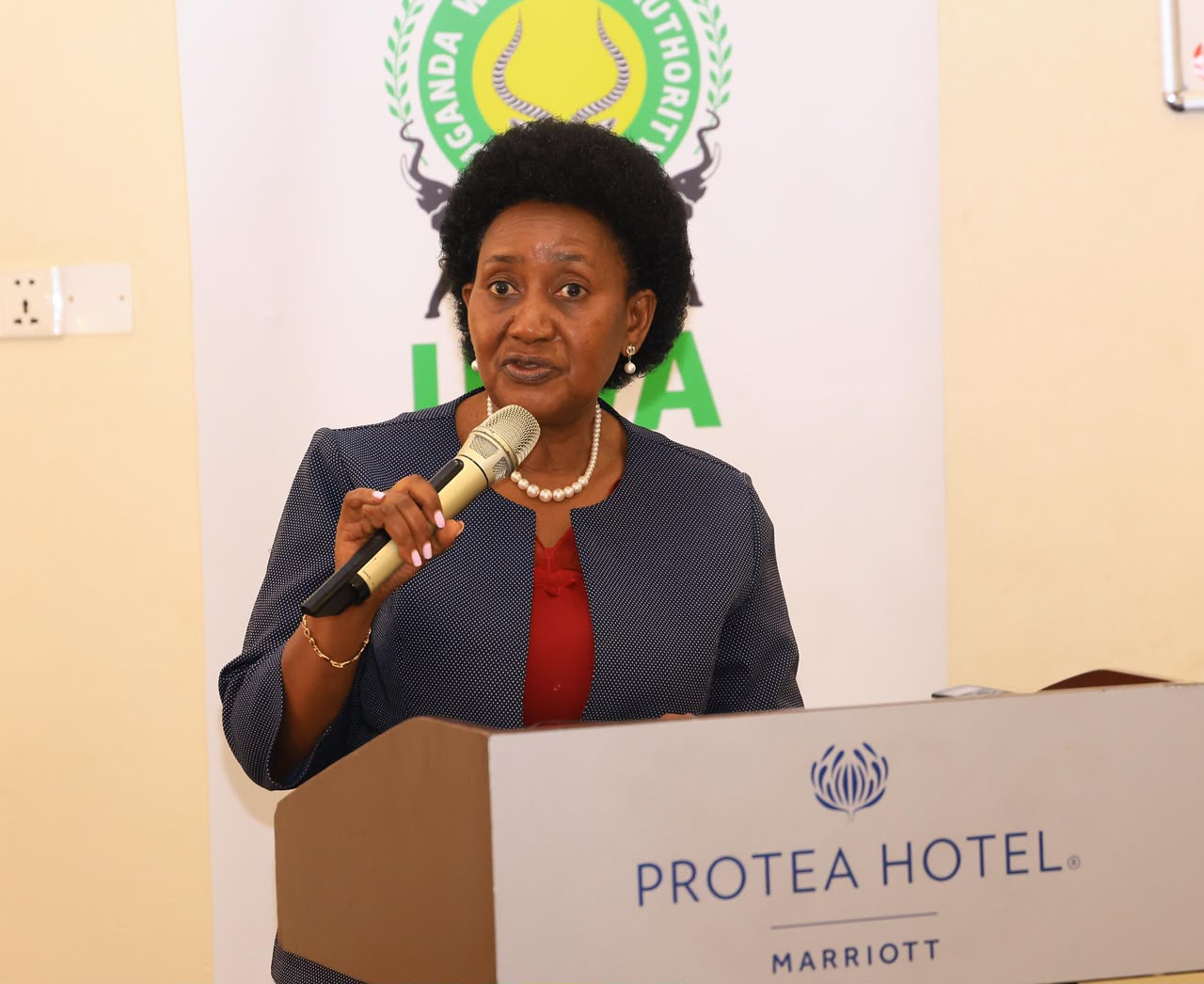
“The question every public institution must ask itself is: What value are we creating for the citizens we serve?” Kyarisiima said.
She noted that modern public institutions are increasingly judged not by the amount of money they spend but by the measurable impact they create in improving people’s lives.
According to Kyarisiima, UWA creates public value by conserving national parks and protected areas for future generations, generating tourism revenue, creating employment opportunities, supporting neighbouring communities through revenue sharing, protecting ecosystems that sustain agriculture and water resources, and enhancing Uganda’s international reputation as the Pearl of Africa.
“Every protected wildlife area, every conservation effort, every tourist who visits Uganda, every empowered community and every restored ecosystem represents value delivered to the people of Uganda,” she said.
She observed that Uganda’s exceptional natural heritage remains one of the country’s greatest competitive advantages, with national parks and protected areas hosting unique ecosystems and iconic wildlife species that continue to attract visitors from around the world.
Kyarisiima further described wildlife conservation as both an environmental obligation and an economic necessity, noting that tourism remains one of Uganda’s leading sources of foreign exchange earnings, employment and rural livelihoods.
She said the strategic plan aligns with the Fourth National Development Plan and Uganda’s Tenfold Growth Strategy by focusing on sustainable wildlife management, biodiversity conservation, ecosystem restoration, tourism development, investment promotion, community benefit sharing, technological innovation, institutional resilience and strategic partnerships.
She also said the Client Charter and Service Delivery Standards establish clear expectations for both the authority and the public, reinforcing transparency, accountability, responsiveness and quality service delivery.
However, she cautioned that the success of the new framework will depend on effective implementation, monitoring, coordination and accountability rather than the existence of policy documents alone.
Speaking at the launch, UWA Executive Director Dr. James Musinguzi said the strategic plan demonstrates the authority’s commitment to delivering professional, accountable and efficient services while safeguarding Uganda’s wildlife resources.
He revealed that UWA has already begun implementing several components of the strategy through digital transformation and modern conservation technologies.
Among the innovations, the authority has deployed the EarthRanger wildlife monitoring system, enabling conservation teams to track collared animals in real time to improve their protection and minimise human-wildlife conflict.
The authority has also expanded the use of drones and surveillance aircraft to strengthen monitoring across protected areas, while introducing a fully cashless payment system that allows visitors to pay electronically through bank cards and mobile money.
Dr. Musinguzi said UWA has also published the State of Wildlife Resources Report, which shows continued growth in Uganda’s wildlife populations and provides critical information for planning, research and conservation management.
One of the authority’s landmark achievements, he noted, has been the successful return of rhinos to Uganda’s protected areas after the species became extinct in the wild in 1983.
Working with government and conservation partners, the rhino population has grown to 61 at Ziwa Rhino Sanctuary, paving the way for the reintroduction of the animals into the wild.
UWA has already translocated four southern white rhinos to Ajai Wildlife Reserve and another four to Kidepo Valley National Park, with plans underway to relocate an additional 16 rhinos to Ajai Wildlife Reserve and 10 more to Kidepo Valley Conservation Area.
The reintroduction is expected to diversify Uganda’s tourism products while restoring one of the country’s iconic wildlife species.
Dr. Musinguzi also disclosed that UWA is engaging the Kenya Wildlife Service to reintroduce the indigenous eastern black rhino to Uganda in the future, further strengthening wildlife diversity and tourism competitiveness.
To support conservation efforts, UWA has invested in ranger infrastructure, including bridges, ranger posts and staff accommodation in conservation areas where rhinos are being reintroduced.
The authority has also established a wildlife forensic DNA laboratory capable of scientifically identifying illegal wildlife products, significantly improving criminal investigations and prosecution of wildlife offenders.
Representing the Permanent Secretary of the Ministry of Tourism, Wildlife and Antiquities, Under Secretary Geoffrey Sseremba praised UWA for aligning its strategic plan with national development priorities.
He attributed the authority’s achievements to strong teamwork and partnerships, saying effective collaboration has enabled significant progress in conservation, tourism development and institutional performance.
Sseremba said UWA remains central to conserving Uganda’s biodiversity while supporting one of the country’s priority sectors for economic growth.
He noted that the three newly launched documents complement one another by providing a clear institutional roadmap, setting measurable service standards and strengthening accountability to stakeholders.
He also commended the National Planning Authority for providing technical guidance during the development and approval of the strategic plan.
With increased adoption of technology, stronger community engagement, improved service delivery and renewed investment in wildlife conservation, UWA believes the new five-year strategy will enhance visitor experiences, strengthen biodiversity protection and position Uganda’s protected areas as globally competitive tourism destinations while contributing significantly to national socio-economic transformation.
The post UWA Unveils New Strategic Plan to Boost Wildlife Conservation, Tourism Growth and Service Delivery appeared first on Watchdog Uganda.

 Vanguard Nigeria
 Modern Ghana
 Premium TImes
 Complete Sports
 Business Day
 The Guardian Football
 identity-mag
 Horn Observer
 Punch Nigeria
 Daily Post
 InformationNG
 Mwananchi
 The Standard Gambia