

By OLUGBENGA OWOLABI
When President Bola Tinubu assumed duties on May 29, 2023, he did not waste time to begin his Renewed Hope Agenda. Immediately, on the first day, he began his reform programme with oil subsidy removal, and subsequently, the economy, monetary policy, security rejig and, later, education reform. While attempting to strengthen the education reform, the Federal Government, through the Ministry of Education, realised the imperative need of sealing the 2025 labour agreement it had with the Academic Staff Union of Universities (ASUU). As part of the Renewed Hope Agenda for Nigerian universities, he thought of repositioning the public university system and entrenching lasting industrial harmony in the education sector. To celebrate the historic milestone, key stakeholders from the executive, legislature, labour, NUC, TETFund and the academic community at the federal level were brought together as witnesses to national commitment to dialogue, stability, and sustainable development in higher education in Nigeria.
While speaking at the event, the Hon. Minister of Education, Dr. Maruf Tunji Alausa, emphasised that the agreement, as a practical demonstration of President Bola Ahmed Tinubu’s Renewed Hope Agenda, would lay a solid foundation against recurring strikes and prolonged academic disruptions. A key component of the agreement is the 40 per cent upward review of the emoluments of university academic staff, with effect from January 1, 2026. After the sealing of the agreement, the FG and ASUU issued a communique, and they urged all the State Governments to fully embrace and domesticate the contents in their respective states. Without wasting time at all, some of the state governments, such as Abia, Ekiti, Osun and Enugu, have responded promptly by implementing the agreement in their universities. It is, however, a sad irony that Lagos State, which often presents itself as the Centre of Excellence and a supposed standard template of good governance system in Nigeria, is now becoming an embarrassment and a bad example of how not to implement a forward-looking policy and renewed partnership between government and academia.
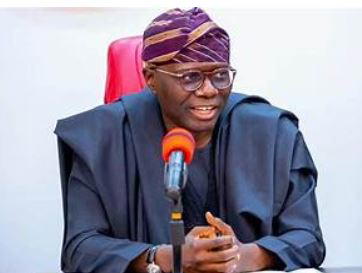
Almost nine months after the agreement had been signed between the Federal Government and ASUU, and other financially less-buoyant states have started paying the new salaries to their university workers, it is fundamentally troubling that Lagos State has continued to demonstrate its unwillingness to pay the new salary structure. Going by the Governor’s undignified eight-month silence about the issue and his open declaration at the last Lagos State University Convocation ceremony in August that the coming administration will see to the welfare of the lecturers, there is no other interpretation to that outburst than a clear sabotage and a direct attempt at undermining Tinubu’s Renewed Hope Agenda, especially as it affects rescuing public university education. Governor Sanwo-Olu cannot convincingly claim his government lacks financial strength to pay the bill. Just within the week, Lagos State was reported to have generated N1.77 trillion in Internally Generated Revenue (IGR) in 2025, accounting for more than a third of the combined revenue generated by 36 states and the Federal Capital Territory. Before Sanwo-Olu became the Governor of the State, Lagos State University lecturers were earning more than University of Lagos staff because of the ‘Lagos factor’. Why is he now dragging the state backward?
What then is Lagos State’s logic for not paying? Whatever it is, if it is to save money, it is a dubious economy; if it is to assert state autonomy over Tinubu’s agreements, it is autonomy misapplied. This is just a repeat of what happened in Osun State during the regimes of Aregbesola and Oyetola that laid the foundation of the All Progressives Congress (APC) losing Osun State to the PDP. Let Governor Sanwo-Olu and his deputy, Obafemi Hamzat, understand that they and the party they represent may pay the high price of underestimating the angry lecturers, more so, three universities’ lecturers put together. That was the same way Oyetola underestimated the civil servants in Osun State while going for election. The result of that election has now become part of history. The Governor may think he is not contesting in the next election and may be ready to damn the consequences, but then, is it proper for him to undermine the chances of the party that provided the platform for him to serve in Lagos State? Is it also appropriate for him to weaken APC’s chances of winning Lagos in the coming election?
It is important to note that last year, Lagos State Government wanted to establish another university to be the fourth one. The pertinent question is: does the state government have the capacity to effectively run four public universities? Does Governor Sanwo-Olu think the running of a university is like a secondary school? Available evidence about the existing three universities in Lagos shows that they all struggle to survive. Forget all the social media ratings. LASU especially lacks most basic amenities that could enhance productive learning. As a result of lack of classrooms, students who registered for physical classes have been forced to migrate to online classes; yet, there is no functional internet anywhere in the school. Besides, there is a shortage of academic staff and standard laboratories to teach some courses. Is this how to run universities that will compete with others in civilised climes?
The truth is, if Lagos State, the political base of President Tinubu, remains adamant about implementing a federally initiated policy that revalues lecturing, it portends a dangerous precedent and an unenviable model for other struggling states. The consequence, no doubt, can be grave, as the entire policy risks flopping and a possible revert to the pre-Tinubu era when schools were mindlessly closed for a whole session. Imagine if the over 70,000 students across the three universities are indefinitely thrown into the streets of a state struggling with cultism, youth unemployment, prostitution, drug addiction, and cybercrime; idleness will then breed life into the criminality already bedevilling the society. The Lagos State Government, the House of Assembly and the Governing Councils of each university must read the mood of the nation: Nigerian lecturers are not begging for charity; they are only asking for dignity in service. Now, the Governor should have a rethink and act like the astute leader he wants Lagosians to perceive him to be. He should quickly instruct his appointed officers to commence the process of full implementation of the FGN/ASUU 2025 agreement across the three Lagos State-owned universities and ensure the payment of arrears from January 1, 2026. Governor Sanwo-Olu cannot justifiably claim to be building bridges and flyovers that lead to nowhere at the expense of starving lecturers.
Until positive action is taken on this important issue, posterity will not forget the Governor for standing against the federal government’s attempt to rescue university education through a new salary policy.
•Dr. Owolabi wrote in from Ogba, Ikeja, Lagos
The post When Lagos plans to sabotage federal policy on lecturers’ salaries appeared first on Vanguard News.