

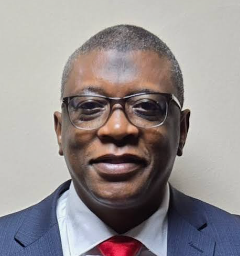
By Emma Ujah, Abuja Bureau Chief
The President of the Nigerian Economic Society (NES), Dr. Baba Musa, has attributed the continued failure of the multi-billion-dollar Ajaokuta Steel Company to the absence of sustained long-term development plans.
Musa said this at the 2026 National Growth and Development Forum (NGDF), with the theme, “The Nigeria We Want: The Economy. Your Money. Our Future,” held in Abuja on Wednesday.
He lamented that Nigeria had failed to maintain critical links between economic planning and performance, noting that strategic projects such as the Ajaokuta Steel Complex, which began with great promise more than four decades ago, had yet to fulfil their potential.
According to him, the oil windfall of the 1970s diverted the country from agriculture and non-oil exports, which had previously sustained the economy.
He said: “History demands candour. Somewhere along the way, we lost vital links between plan and performance. We built, but did not always maintain.
“The oil windfall of the 1970s drew us away from the agriculture and non-oil exports that had sustained us. Strategic projects such as the Ajaokuta Steel Complex, begun with great promise, have yet to fulfil it four decades on.
“And when formal planning gave way in the mid-1980s, long-term strategy too often yielded to visions that changed with administrations.”
Musa, however, said his remarks were not intended to indict any generation or government but to emphasise the need for the country to learn from its past.
He added that Nigeria’s development aspirations must be built on a clear understanding of its present economic realities.
The NES president also expressed concern that ongoing economic reforms had yet to translate into shared prosperity, citing food inflation of about 19 per cent and widespread poverty.
He said the World Bank estimated that about 63 per cent of Nigerians, representing approximately 140 million people, lived below the poverty line in 2025.
He further noted that inflation varied significantly across states, ranging from about six per cent in some states to nearly 29 per cent in others in October, while industrial growth had slowed and more than nine in 10 workers remained in the informal economy.
“Macroeconomic stability is necessary, but it is not yet shared prosperity. A stable exchange rate is not yet a full dinner table. Stability is the foundation; it is not the building,” he said.
Musa outlined the priorities for achieving the Nigeria of the country’s aspirations to include an economy that generates jobs and benefits the poor, a financial system that works for the people, increased domestic production, investment in human capital, disciplined public finance and credible institutions.
In his goodwill message, the President of the Capital Market Academics of Nigeria (CMAN), Prof. Uche Uwaleke, said the success of economic reforms should be measured by their impact on the living conditions of citizens rather than macroeconomic indicators alone.
He said reforms should be assessed by their capacity to create jobs, improve purchasing power, reduce poverty, expand opportunities and enhance the quality of life.
Uwaleke added that macroeconomic stability must be complemented by policies that stimulate productive investment, support small and medium-scale enterprises, strengthen domestic production and promote financial inclusion.
According to him, economic growth must be inclusive, job-rich and capable of delivering shared prosperity.
Also speaking, the convener of the dialogue and host of Moneyline With Nancy on AIT, Nance Nnaji, said economic policies should reflect the everyday realities of Nigerians, including food prices, school fees, borrowing costs, employment opportunities and access to better livelihoods.
She called on development finance institutions to play greater roles in supporting small and medium-scale enterprises through improved access to funding.
Nnaji questioned the extent to which Nigerian entrepreneurs understood the financing opportunities offered by such institutions and the processes required to access them.
“We hear about these institutions. We see their names and logos at conferences. But how many Nigerian entrepreneurs really understand what they do, what financing opportunities they offer, who qualifies and how to access them?” she asked.
The post Why Ajaokuta remains moribund after 40 years — NES president appeared first on Vanguard News.