

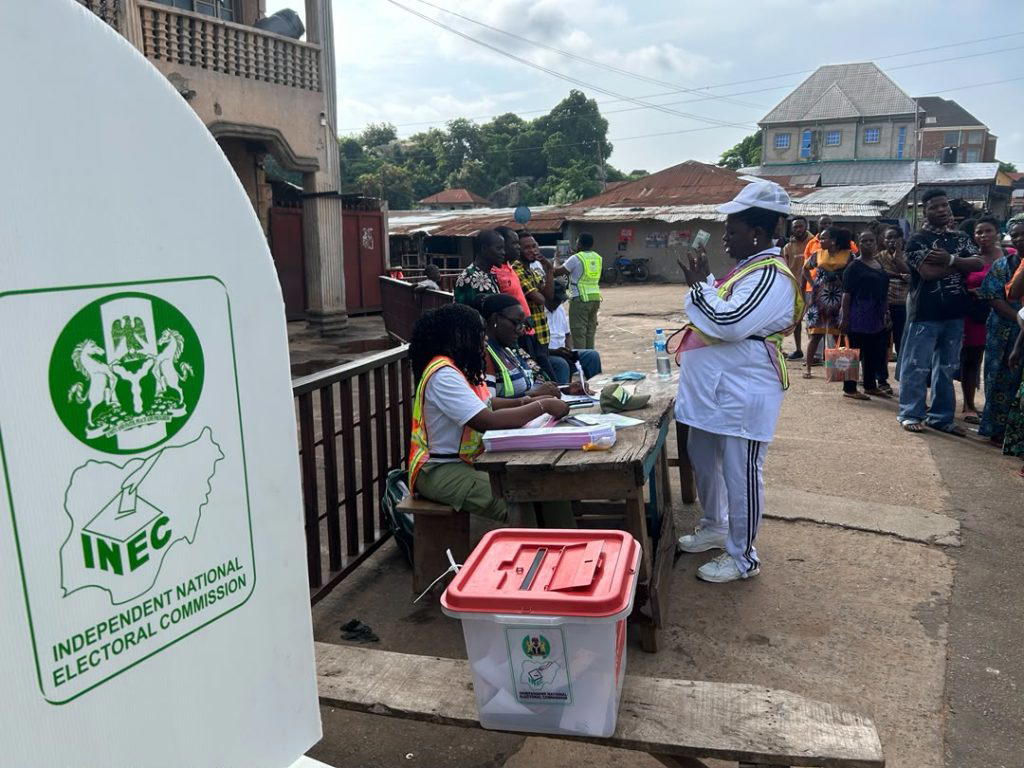
Will the 2027 general elections hold as currently scheduled? There are compelling legal, logistical, and contingency reasons to doubt that the elections will hold as presently scheduled for January 16 and February 6, 2027, for the federal and state elections, respectively. First, the entire election is already in a legal peril. According to an INEC press release dated 26th October, 2026, the Commission claims to have conducted a physical display of what it calls “preliminary” Register of Voters at registration areas nationwide from 9th to 15th October, and published this “preliminary” copy online on 26th October. INEC then added that: “Meanwhile, the commission continues to process claims and objections arising from the exercise in accordance with the Electoral Act, 2026, preparatory to the certification and publication of the final register of voters on 15th December 2026”.
There are a thousand and one legal problems with this release because nearly everything INEC says in this release is not only a direct violation of the Electoral Act 2026, but puts the entire election into a legal peril. By publishing the preliminary voter’s register on 26th October, and promising to release the certified copy of the register on 15th December, INEC has already breached the law, twice. The wording of Section 9(6) of the Electoral Act 2026 could not be clearer, as it says: “The registration of voters, updating and revision of the Register of Voters under this section shall stop not later than 90 days before any election covered by this Act”.
Moreover, Section 19(1) of the Act further provides that: “Subject to the provisions of section 9 (6) of this Act, the Commission shall, not later than 90 days to a general election, appoint a period of seven days during which a copy of the voters’ register for each Local Government, Area Council or Ward shall be displayed or published for public scrutiny at every registration area and on its official website or any website established by the Commission for that purpose”.
One does not need to be a lawyer to grasp the legal force of these provisions. First, these are legal provisions, not mere administrative timelines that INEC or anyone can bend or ignore at will. The provisions require INEC to ensure that continuous voter registration, publication, claims and objections, and revisions and clean-up of the Voter Register “shall stop not later than 90 days before any election covered by this Act”. That deadline is 18 October, 2026 and cannot be extended or changed unless the law is amended. In other words, the Electoral Act requires INEC to have a final copy of the register of Voters latest by 18th October, 2026 for the opening presidential and national assembly elections on January 16, 2027. INEC does not have the final Voter register, and in its own words, it would not have it until 32 days before the election on 15th December, 2026. That is in clear violation of the Electoral Act.
But it gets worse. The word “shall” is one of the strongest forms of language use in any body of laws, and almost always used as a categorical command. In this case, the command is clear: there can be no further work on the Voter Register after 18th October, 2026, which has already elapsed. This means that the processing of “claims and objections” arising from the publication of the preliminary register, and “preparatory to the certification and publication of the final register of voters on 15th December 2026”, to quote INEC directly once again, are all null and void under the law. If INEC’s yet to be released final Voter Register is already an illegality, then the election is also legally voided long before any votes are cast. This is not merely the opinion of a newspaper columnist. It is a matter that lawyers are discussing publicly, including Festus Okoye, himself an election litigation expert and former INEC Commissioner for Public Information and Education. For INEC, the legal banana peel it finds itself sleep-walking over is trouble enough, but more troubling still is the legal uncertainty surrounding the candidates of the African Democratic Congress (ADC), one of the principal opposition parties in the elections. INEC published its candidate lists on October 31. However, on November 5, the Federal High Court delivered a judgment nullifying the David Mark-led leadership of the ADC and invalidating the party’s primary election processes conducted under that leadership.
This changed everything. The ruling APC may be happy that ADC’s presidential and other down-ballot candidates are presently in a legal limbo about their candidacy arising from this latest court judgment.
However, INEC too is in a legal limbo, and indeed the entire election and the country. Section 32(1) of the Electoral Act 2026 provides that: “The Commission shall, at least 60 days before the day of the election, publish by displaying or causing to be displayed at the relevant office or offices of the Commission and on the Commission’s website, a statement of the full names and addresses of all candidates standing nominated”. The deadlines for this are 17th November for the federal elections, and 8th December for state elections. Because the ADC has appealed the ruling, INEC must wait until the case is finally decided in the courts.
If INEC updates and publishes its final list of candidates without hundreds of candidates of a major opposition party, then it would not only be acting prejudicially in relation to the courts, but also destroying the credibility of the elections completely even before any votes are cast. If INEC does not publish the list by 17th November—in eight days—then any subsequent list published after this date would be in breach of the law, and therefore, null and void. This means that there is real risk of the entire slate of candidates across ALL THE PARTIES being voided, not just the ADC candidates.
It is not the ADC alone that should be worried about this latest court case, the ruling APC and other parties have even more to worry about. In other words, with just 68 days left until the election, Nigeria has no legally binding Register of Voters and no legally binding final list of candidates for the election. These legal problems facing INEC are serious enough to scuttle the election, but they also have compounded INEC’s logistical challenges which is a nightmare even at the best of times. INEC cannot produce several critical election materials—ballot papers, electoral and collation forms, etc—without a complete and final list of candidates and voter’s register. Because of the security implications of these documents, they have normally been produced outside of Nigeria and transported into the country. In addition, they would need to be transported across all the 36 states capitals for onward distribution to INECs more than 190,000 polling units on election day.
Most of these logistics are not under the direct control of INEC. And with just 68 days left until the election, these massive logistical operations are already a near impossibility to pull off. As far as INEC’s elections are concerned, we may be sleep-walking back to 2007, the most discredited elections in Nigerian history. Since at least 2011, Nigeria’s elections have been improving in both process and integrity of the elections, including the 2023 election. You would think that for a president much touted as a democrat, President Bola Ahmed Tinubu would be deeply concerned about all these serious developments threatening his own re-election. Perhaps, he is.
There is little evidence, however, that the government has risen to the urgency of the situation. The question then is how we arrive here, and what can be done to save the day. The answer is pretty simple. The INEC Chairman, Professor Joash Amupitan, is incapable of doing this job. The shoe is bigger than his feet, and more than that, his two immediate predecessors also tower heads and shoulders above him in competence and the capacity to do this specific job. The political and legal battels aside, the lack of capacity of the current INEC Chairman is the single most important reason for how we got here. The solution must therefore also be directed there. What INEC needs, and what the urgency of the situation deserves, is a new pair of hands to steady the ship. Otherwise, we will be risking everything.
The post Will the election hold? By Suleiman A. Suleiman appeared first on Vanguard News.