

… As YEDI, Grassroot Soccer take mental health awareness to Mushin community
By Chioma Obinna
Concerned by the growing burden of mental health challenges among young people and widespread misconceptions surrounding the condition, health experts have called for early help-seeking, community-based interventions and stronger collaboration between health professionals, families and religious institutions.
They spoke during a community outreach organised by Youth Empowerment and Development Initiative (YEDI), in partnership with Grassroot Soccer, to commemorate the 2026 World Mental Health Day in the Mushin area of Lagos State.
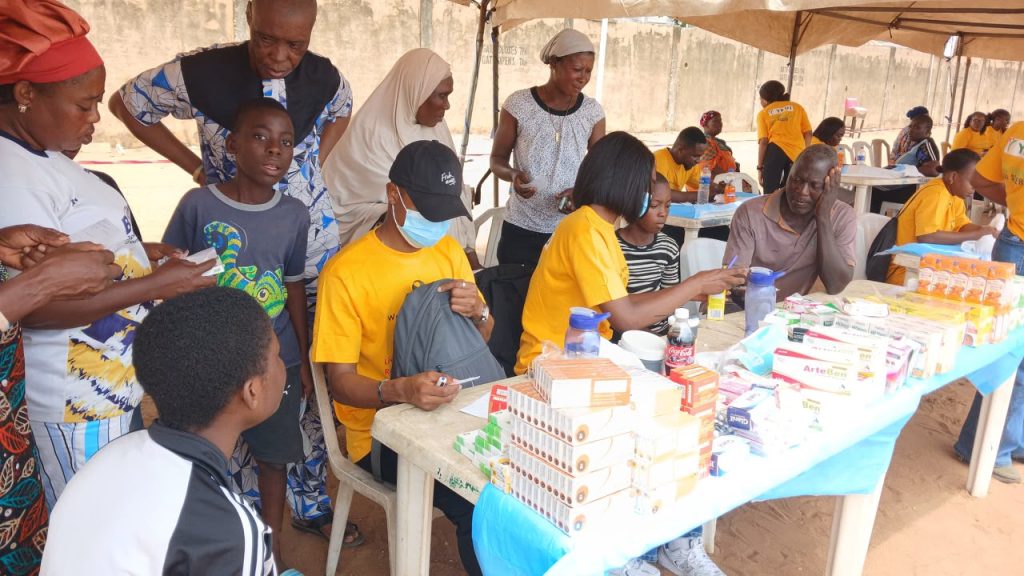
The outreach combined football, drama, personal testimonies and health education with free medical checks, counselling and medication to encourage residents to prioritise their mental and physical wellbeing.
A programme consultant with Grassroot Soccer Incorporated in Nigeria, Dr Babatunde Odusolu, said one in six young people aged 15 to 24 in Nigeria experiences some form of mental health challenge, underscoring the need for accessible information and early intervention.
He said the partnership was designed to make mental health education accessible to adolescents and young people through football-based learning, trained youth mentors and referral services.
“It’s ensuring that young people are aware of their mental health and they seek help as quickly as possible,” Odusolu said.
According to him, the initiative, known as MindSKILLZ, uses sport to deliver health messages in ways young people can understand, while providing pathways for those who need professional assistance.
“If during this outreach people are identified that have mental health issues, it could be mild, it could be moderate or severe, they are referred appropriately,” he said.
Odusolu said the intervention went beyond the one-day event, noting that YEDI and its partners also supported school-based and community programmes across Lagos.
He explained that participants identified as needing further care would be referred to appropriate facilities and followed up to ensure continuity of support.
The programme also provided a platform for people with lived experiences of mental health challenges to share their stories in a safe environment, helping to challenge the stigma that often prevents people from seeking care.
“In this part of the world, it is believed that once you say you have mental health issues, then you are mad. But you can see that the speakers are demystifying it by saying to people that it is not madness,” Odusolu said.
He added that personal testimonies could help others recognise their struggles, speak out and seek professional support without fear of discrimination.
Speaking on why YEDI took the message to the grassroots, Executive Director of YEDI, Tomisin Adeoye, said the organisation deliberately took its mental health campaign to the community after conducting a needs assessment to determine where awareness and services were most needed.
Adeoye explained that YEDI uses evidence-based programmes to address health concerns, including malaria, HIV and mental health, particularly among young people.
“We are going to use football for good to pass across our information. Because football is universal, and we can see that people are interested in football,” she said.
According to her, football, drama and interactive sessions were used to make the message engaging and easier for residents to understand.
“People don’t want to measure mental health. People just think that it has to do with people that are mad. But it’s beyond that,” Adeoye said.
She explained that mental health encompasses psychological and social wellbeing and requires greater public understanding beyond commonly held misconceptions.
Adeoye said the outreach was also intended to empower participants with accurate information they could share with family members and others in their communities.
“Before we talk about the community taking initiative, they need to understand what mental health is all about,” she said.
She added that the availability of counsellors and referral partnerships ensured that the programme offered more than awareness, providing access to further support for participants who needed it.
Beyond mental health education, the outreach revealed other health concerns among residents who received free medical screening.
A retired Deputy Director of Nursing Services at Lagos University Teaching Hospital, Mrs Sarah Onyebuka Ojei, said some participants presented with anxiety, worry and agitation, while screening also identified elevated blood pressure and blood sugar levels.
She said some residents were unaware of their conditions, while others had stopped taking prescribed medication because they could no longer afford it.
“In every three people we check, you see that the blood pressure is raised,” Ojei said.
She explained that some participants disclosed that financial hardship had prevented them from purchasing their medication, making the free medical services particularly important.
The screening also identified cases of obesity, underweight, elevated body temperature and other conditions requiring further assessment.
Ojei said participants with suspected malaria were directed to undergo appropriate tests, while those with other health concerns received counselling and referrals for further evaluation and treatment.
She stressed that early detection and appropriate follow-up could prevent health problems from becoming more serious.
The outreach operated a referral process through which participants moved from initial nursing assessments to laboratory investigations and medical consultations where necessary.
Those requiring more advanced care could be referred to primary healthcare centres, general hospitals, teaching hospitals or specialist psychiatric facilities, depending on their needs.
Ojei also emphasised the importance of confidentiality in mental health counselling, noting that people experiencing emotional or psychological difficulties might hesitate to speak if they feared their private concerns would become public knowledge.
“We establish rapport, good relationships, make them feel that we are human beings, we are not gods. We talk with them, try to ask them some open-ended questions,” she said.
She explained that the approach was intended to help participants feel comfortable enough to discuss their concerns and receive appropriate guidance.
Speaking, the General Secretary of the Catholic Youth Organization of Nigeria at Christ the King Catholic Church, Ilasa-Maja, Ogechi Idioha, said the church had a responsibility to support members’ mental wellbeing alongside their spiritual development.
She said the church provided its premises for the outreach to enable health professionals to educate and sensitise residents about mental health.
“People come to church and they try to get better spiritually. But then the mental aspect is also needed and also important, actually,” Idioha said.
She noted that stigma and shame often prevented young people from discussing personal challenges, even with friends and people they trusted.
According to her, creating safe spaces where people can speak openly about their experiences would help them access support before their difficulties escalated.
Idioha added that the church also provided opportunities for education and counselling through its family-focused programmes and health services.
Also speaking, Rev. Fr. Bonosa Kwadwo Fosu of the Society of Jesus (Jesuits), who represented Fr. Thomas Djabaku, said religious institutions needed to recognise when individuals required professional mental health services rather than relying exclusively on spiritual interventions.
Fosu said the church’s work with young people, including counselling and spiritual accompaniment, could complement the services provided by mental health professionals.
He, however, cautioned against treating every psychological challenge as a purely spiritual problem.
“If you have the knowledge of knowing that this is something you cannot solve on your own, you refer it to the professional,” he said.
The cleric added: “So, it shouldn’t be like, oh, it’s only prayer. Going to see the psychologist is also a prayer because God has granted the psychologist the skill, the tools to use.”
He urged religious leaders to acquire the knowledge needed to recognise situations beyond their competence and refer affected individuals to qualified professionals.
Fosu also expressed concern that increasing dependence on mobile phones and social media could weaken face-to-face relationships and the communal support systems that traditionally helped people cope with personal difficulties.
He urged families and communities to make time for direct interaction, particularly during family gatherings and other communal activities.
“Phones have come to stay with us. But when we gather as a family, can we put phones aside? When we gather as a group, as a church, can we put phones aside and then deal with each other physically and personally?” he asked.
He maintained that prayer, community support and professional intervention should work together to promote mental wellbeing.
A beneficiary of the outreach, Fatima, expressed appreciation for the free medical checks and medication, saying the exercise helped her understand aspects of her health she had previously been unaware of.
She said the screening gave her information about her temperature and malaria status, while the availability of free medication made the intervention particularly beneficial.
Fatima encouraged other residents to take advantage of medical screening and seek information about their health.
The organisers said the outreach was part of continuing efforts to improve mental health literacy, reduce stigma and connect young people and other community members to appropriate services.
They maintained that sustained awareness, early identification, confidential counselling and effective referral systems were essential to ensuring that people experiencing mental health challenges received the help they needed.
The post 1 in 6 Nigerian youths faces mental health challenge, experts warn appeared first on Vanguard News.