

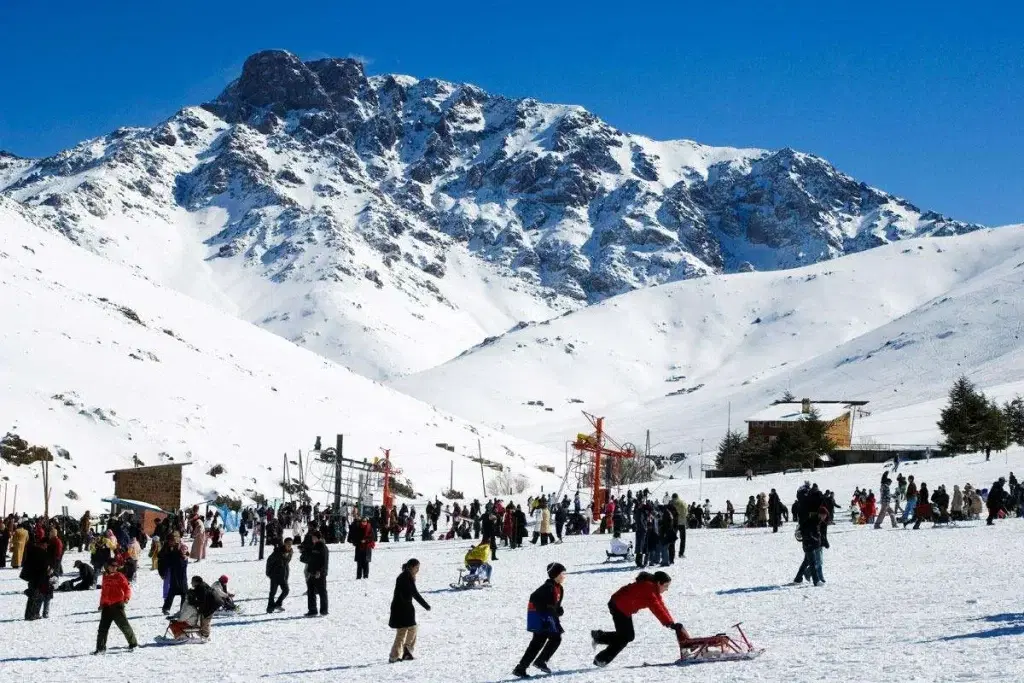
The coldest countries in Africa may challenge the common perception of the continent as a place of constant heat, with several countries in Africa experiencing freezing temperatures, snowfall and chilly winters.
From high-altitude mountain ranges and plateaus to Mediterranean coastlines, several African countries experience remarkably low temperatures, particularly during winter and in elevated areas.
Here are 10 African countries known for some of the continent’s coldest conditions.
1. Lesotho
Lesotho is widely regarded as Africa’s coldest country, largely because of its high elevation. The entire country sits at relatively high altitudes, with some areas rising above 3,000 metres.
Temperatures can fall to around 0°F (-17.8°C) during particularly cold periods, while summer temperatures can climb considerably higher.
The mountainous kingdom also experiences snowfall during winter, especially in its highland regions.
2. Morocco
Morocco has one of Africa’s most varied climates. While parts of the country, particularly the Sahara, experience intense heat, the Atlas Mountains can become extremely cold during winter.
Temperatures in some mountainous areas can drop to about 17°F (-8.3°C), and snowfall is common at higher elevations.
The country’s contrasting landscapes mean visitors can experience cold mountain conditions and desert heat within the same trip.
3. South Africa
South Africa has a wide range of climates because of its size and varied terrain.
Winter can be particularly cold in the country’s interior and mountainous regions. Temperatures can fall to around 3.2°F (-16°C) in some of the coldest areas, while summer temperatures can exceed 100°F (37.8°C).
Snow is also recorded in parts of the country, particularly in the Drakensberg and other elevated regions.
4. Tanzania
Although Tanzania is located close to the Equator, altitude creates significantly cooler conditions in some parts of the country.
Areas around Mount Kilimanjaro and other highland locations can experience much lower temperatures than the country’s tropical lowlands.
Average temperatures in some cooler parts of the country can range between 59°F (15°C) and 68°F (20°C).
5. Kenya
Kenya’s climate varies considerably between its coastal areas, lowlands and highlands.
The country’s elevated regions can become surprisingly cold, particularly at night and during the cooler months. Temperatures can drop to around 0°F (-17.8°C) in the coldest high-altitude locations.
Nairobi and other highland areas generally have much cooler weather than Kenya’s tropical coast.
6. Uganda
Uganda’s location near the Equator might suggest consistently hot weather, but its elevation helps moderate temperatures.
The country generally experiences temperatures between about 50°F (10°C) and 90°F (32°C), with cooler conditions occurring in higher-altitude areas.
Regions around the Rwenzori Mountains can experience significantly colder weather.
7. Democratic Republic of the Congo
The Democratic Republic of the Congo is largely associated with tropical conditions, particularly because of its extensive rainforest.
However, its eastern highlands have a much cooler climate. Elevated areas can experience temperatures around 50°F (10°C), particularly at night.
The country’s enormous size and varied terrain account for the sharp differences in weather across its regions.
8. Ethiopia
Ethiopia is one of Africa’s most prominent highland countries, with large areas located thousands of metres above sea level.
The elevated terrain gives many parts of the country a relatively cool climate, with temperatures in some highland areas falling to around 41°F (5°C) or lower.
Addis Ababa, one of Africa’s highest capital cities, is known for its mild temperatures compared with many other capitals on the continent.
9. Algeria
Although Algeria contains a huge portion of the Sahara Desert, the country’s northern regions have a Mediterranean climate, while its mountainous areas can become considerably colder.
Temperatures can fall significantly during winter, particularly in the Atlas Mountains and other elevated areas.
The country’s climate therefore ranges from extremely hot desert conditions to much cooler northern and mountainous environments.
10. Tunisia
Tunisia’s northern location and Mediterranean climate give it cooler winters than many countries farther south in Africa.
Temperatures can fall to around 43°F (6°C) or lower during colder periods, particularly in northern and inland areas.
Vanguard News
The post 10 coldest countries in Africa to visit appeared first on Vanguard News.