

By Mmesoma Goodness
African universities have a long and rich history of scholarship, with some of the continent’s most important centres of learning dating back more than 1,000 years.
Some of these institutions began as mosques, madrasas and centres of Islamic scholarship before evolving into institutions recognised as universities in the modern era. Others began as colleges or higher-education institutions during the 19th century and later acquired full university status.
Because of these differences, the ranking below is based broadly on the earliest documented origins of the institution or educational tradition that developed into the present-day institution, rather than strictly on the date when each institution acquired modern university status.
Here are 10 of Africa’s oldest universities and higher-learning institutions.
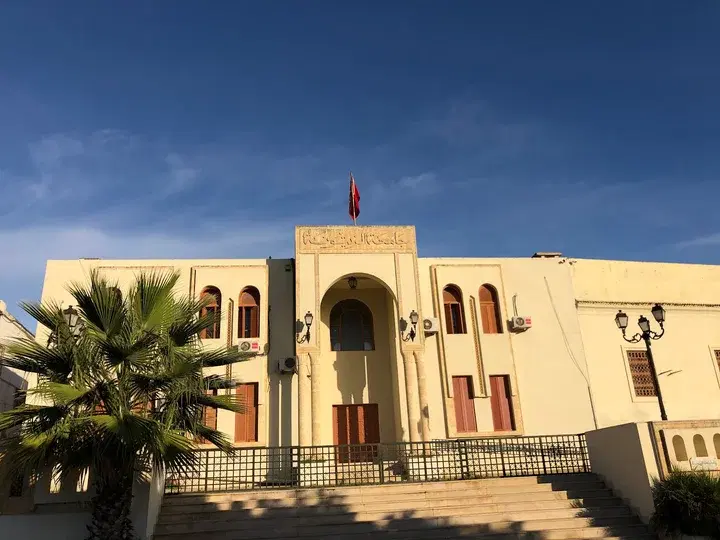
1. Ez-Zitouna University — Tunisia
Educational origins: 737 AD
Ez-Zitouna University in Tunis traces its educational history to the Great Mosque of Ez-Zitouna, where Islamic sciences were being taught from around 737 AD, according to the university’s official history. The mosque itself dates to an earlier period, with the university describing it as having been founded in 734 AD.
Over the centuries, Ez-Zitouna became an important centre of Islamic scholarship, teaching subjects including Islamic jurisprudence, Quranic studies and Arabic.
The institution’s modern university structure is much more recent, but its long educational tradition is why Ez-Zitouna is frequently included among Africa’s oldest centres of higher learning.
2. University of Al-Qarawiyyin — Morocco
Founded: 859 AD
The University of Al-Qarawiyyin in Fez is traditionally dated to 859 AD, when Fatima al-Fihri established the institution that developed around the Al-Qarawiyyin mosque.
It became an important centre of Islamic and Arabic scholarship and attracted scholars and students from across the Muslim world.
Al-Qarawiyyin is widely recognised as one of the world’s oldest continuously operating institutions of higher learning. However, as with several institutions on this list, its early form was different from the modern university system that developed centuries later.
3. Al-Azhar University — Egypt
Origins: 970–972 AD
Al-Azhar University in Cairo traces its origins to the Al-Azhar Mosque, whose construction began after the Fatimid conquest of Egypt. The first Friday prayer at the mosque was held in 972 AD.
Al-Azhar subsequently developed into a major centre of Islamic scholarship, particularly in theology, Islamic law and Arabic studies.
Although its modern university structure developed much later, Al-Azhar’s more than 1,000-year history as a centre of learning makes it one of Africa’s most historically significant educational institutions.
4. Sankore and the Historic Centres of Learning in Timbuktu — Mali
Major period of scholarship: 14th–16th centuries
Timbuktu should not be listed as a “University of Timbuktu founded in 982 AD.” There is no reliable historical basis for that specific founding date.
Instead, Timbuktu is better described as a historic centre of higher learning, particularly through institutions associated with the Sankore, Djingareyber and Sidi Yahia mosques.
UNESCO describes Timbuktu as an intellectual and spiritual capital of Africa during its 15th and 16th-century golden age, with the University of Sankore and other madrasas playing a major role in Islamic scholarship.
Sankore became particularly renowned for scholarship in areas including Islamic law, literature, mathematics, astronomy and other fields of knowledge. Historical accounts associate Timbuktu with a large network of scholars, students and manuscript collections.
The city therefore deserves a place in a list of Africa’s oldest centres of higher learning, but not with the incorrect 982 AD founding date.
5. Fourah Bay College — Sierra Leone
Founded: 1827
Fourah Bay College in Freetown was founded on 18 February 1827 by the Church Missionary Society.
The University of Sierra Leone describes it as the first Western-style university institution established in sub-Saharan Africa.
The college was originally established to train teachers and missionaries. In 1876, it became a degree-granting institution through its affiliation with Durham University in England.
In 1967, Fourah Bay College became a constituent college of the University of Sierra Leone.
Its nearly two-century history makes it one of the most important landmarks in the development of Western-style higher education in Africa.
6. University of Cape Town — South Africa
Origins: 1829
The University of Cape Town (UCT) traces its origins to 1829, when the South African College was established in Cape Town.
The college initially combined secondary and tertiary education. It expanded considerably during the late 19th and early 20th centuries and eventually developed into a fully fledged university.
UCT was formally established as a university in 1918.
The institution is now one of Africa’s leading research universities and remains South Africa’s oldest university.
Thus, while 1829 is used to describe UCT’s historical origins, the university in its formal modern form dates from 1918.
7. University of Liberia — Liberia
Origins: 1862
The University of Liberia was established in 1862 as Liberia College.
According to the university’s official history, Liberia College opened its doors to students in February 1863, with seven students in its first group. It became a full university in 1951.
The institution was established during the early years of the Liberian republic to provide higher education and help develop the country’s professional and intellectual class.
Today, the University of Liberia is a public university with campuses and programmes covering a range of academic disciplines.
8. Stellenbosch University — South Africa
Origins: 1866
Stellenbosch University’s educational roots can be traced to the Stellenbosch Gymnasium, established in 1866.
The institution subsequently evolved through several stages, becoming a college and later Victoria College before achieving full university status.
Stellenbosch University was officially established as a university on 2 April 1918, alongside the University of Cape Town and the University of South Africa.
The university therefore has a distinction between its 1866 educational origins and its 1918 formal university status.
It has since grown into one of South Africa’s major research universities, with strengths across science, engineering, agriculture, medicine, the humanities and social sciences.
9. University of South Africa — South Africa
Origins: 1873
The University of South Africa (Unisa) traces its history to the University of the Cape of Good Hope, established in 1873 by an act of the Cape Colony’s Parliament.
The institution was modelled on the University of London and initially served largely as an examining and academic standards body for affiliated colleges. It was renamed the University of South Africa in 1916.
Unisa later developed into a major distance-learning institution. Its transition to distance education became particularly significant in the 20th century, and it is now one of the world’s largest open-distance learning universities.
Therefore, 1873 represents the origin of the institution’s predecessor rather than the establishment of Unisa under its present name.
10. Cairo University — Egypt
Founded: 1908
Cairo University traces its origins to the Egyptian University, which was inaugurated on 21 December 1908 as a private university.
The institution was later incorporated into the state university system. In 1925, the government established a state university under the name Egyptian University, incorporating the earlier institution and several higher schools.
The university was subsequently known as Fuad I University before becoming Cairo University.
It has played a major role in Egyptian education, research and intellectual life and remains one of the country’s leading universities.
The post 10 oldest universities in Africa appeared first on Vanguard News.