

….Lawyers warn vote buying, intimidation may undermine polls
By Adesina Wahab
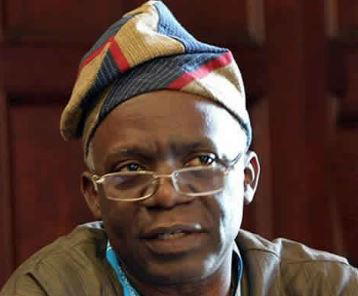
LAGOS — Senior Advocate of Nigeria (SAN), Mr Femi Falana, and human rights lawyer, Ms Ayo Obe, have warned that the 2027 general elections may not be credible if flaws associated with previous electoral exercises persist.
The duo spoke on Thursday at the 25th Mike Okonkwo Annual Lecture in Lagos, where they identified strict adherence to electoral laws and guidelines by the Independent National Electoral Commission (INEC), rejection of vote buying and protection of voters from intimidation as critical to credible elections.
The lecture, themed “Democracy at the Crossroads: Electoral Credibility, Judicial Integrity and the Future of Nigeria,” also focused on the role of the judiciary and electoral institutions in safeguarding Nigeria’s democracy.
Falana, who chaired the occasion, expressed concern over threats allegedly directed at political opponents across the country, questioning the continued use of inflammatory rhetoric by politicians.
He said civil society organisations would take legal action against individuals who threatened political opponents.
Falana said the 2027 elections would present a crucial test for Nigeria’s democracy, but expressed concern over signs suggesting that the polls might not be free and fair.
“Democracy is said to be at a crossroads because the 2027 general elections will provide a real opportunity when a crucial decision is required to be made in the life of the nation.
“Many of us are not very confident that the next election will be free and fair. It is indisputable that elections have become the foundation of democracy. Therefore, it is the right of citizens to participate freely and peacefully in the democratic process without fear, intimidation or threat,” he said.
The SAN also criticised the increasing reliance on election tribunals and courts to resolve disputes arising from elections, noting that many petitions were dismissed on technical grounds or because petitioners failed to establish their cases.
Vote buying
Falana expressed particular concern over the growing influence of vote buying, saying recent off-cycle elections had shown that the practice was becoming increasingly expensive.
He cited the recently concluded Osun State governorship election as an example, alleging that billions of naira were spent to induce voters.
“In the recently concluded election in Osun State, none of us can say that the election was good enough to produce a candidate that the people of Osun wanted. It was a very expensive adventure.
“Somebody said about N50 billion was spent to bribe voters. Another said N110 billion was spent to bribe voters. Another said it was around N43 billion. Billions of naira were spent bribing voters for their votes, in order to produce a governor,” he said.
He expressed concern about the possible scale of vote buying in the 2027 elections, when elections would be held across the country.
Falana said the amounts allegedly offered for votes had increased in recent elections, citing figures ranging from N5,000 in Ekiti to between N20,000 and N50,000 in Osun.
He warned that the amount could rise further during the 2027 elections.
Obe: Electoral officials must uphold rules
In her lecture, Obe urged electoral officials to remain guided by their conscience and strictly adhere to established procedures, warning that their decisions would ultimately be judged by posterity.
She cited the conduct of Prof Nnenna Nnannaya Oti, the Returning Officer for the 2023 Abia State governorship election, as an example of electoral integrity.
According to Obe, Oti resisted pressure to announce unverified results from Obingwa Local Government Area and insisted that the figures be authenticated using data from the Bimodal Voter Accreditation System (BVAS) before the collation could continue.
She recalled Oti’s declaration: “I shall stand squarely on the processes and procedures of INEC. The pastor and the mother in me will not permit me to do anything that will adversely affect the future of our children. I will not compromise.”
Obe said Oti’s decision offered a “glimmer of hope” that individuals within the electoral system could still be trusted to uphold due process.
“She refused to announce unverified results. She insisted that BVAS data be used to authenticate figures from Obingwa LGA before collation resumed,” Obe said.
She stressed that adherence to INEC’s established processes remained essential to electoral credibility.
“The part of her declaration on which I want to dwell is, ‘I shall stand squarely on the processes and procedures of INEC.’ This is important because many of us talk as though the whole system is faulty, and that without the famous ‘electronic transmission of results’, an election in Nigeria is automatically suspect and must be rejected,” she said.
Obe urged electoral stakeholders to carry out their responsibilities diligently, warning that failure to do so could further undermine Nigeria’s democracy.
Okonkwo celebrates 25th lecture
In his remarks, Bishop Mike Okonkwo, founder of The Redeemed Evangelical Mission (TREM), recalled his longstanding relationship with Falana, noting that the lawyer had handled cases for him during the early years of his ministry.
Okonkwo said Nigerians must be prepared to play their part in bringing about positive change in the country.
He commended Obe for her lecture and expressed gratitude to God for allowing him to witness another birthday and the 25th edition of the annual lecture.
The post 2027: Falana, Obe demand strict adherence to electoral rules appeared first on Vanguard News.