

By Luminous Jannamike
When former Senator Dino Melaye posted on social media that Peter Obi could only function in an ‘air-conditioned kitchen,’ it immediately became one of the defining political phrases of the week.
But behind the mockery was a deeper political reality.
Barely two weeks after opposition leaders gathered in Ibadan promising a united front ahead of the 2027 presidential election, Nigeria’s opposition coalition is already showing serious cracks.
“Peter Obi excused himself from tough situation. He can only operate in an air-conditioned kitchen. Hot kitchens are not for him,” Melaye wrote.
The remarks came days after Obi and Rabiu Musa Kwankwaso formally left the African Democratic Congress, ADC, for the National Democratic Congress, NDC, throwing fresh uncertainty into efforts to build a broad anti-APC coalition.
For many Nigerians, the developments have revived memories of the 2023 presidential election, when opposition divisions helped clear the path for the victory of President Bola Ahmed Tinubu despite widespread anger over economic hardship and insecurity.
Now, with less than nine months to another election cycle, the opposition appears trapped in familiar problems: competing ambitions, distrust, regional calculations, and internal rivalry.
The fear among many opposition supporters is simple: History may be repeating itself.
The 2023 Numbers Still Shape the Conversation
The shadow of the 2023 election hangs heavily over every opposition discussion ahead of 2027.
Tinubu won the presidency with about 8.79 million votes, roughly 37 per cent of total ballots cast.
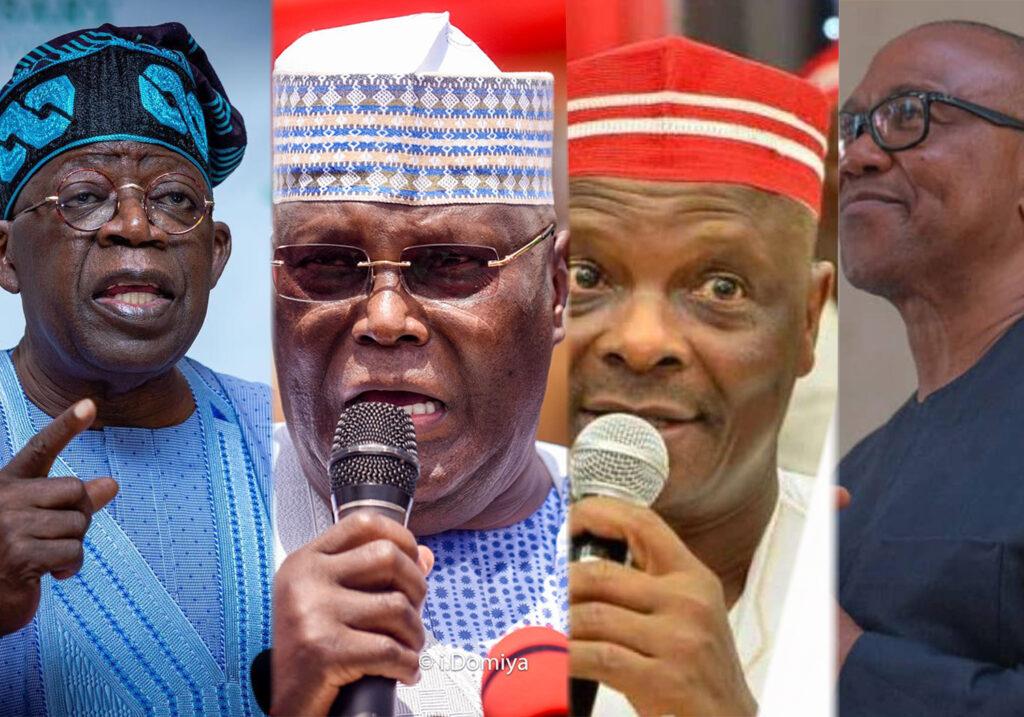
Former Vice President Atiku Abubakar secured around 6.98 million votes, while Obi polled about 6.10 million. Kwankwaso added another 1.5 million votes, largely from Kano and parts of the North-West.
Combined, the major opposition candidates received significantly more votes than Tinubu.
But Nigeria’s electoral system rewarded the candidate with the strongest national structure, broader spread, and better coordination across regions.
The APC also benefited from low voter turnout and a fragmented opposition field.
That outcome created lasting frustration among opposition supporters, many of whom remain convinced that a united opposition ticket could have changed the result.
The Ibadan opposition summit held on April 25, 2026, was meant to address exactly that problem.
Politicians from different opposition camps gathered to project unity and discuss a possible consensus arrangement ahead of 2027.
The summit produced what became known as the Ibadan Declaration; a broad commitment to work together against the APC and resist what speakers described as growing one-party dominance.
For a brief moment, the summit created optimism that Nigeria’s opposition had finally learned from the mistakes of 2023.
That optimism began fading almost immediately.
How the Coalition Began to Unravel
By May 3, the opposition coalition had slipped into open crisis after Peter Obi and Rabiu Musa Kwankwaso formally joined the National Democratic Congress, NDC, effectively walking away from the ADC coalition project that had led to the Ibadan talks. The development immediately altered the opposition equation ahead of 2027.
Obi cited a toxic environment, internal instability, and outside interference as reasons for leaving the ADC coalition. Behind the scenes, however, tensions had reportedly been building over party control, candidate calculations, and fears that Atiku’s camp held excessive influence within the coalition structure.
One statement circulated by figures aligned with the Obi-Kwankwaso bloc captured the frustration directly.
“We left ADC because His Excellency Atiku Abubakar said the coalition was formed in his house, that ADC is his party, and that nobody will tell him anything”, one sympathizer said.
The statement deepened the perception that the coalition lacked internal balance from the beginning.
Atiku’s allies rejected suggestions that the coalition had collapsed, insisting that opposition discussions remained ongoing and that the exits would not destroy broader efforts to challenge the APC in 2027.
But politically, the damage was immediate.
Instead of one broad opposition coalition, the political landscape now appears divided into multiple camps: Atiku’s bloc remaining inside the ADC; Obi and Kwankwaso consolidating inside the NDC; other political actors still weighing possible alignments.
The fragmentation has already become a major talking point within the ruling APC.
The APC Moves Quickly
The Presidency wasted little time using the opposition crisis to question the credibility of its rivals.
Presidential spokesman Bayo Onanuga accused Obi of avoiding difficult political contests and moving between parties whenever internal competition became uncomfortable.
“He goes to where other people have toiled to cook the soup and takes the biggest meat in the pot,” Onanuga said.
The remarks reflected growing confidence within APC circles that opposition disunity could once again improve Tinubu’s re-election prospects.
The APC’s calculation is straightforward: a divided opposition reduces the likelihood of a coordinated challenge strong enough to threaten the ruling party’s nationwide political structure.
Obi’s supporters, however, rejected the attacks.
They argue that Obi’s appeal comes precisely from operating outside traditional ‘moneybag’ politics and refusing to depend on entrenched political structures dominated by elite bargaining.
Many of his supporters continue to see him as a candidate whose strength lies in grassroots enthusiasm, especially among younger and urban voters frustrated with conventional political culture.
Critics disagree. They argue that while movements can generate momentum, Nigerian elections still depend heavily on durable party structures, regional alliances, institutional networks, and financial resources.
That debate now sits at the centre of opposition politics heading into 2027.
The Problem Runs Deeper Than Personal Rivalries
Beyond the public insults and social media exchanges, the latest crisis has exposed a deeper structural weakness inside Nigeria’s opposition politics.
The coalition that emerged from the Ibadan summit was driven largely by a shared desire to challenge Tinubu and the APC.
But once discussions moved from general declarations to practical issues: candidate selection, zoning, leadership control, and party structures; old tensions resurfaced quickly.
Shortly before the coalition began to unravel, Obi had publicly appealed for unity among opposition figures.
“We must put Nigeria first, above personal interests, above politics, and above all forms of division,” he said after the ADC convention in Abuja.
But events soon moved in the opposite direction.
The breakdown highlighted recurring problems that have complicated opposition alliances for years: Mistrust among political elites, regional balancing disputes, competing presidential ambitions, and fears that one bloc could dominate others.
The absence of strong ideological alignment has also made coalition-building more difficult.
Most of the opposition parties involved share similar broad criticisms of the APC government, particularly over economic hardship and insecurity.
But beyond opposition to the ruling party, there remains limited agreement on governance priorities, economic direction, or institutional reforms.
That weakness became increasingly visible once power negotiations began.
Why Some Opposition Figures Still See Opportunity
Despite widespread concern about fragmentation, some opposition figures believe the current split may not entirely favour Tinubu.
Their argument is that the ADC itself was already weighed down by legal disputes, internal battles, and leadership tensions before Obi and Kwankwaso left.
Keeping all major opposition figures inside one unstable structure, they argue, might only have postponed a larger implosion closer to the election.
From that perspective, the NDC offers Obi and Kwankwaso an opportunity to consolidate their political bases independently while preserving room for future negotiations.
Obi still commands strong support among many young voters and sections of the urban middle class, particularly in the South-East and parts of the South-South.
Kwankwaso, meanwhile, retains a loyal political structure in Kano and sections of the North-West through the Kwankwasiyya movement, which remains one of the most organised regional political networks outside the APC and PDP.
Some opposition figures believe separate political structures may ultimately strengthen negotiations ahead of possible future alliances rather than weaken them.
They also point to Tinubu’s own political challenges: Economic hardship, inflation, insecurity, unemployment, and rising living costs continue to shape public frustration across the country.
While the APC insists its economic reforms are necessary long-term measures, many Nigerians remain dissatisfied with current conditions.
The opposition hopes that public frustration could eventually outweigh the disadvantages created by fragmentation.
But that will depend on whether opposition leaders can turn dissatisfaction into coordinated political action rather than endless internal conflict.
The Missing Debate About Governance
Amid the coalition drama, one major issue continues to receive limited attention: Policy.
Much of the political conversation remains focused on defections, alliances, personalities, and electoral calculations rather than detailed governance alternatives.
Questions around inflation, unemployment, electricity, insecurity, education, healthcare, and constitutional reform rarely remain central for long before political attention shifts back to coalition tensions and presidential ambition.
The APC continues defending Tinubu’s economic reforms as painful but necessary adjustments inherited from years of structural weakness.
The opposition, meanwhile, is still struggling to convince many Nigerians that it offers a clearly defined governing alternative beyond opposition to the APC itself.
For many citizens facing worsening economic pressure, the constant political manoeuvring increasingly feels disconnected from everyday realities. Public frustration is therefore directed not only at the ruling party, but increasingly at a political class widely seen as consumed by elite power struggles.
That mood may shape the 2027 election as much as coalition mathematics.
Tinubu Holds the Advantage — For Now
At least for now, the opposition’s divisions clearly favour Tinubu. Every week spent managing defections, internal disputes, and public attacks is time not spent building a coherent national campaign.
The APC enters the next political cycle with the advantages of incumbency, established national structures, and a fragmented opposition field. But Nigerian politics has also shown repeatedly that alliances can change quickly when political interests shift.
Today’s rivals may still find themselves negotiating tomorrow if survival demands it. The bigger challenge for the opposition is whether it can avoid repeating the mistakes that weakened it in 2023. That means moving beyond personality clashes and building a more coherent political message capable of convincing Nigerians that real change is possible.
Until then, the political kitchen remains hot for every member of the opposition involved, and Tinubu’s camp is watching closely.
The post 2027: Fears mount Atiku, Obi, Kwankwaso may play into Tinubu’s hands again appeared first on Vanguard News.