

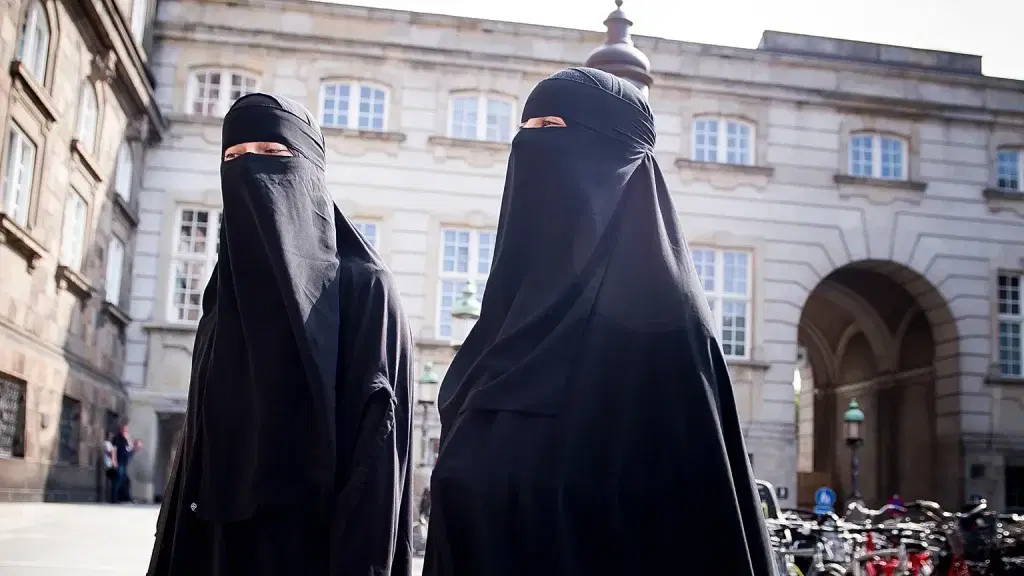
Travellers heading to some European countries may need to pay attention to local rules on face coverings.
Several countries have introduced laws restricting clothing or other items that conceal the face in public places. The rules differ considerably: some countries have nationwide restrictions, while others apply the ban only in specific locations such as public transport, schools or government buildings.
For travellers, including Nigerians visiting Europe, understanding these rules can help avoid fines or other problems during a trip.
Here are nine countries with restrictions on face coverings.
1. France
France has one of Europe’s broadest restrictions on face coverings. A law in force since 2011 prohibits wearing clothing intended to conceal the face in public spaces.
The restriction applies to public roads, places open to the public and locations providing public services. Full-face veils such as the burqa and niqab are among the items covered by the law.
There are exemptions for reasons including health, professional activities, sports, festivals and artistic or traditional events.
2. Belgium
Belgium also has a nationwide restriction on appearing in public with the face completely or largely concealed in circumstances where a person cannot be identified.
The measure has been applied to face-covering garments including the burqa and niqab. It was introduced on security and identification grounds and has been upheld by the European Court of Human Rights.
Travellers wearing full-face coverings should therefore check the rules before visiting public places in Belgium.
3. Austria
Austria has had a nationwide face-covering ban since October 2017.
The law applies to everyone in Austria and generally prohibits covering or concealing facial features in public places or public buildings in a way that makes the person unrecognisable.
The restriction can apply in places including streets, schools, universities, railway stations, airports, shopping centres and other public facilities.
There are exemptions for situations such as health, work, weather and certain cultural or sporting activities.
4. Denmark
Denmark introduced restrictions on face-covering garments in public in 2018.
The rules cover garments that conceal the face, meaning clothing such as the niqab and burqa can fall within the restriction.
However, the rules include exceptions for legitimate purposes, including protection against cold weather and certain professional, sporting or similar circumstances.
5. Switzerland
Switzerland’s nationwide face-covering ban came into force on 1 January 2025.
Under the Federal Act on the Ban on Covering the Face, covering one’s face in public places is prohibited. A person who violates the rule can face a fine of up to CHF1,000, while the standard fixed penalty is CHF100.
There are several exceptions, including health and safety reasons, protection against the weather, places of worship, aircraft, diplomatic premises and certain artistic or cultural activities.
6. Bulgaria
Bulgaria has also introduced restrictions on face-covering clothing in public places.
The country’s legislation has been associated particularly with restrictions on garments that conceal the face, including full-face veils.
However, travellers should check the specific local rules and exemptions applicable to the place they intend to visit, as enforcement and permitted circumstances can vary.
7. Portugal
Portugal has recently joined European countries restricting face coverings in public spaces.
The country’s new legislation prohibits clothing designed to conceal the face or prevent identification in public places. The law has been widely described in Portuguese media as the “burqa law” because of its implications for full-face Islamic veils.
There are exemptions for health, professional, artistic and weather-related reasons, as well as in places of worship, diplomatic missions and on aircraft.
Violators can face fines ranging from €150 to €3,000.
President António José Seguro defended the measure, saying:
“The face must be considered a central element of human identity and communication.”
The law has been criticised by left-wing parties, which argued that it could contribute to Islamophobia.
8. Netherlands
The Netherlands has a partial, rather than nationwide, ban on face coverings.
Since 2019, face coverings have been prohibited in and around government buildings, healthcare institutions and educational institutions, as well as on public transport.
The restriction applies to items that make a person’s face unidentifiable, including burqas, niqabs, balaclavas and full-face motorcycle helmets. Headscarves, hats and face paint are not covered by the ban.
On public transport, the rule applies inside buses, trains, trams and metros, but not at stations, platforms or stops. It also does not apply to taxis, ferries and certain on-demand buses.
9. Italy
Italy is slightly different from the other countries on this list.
It does not currently have a nationwide law specifically banning the burqa or niqab in every public place. Instead, Italy has longstanding legislation restricting the use of clothing or other items that make identification difficult in public without a justified reason.Travellers heading to some European countries may need to pay attention to local rules on face coverings.
Several countries have introduced laws restricting clothing or other items that conceal the face in public places. The rules differ considerably: some countries have nationwide restrictions, while others apply the ban only in specific locations such as public transport, schools or government buildings.
For travellers, including Nigerians visiting Europe, understanding these rules can help avoid fines or other problems during a trip.
Vanguard News
The post 9 popular countries Nigerians travel to where you cannot cover your face in public appeared first on Vanguard News.