

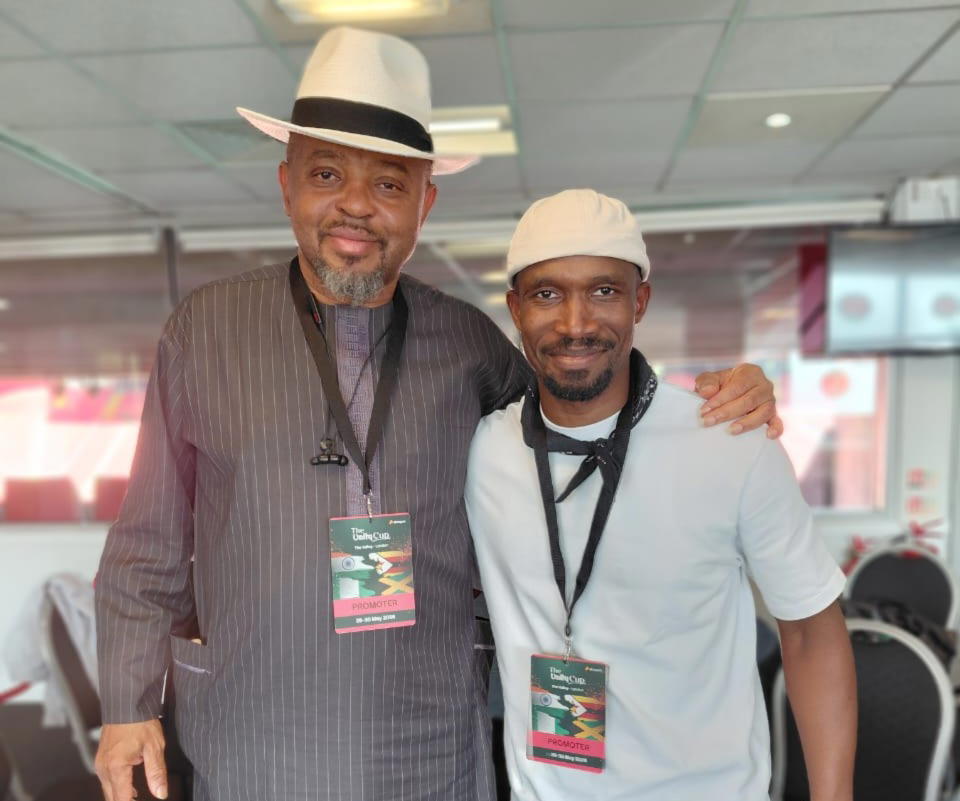
Few sporting events successfully combine elite competition with cultural celebration. Since its revival, the Unity Cup has sought to do precisely that, bringing together international football, entertainment and diaspora communities in a tournament that has steadily grown in profile.
Conceived and delivered by Afrosports Group, the competition has become a flagship property for the sports media and activations company. The 2026 edition welcomed India, Zimbabwe, Jamaica and Nigeria to The Valley in London, with the Super Eagles retaining the Unity Cup after defeating Jamaica in the final. The tournament followed the successful 2025 revival, which featured Ghana, Jamaica, Nigeria and Trinidad & Tobago, while the inaugural competition was staged in 2004.
Across its three editions over a 22-year period, Nigeria has remained a constant presence, underlining both the country’s football pedigree and the tournament’s enduring connection with African and Caribbean diaspora communities in the United Kingdom.
Beyond the action on the pitch, the Unity Cup reflects Afrosports Group’s broader ambition to create
globally relevant sports properties that connect audiences through premium live events, compelling storytelling and meaningful fan engagement.
In this exclusive interview, Tuoyo Amuka speaks with Afrosports Group founder and media executive Rotimi Pedro about the vision behind Afrosports, the evolution of the Unity Cup, and the opportunities and challenges involved in producing international sporting events that bring together governing bodies, commercial partners, broadcasters, athletes and fans. Drawing on experience across multiple international markets, Pedro also discusses building a globally minded sports media business from a Nigerian foundation, and why innovation, collaboration and audience engagement have become defining characteristics of success in today’s attention economy.
Tuoyo: How long has the Unity Cup been running and how would you assess the tournament from when you started and now? For such an august project, how would you describe your position; where you are now, compared to when you began?
Rotimi: In the early days, the challenges was with the regulatory bodies, the policing and there is a reason why there is a twenty-year gap between Unity Cup Mark 2 and Unity Cup Mark 3 last year. Mark 2 last year we had a huge policing bill more than what we had here now because people were not used to the idea of ethnic teams coming to the UK to play on neutral ground and the Police didn’t know how to deal with it. So that is why there was a huge bill.
That is why we had to stop for many years, even though the Prime Minister at that point in time endorsed it the endorsement came late when we wanted to stage Mark 3 in 2025. Mark 2, the one we had Nigeria, Ireland and Jamaica, we had about 40,000 in this stadium over the three days that we had here. To answer your question straight, is simply around attitude. The society has become cosmopolitan 20 years on, Afrobeat is trending globally and African music is played everywhere. Right now, people are more accustomed to ethnic sports as well and diaspora support base of their teams. As a result, more games are being played here in the UK now.
But we pioneered it, playing games in neutral territories but the society at that point in time, was not receptive towards it. But now, it is a different kettle of fish, where you have Burna Boy and all the Nigerian artists filling up the O2 Arena and everything. So we asked ourselves, why can’t we do the same thing, why not sports? May be we were a bit ahead of our time but we feel the right time is now. That is why we are going to be doing it as a yearly event. The regulatory authorities and the policing are a more relaxed now because we are now being considered as a project that grows ethnic interaction through sports. It’s a better thing now but the cost is what we are trying to deal with right now.
However, we are trying to scale it for the future, to make it travel round to other territories like Paris or going to the United States as well. Where there is strife and ethnic tension, the Unity Cup has a role to play. If my understanding is the appreciation of sports as not just entertainment but also as a cultural bridge is one resonates very strongly with me and the vision that you have for the Unity Cup. How do you see the tournament in the next 10 – 15 years, and how has the reception from countries from different territories been? How would you say has been their willingness to be involved and your interaction with the various football federations and their appreciation of what the Unityis supposed to achieve?
I think the idea resonated with virtually everybody including FIFA and that is why we got FIFA’s endorsement because it(the idea) fits into their own vision: ‘more than a game’ motto; that there is a role football has to play and the Unity Cup is doing just that. We got a letter from the Prime Minister of the UK back then, commending the impact the Unity Cup has in bring together ethnic communities into football grounds. Before that little did anybody know that when you play a Nigerian team here Nigerians will come out and watch their team. Nigerians love football. When you play a Ghanaian team Ghanaians will come out and watch but they didn’t have enough integration.
That is what is being appreciated more now. Even the federations have come to realise the power of the diaspora market. The cost of a match ticket here(in UK) is probably 50 times more than when you buy a ticket in Nigeria. Now FAs think outside the box; they now realise the world is a global village, I might as well tab into the diaspora market maybe they will buy my jersey and all that. The power is in the diaspora market. The economy is in the diaspora so why not tab into it? Senegal played Brazil here a few months ago. Most national teams play their matches outside their territories, exploring the diaspora markets.
It could be recalled that the entire final of Copa America(AFCON equivalent), was taken to Miami. So, it was the power of the Dollar that made that possible. Instead of playing their tournament in South America, the took it to the US. Football travels these days and the Unity Cup is no different.
Tuoyo: How do you see that integration of media, sports and entertainment? The way Afrosports has positioned itself, do you see the repositioning of these three elements?
Rotimi: What is entertainment? I used to tell people, that the World Cup and the Olympics predate the media. But the introduction of the media has contributed to the growth of sports exponentially.. Without the television you probably will be talking to five, may be ten thousand in a stadium But with the introduction of television you probably will be talking to ten million simultaneously. So you realise that the television can convert a ten thousand audience into a ten million audience. It is the conduit at which sports breath and live. And that is probably one of the biggest problems we have in Nigeria, which is one of the ethos of Afrosports. Most of our local sports are not on television, so it can’t grow.
Media is the oxygen to grow sports from the developmental stage to the global market. The same thing happened to the Olympics and the FIFA World Cup; they were small events until television came along and made them exponential events. If you are having an Olympics in Paris and you don’t have television is a non-event.
What changed the English Premier League? I was here as a student. It used to be one live game on TV and one Match of the Day, which is still on, 50 year on. What changed the trajectory of the EPL was the coming of Sky that produced 10 games everyday. That was when the Premier League exploded.
What is more interesting these days is you have culture being woven into it as well..You have not just sports, there is entertainment. Another example is the Super Bowl. I don’t like Super Bowl but I always make sure I ask who is the artist performing? Whether it is Byoncy. Even when I don’t like the sport, I look forward to it because of the performing artist. FIFA is realising it now that they have to infuse culture. You saw Shakira and Burna Boy perform at the FIFA World Cup opening ceremony in Mexico. Burna Boy also performed in the final of the UEFA Champions League. There is a lot of entertainment, culture being infused into sporting events. We may not have realised this in the past, but now people are knowing better that sports is entertainment, culture, sports and the media go together.
Tuoyo: What’s next for Afrosports?
Rotimi: We want to sustain the momentum and make it travel. We want to make it an 8-nation tournament between London and Paris. We have a funding partner who, we hope will continue to be with us in this journey. That would have to be on the eve of the Africa Cup of Nations next year. The Francophone countries will go to Paris while the English speaking teams will come to London. So, that is the next stage.
The post Afrosports: Building a global sports platform through the Unity Cup appeared first on Vanguard News.