

By providing a slot for feedback (responses and suggestions) many television stations in the past gave viewers a weekly opportunity to comment on the programmes they watched; the opportunity appears to have since been inadvertently blocked. As a result, these days, many people who have comments to make about any programme including how and when it was scheduled as well as the conduct of its anchor, moderator or presenter now pass such comments through group chats. Interestingly, most of the comments I have run into concern Arise television, one of Nigeria’s leading broadcast outfits. The comments which are mostly credited to former broadcasters are also more on the messenger and hardly on the message.
However, because many broadcasters in the group make no comments on the subject, it is simplistic to imagine that anyone is speaking on behalf of the majority. The mentality that broadcasting must always be handled as it was done in the western world from where we learnt it has been one of our problems. Many people in Nigeria mix up European and broadcast cultures; they are not coterminous. In Europe an elder can be called by his first name both in a television studio and any elsewhere, making it the culture of the people.
But that cannot be the universal culture of broadcasting and not necessarily the culture of broadcasting. Consequently, it is impudent to call an elder by his first name in Nigeria where such an act is seen as impudent. One of the supposed sins of Ruben Abati was his belief that it was brazen for a much younger colleague to call him Ruben. It was assumed by some broadcasters that Ruben so behaved because he was not originally a broadcaster. I disagree. Broadcasting is not static like Latin; it ought to be practiced in line with the ethos of each environment.
Indeed, broadcasting has itself changed tremendously. Many years ago, broadcasters were restricted to content creators and producers. Engineers, Marketers etc. were looked down upon as mere service providers. Today, it is not exactly so. Those of us who kept saying that in broadcasting, ‘Content is King’ may no longer be too confident in amplifying the saying judging by the elevation that digitization has given to Engineering. In fact, the Economy has since raised Broadcast Marketing to the first point of reckoning. Critics who call certain people broadcast gate crashers must now be more sober in diction.
What this suggests is that talks about broadcasting should be less personalized because it is the process that now occupies primacy. It would have been beneficial to hear more about what broadcasting has done or is doing than the unnecessary focus on the individual traits of actors.
What made the Nigerian media great and sustained it for long was the role it played in removing our country from alien rule – colonialism and dictatorship – military government. Today, the Nigerian media does little or nothing in holding government accountable to the people as mandated by Section 22 of our constitution. Yet, broadcasting is the most impactful segment of the same media. From May 2023 till the recent approval for electioneering to start for the 2027 election, our politicians turned the period of governance into premature campaigns. They used the media to engage in the illegal act perhaps because the media gained from advertising the unacceptable political culture.
Adversarial journalism that can push politicians back to line is no longer in vogue in our clime. How come it is only the little that the morning show crew of Arise Tv is doing that everyone is condemning?
Even Arise Tv is yet to match the courage of the Nigerian media of old which under colonial rule rejected names like gorilla fighters, rebels, rioters etc which the British called those agitating for independence. The then Nigerian media called them leaders of nationalist movements, freedom fighters, patriots etc. Those were the days when the media stood firm on its own ground and proudly claimed to be part of those who won independence for the country.
If the Nigerian media had remained potent, it would have today labelled some governors as ‘defection gov-ernors’ instead of being part of those calling them APC governors. This is because only political parties can legally win votes in Nigeria and secondly no one can be a governor under a party that did not sponsor him for election. This does not suggest that the media should oppose the government; it should only oppose what is wrong.
Those who are attacking Rufai Oseni should note that there are 3 important things in a television programme: a) the philosophy around which the programme is built, b) the objectives the programme seeks to achieve and c) the format-that is the order, arrangement and style which give the programme a specific identity. The anchors on Arise Tv morning show have an approved hybrid cross-functional format. Anyone who construes any of them as just an interviewer misses the point. It is indeed obvious that many of the critics of Rufai are using their own understanding of a standard programme to evaluate him. The guilt-ridden of Rufai’s critics are his guests; some didn’t know the format of the programme before accepting to participate, others came on with a mindset to fight their host to standstill because of their predisposition. Yet, the best guest is the one who overlooks the antics of the interviewer and proceeds to use the opportunity to deal with the message to his own advantage.
A guest on a television programme is expected to see his interviewer not for what the latter is known for but instead to see him as a representative of the general public. Answers to any question even where the programme is a recording is ordinarily meant for the public and not the person asking the question – a public that is so diverse that not everyone will see the answer from the same perspective. This posture is quite redeeming when the interviewer decides to play the devil’s advocate as Seun Okinbaloye of Channels does quite often. Some members of the public will never accept the answer as well-delivered except it is persuasive. Accordingly, the guest is obliged to refuse to be provoked just as he does everything to ensure the public mis- conception which initially influenced the question is once and for all addressed.
As for who is a true professional, I am always amazed when I hear people casting aspersions on others in the broadcast sector. Having served as a broadcaster for many years and now as a broadcast teacher, I can conveniently confirm that the number of professionals in the industry is far less than we see. It is for example not enough to have read Mass Communication which is print dominated.
A scientist employed in the media would be more proficient as a science correspondent than a standard journalist. As head of the Nigerian Television Authority, I encouraged the sponsorship of a law graduate in the newsroom to the Law School with a viewing to getting a professional judiciary correspondent.
This is because the advantage of familiarity with a terrain which longevity at a beat gives an individual is not the same as specialization. There is wisdom therefore in not basing the assessment of media a professional on his specific course of study.
I cannot end this piece without paying some attention to the trend whereby media professionals who get elevated or appointed into management positions are encouraged to handle administration while leaving operations to younger colleagues. I refer once more to my previous chief executive position at the NTA. Whereas many were surprised that I was still present the station main interview programme, ‘Point Blank’ I had no doubt that the aspect of the success of the programme attributable to experience was huge.
Today, Charles Aniagolu’s excellent handling of the programme ‘Prime Time’ is due largely to his demeanour, temperament and years of experience. To suggest that such a character should consider handing over to younger colleagues because he has had a long enough experience is certainly counter-productive.
It will deprive the broadcasting world of its veterans. The day I read that suggestion about Ruben Abati was perhaps my worst day this year. Rather than criticising those I have mentioned in this article, anyone unhappy with their stations should tune off and watch those worshipping their heroes on air.
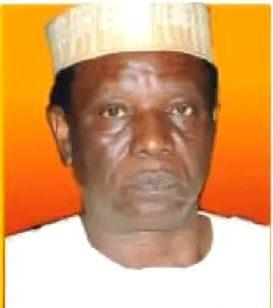
The post Arise Tv and professional feedback, by Tonnie Iredia appeared first on Vanguard News.